Buying guide
Baby Bath Tubs Buying Guide (2027)
How to buy a baby bath tub in 2027: newborn support, sink and tub fit, drains and drying, temperature cues, and storage for real bathrooms.
Support first: bumps, reclines, slings, and what each stage needs
A newborn needs a bump, a molded recline, or a soft cradle that holds the head and back, because a newborn cannot sit and slides the moment water touches skin. A sitter needs containment, a non-slip base, and a support bump that keeps them upright. A toddler needs room and high walls. No single tub does all three stages well, which is why this guide ranks tubs inside their true stage. Buy for the stage your baby is in now, and plan the handoff: a sink bather to a stage tub at sitting, and a stage tub to a toddler tub or a family tub mat at standing.
Size and fit: measure your sink and your tub before you buy
Measure before you order, because a tub that does not fit your sink is a return, not a bath. A standard bathroom sink is about 16 to 20 inches wide; the Frida and Skip Hop bathers are built for that range, while the Munchkin Sit and Soak at 25 inches long needs a large or double sink. A folding tub like the OXO needs floor or tub space when open, and the Ingenuity Tuckaway needs a flat shower floor. Check the maker's dimensions against your actual sink and shower, not against a guess, and remember that a tub also needs a flat, stable surface to sit safely.
Drains, drying, and mildew: the hygiene half of the decision
A tub with no drain plug means lifting a full tub to empty it, which is a two-hand job at the worst moment of the bath. A tub with a reachable drain, like the OXO, lets you refresh warm water mid-bath. Drying matters as much as draining: slings, plush inserts, and foam backrests that stay damp become mildew farms within a week. Quick-dry surfaces, machine-washable bathers, and instant-drain mesh stay fresh with far less effort. Before you buy, ask two questions: how does the water leave, and how does the fabric dry.
Temperature: plugs, discs, and the wrist test
Bath water should sit around 100 F (37.8 C), and the wrist or elbow test is still the most reliable check. Temperature cues help but never replace it: the Boon SOAK plug changes color when the water runs too warm, which is a useful second opinion at fill time. Set the home water heater to 120 F maximum, fill the tub before placing the baby, swirl to remove hot spots, and test again. A tub with a temperature cue is a nice-to-have; a caregiver who tests the water every time is the safety device.
Storage and the handoff: folding tubs and planning the next stage
A tub that cannot be stored gets used less, so storage is a buying feature, not an afterthought. Folding tubs like the OXO disappear behind a door; sink bathers like the Frida fold into a drawer; the Ingenuity packs into its own pouch for travel. Rigid one-piece tubs need a cupboard shelf or a hook, and the biggest ones dominate a small bathroom. Plan the handoff too: know what you will buy when the baby sits, and when the toddler stands, so the next tub is already chosen when the current one retires. The cheapest tub is the one you use until the child outgrows it, not the one you replace in three months.
Start with our top 3
The three highest-ranked products in our full baby bath tubs ranking. Read the in-depth review where one exists, or jump to the product in the ranked list.

Shnuggle Shnuggle Newborn Baby Bath
A compact upright tub with a bum bump and foam backrest for newborns to 12 months.
- Age range: Newborn to about 12 months
- Dimensions: 23.62 x 15.35 x 13.78 in
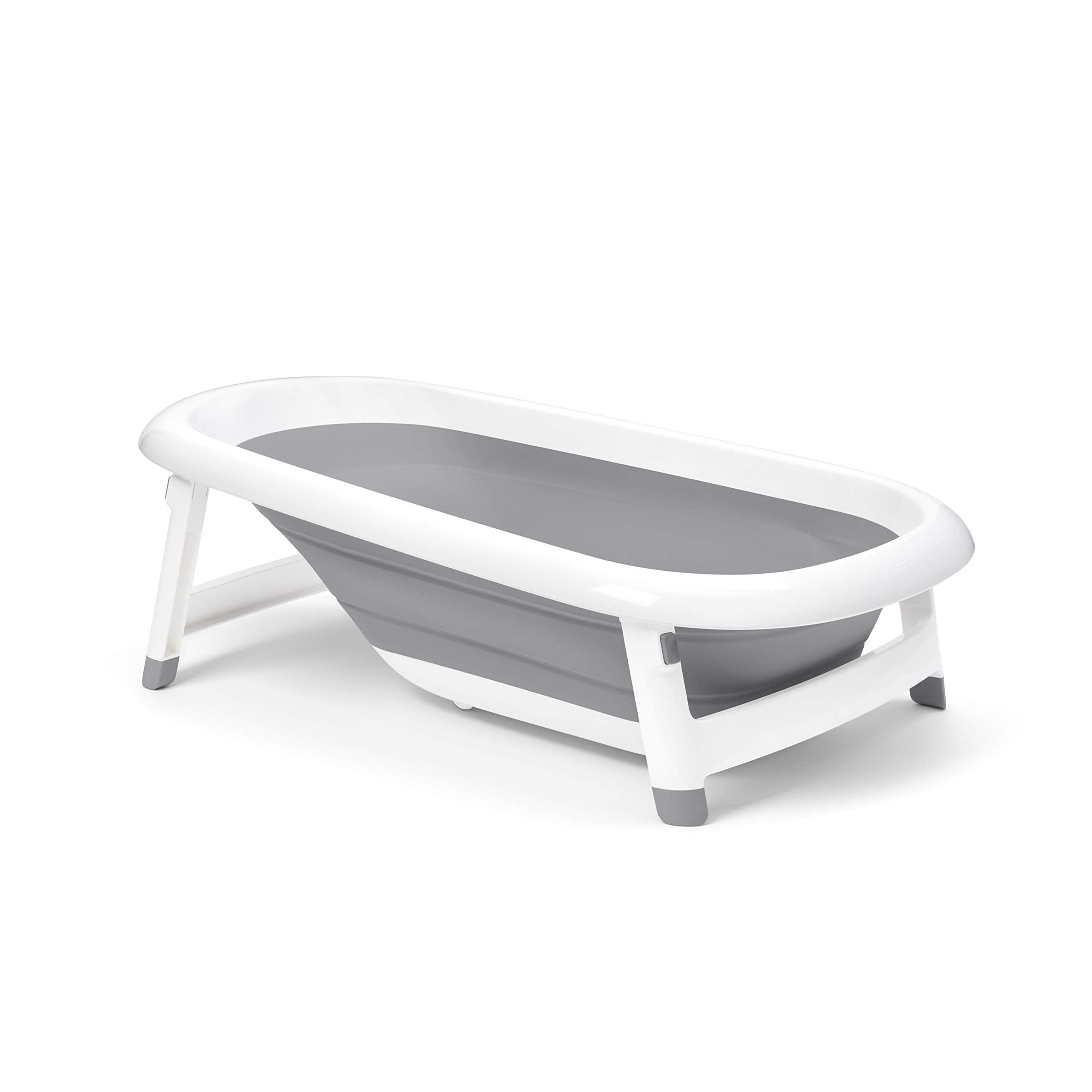
OXO Tot Splash & Store Bathtub
A rigid folding tub with a narrow newborn end, a wide toddler end, and legs that fold flat.
- Age range: 0 to 18 months
- Max weight: 25 lb

Boon SOAK 3-Stage Baby Bathtub
Three support positions from newborn recline to toddler sit-up, with a drain plug that changes color when the water is too warm.
- Age range: 0 to 18 months
- Dimensions: 25.38 x 15.72 x 8.84 in
Questions, answered
How much should I spend on a baby bath tub?
For a newborn sink bather, a budget plush bather like the Skip Hop does the job honestly. For a stage tub that lasts to 18 or 24 months, a mid-tier tub like the Boon SOAK or the First Years reclining tub is the better value per month. For a small bathroom, the OXO folding tub earns its premium tier in storage alone. Buy for the stage your baby is in, not for the longest age range on the box.
Do I need a separate newborn tub and a toddler tub?
Usually yes. Newborn tubs end at 6 to 12 months, and toddler tubs start at 6 months and up. Stage tubs bridge the gap: the Boon SOAK runs to 18 months and the First Years reclining tub to 24 months, which is the longest single-purchase window in this guide.
What is the safest way to bathe a newborn?
Shallow water at about 2 to 3 inches and around 100 F, a tub or support that holds the head and back, one hand on the baby at all times, and everything you need within reach before the baby goes in. Never leave a baby alone in water, even in a support seat, for any duration.
How do I clean and store a baby bath tub?
Rinse the tub after every bath, wipe it dry, and let slings and fabric parts air dry fully before storing. Hang bathers by their loop, fold flat tubs behind a door, and store rigid tubs on a shelf where they cannot fall. A tub stored damp is a tub that smells by next week.
Every guide on Baby Bath Tubs15 pages
- Topic hubBaby Bath Tubs
- Best ofThe Best Baby Bath Tubs (2027)
- For newborns, the tub is really a support problem. A baby who cannot sit needs a bump, a recline, or a soft cradle that holds the head and back while the caregiver washes with the other hand, and the water needs to stay shallow and warm. This ranking weights newborn support method and sink-height convenience above stage range, because a tub that also serves toddlers is no help if it fails the first bath. It also weights drying: newborn bathers that stay damp between baths are the ones that start to smell within a week.The Best Baby Bath Tubs for Newborns (2027)
- Small bathrooms punish every tub that cannot disappear between baths. This ranking weights folded size and hang storage above stage range, because a tub that lives on the floor of a small bathroom gets in the way of everything else. Sink bathers and folding tubs rank highest, and rigid one-piece tubs rank only when their bathing performance earns the cupboard space. It also weights multi-location use: a seat that works on a counter, in a sink, or in a tub is worth more in a home without a fixed bathing spot.The Best Baby Bath Tubs for Small Spaces (2027)
- Toddlers change the question from support to containment. A baby who sits and splashes needs room, high walls, and a drain that empties a big volume fast, and the tub needs to survive being treated as a climbing frame. This ranking weights interior size and age ceiling above newborn features, because a tub that ends at 12 months is no answer for a toddler. It also weights the exit plan: the best toddler tubs either last to age 5 or hand off cleanly to a non-slip mat in the family tub.The Best Baby Bath Tubs for Toddlers (2027)
- ReviewShnuggle Newborn Baby Bath Review (2027)
- ReviewOXO Tot Splash & Store Bathtub Review (2027)
- ReviewBoon SOAK 3-Stage Baby Bathtub Review (2027)
- ReviewFrida Baby Soft Sink Baby Bath Review (2027)
- ReviewMunchkin Sit & Soak Baby Bath Tub Review (2027)
- ReviewFirst Years Sure Comfort Reclining Tub Review (2027)
- Head to headShnuggle Newborn Baby Bath vs Munchkin Sit & Soak Baby Bath Tub (2027)
- Head to headFrida Baby Soft Sink Baby Bath vs Skip Hop Moby Soft Sink Baby Bath Tub (2027)
- Fix itBaby Bath Tub That Slips, Smells or Feels Too Small? Fixes (2027)