Buying guide
Flashlight Buying Guide (2027)
How to buy a flashlight in 2027: lumens, beam distance, battery types, charging standards, water resistance ratings and the small features that decide whether a light gets carried.
Lumens: what the numbers mean
Lumens measure total light output, and the numbers have inflated fast: a penlight puts out 350 lumens, a pocket light puts out 1,700, and a mid-tier light puts out 2,403. What the numbers hide is that every light above 1,000 lumens steps down as it heats, usually within minutes, and the level it settles at is the level you actually use. A 2,403-lumen light and a 1,700-lumen light both spend most of their working life at a few hundred lumens. Buy for the sustained levels and the low modes, which are the ones that last all night, and treat the turbo number as a signal flare: useful for a few seconds, not a working level. For close work indoors, 90 to 350 lumens is plenty. For a night walk, 500 to 800 lumens is the sweet spot. Above 1,000 is for searching and duty work.
Beam distance and shape: throw against flood
Beam distance measures how far the light throws a usable beam, and it matters as much as lumens: a 500-lumen light with a tight reflector can out-throw a 1,500-lumen flood light by a wide margin. A tight spot is the right beam for searching, duty work and checking a fence line. A wide flood is the right beam for a room, a tent or a workbench. Zoom and twist-focus heads try to be both, and they succeed at the cost of a mechanism that can loosen over time. When you compare two lights, compare their beam distances, not just their lumens: the Fenix PD36R V2.0 throws 396 metres, the Streamlight ProTac 2L-X USB throws 165, and that gap tells you more about the two lights than the 1,700 against 500 lumen gap does.
Battery types: 18650, 21700, AA and D-cell
The battery decides the running cost and the size. A rechargeable 18650 cell is the standard for pocket lights, and a 21700 cell is the standard for duty lights, with roughly half as much capacity again. Both charge by USB and cost nothing per use. A light that eats CR123As charges you every time it runs, and a light on AAA batteries is the most expensive light here per hour of use, even though it is the cheapest to buy. The exception is the emergency kit: a light that sits for a year must run on batteries that are still good when you need them, which is why AA and D-cell lights earn their places despite their running costs. Dual-fuel lights, like the Fenix LD22 V2.0, split the difference: rechargeable at home, AAs anywhere else.
Charging: USB-C, magnetic and micro USB
USB-C is the standard that matters in 2027, because the cable is already in every house and every car, and it charges the phone and the torch from the same lead. Magnetic charging, like Olight's MCC3, is convenient until the cable is lost, and then the light cannot charge at all, because there is no port on the body. Micro USB is a legacy port that asks you to keep an old cable for one device, and it is the clearest sign that a light is an older model. And a light with no charging at all, running on AAs or D-cells, is the most reliable light in a power cut, because its fuel is a battery you can buy in a petrol station. When you buy a rechargeable light, check the port before you check the lumens.
Water resistance, switches and the small features that save a night
After output, beam and battery, the details decide. Water resistance is rated on the IP scale: IPX4 survives rain, IPX7 survives a metre of immersion, and IPX8 survives continuous immersion, but the rating applies to the exact model tested, so a figure quoted for one version does not automatically cover another. The switch decides the feel: a tail switch gives momentary-on and works through gloves, a side switch is easier to find in the dark but can be pressed in a pocket, and a dual switch splits power from modes. A pocket clip decides whether the light gets carried at all, and a magnetic tail turns a torch into a hands-free work light. None of these features sells a light on its own, but together they decide whether the tool disappears into the work or fights you through it.
Start with our top 3
The three highest-ranked products in our full flashlights ranking. Read the in-depth review where one exists, or jump to the product in the ranked list.
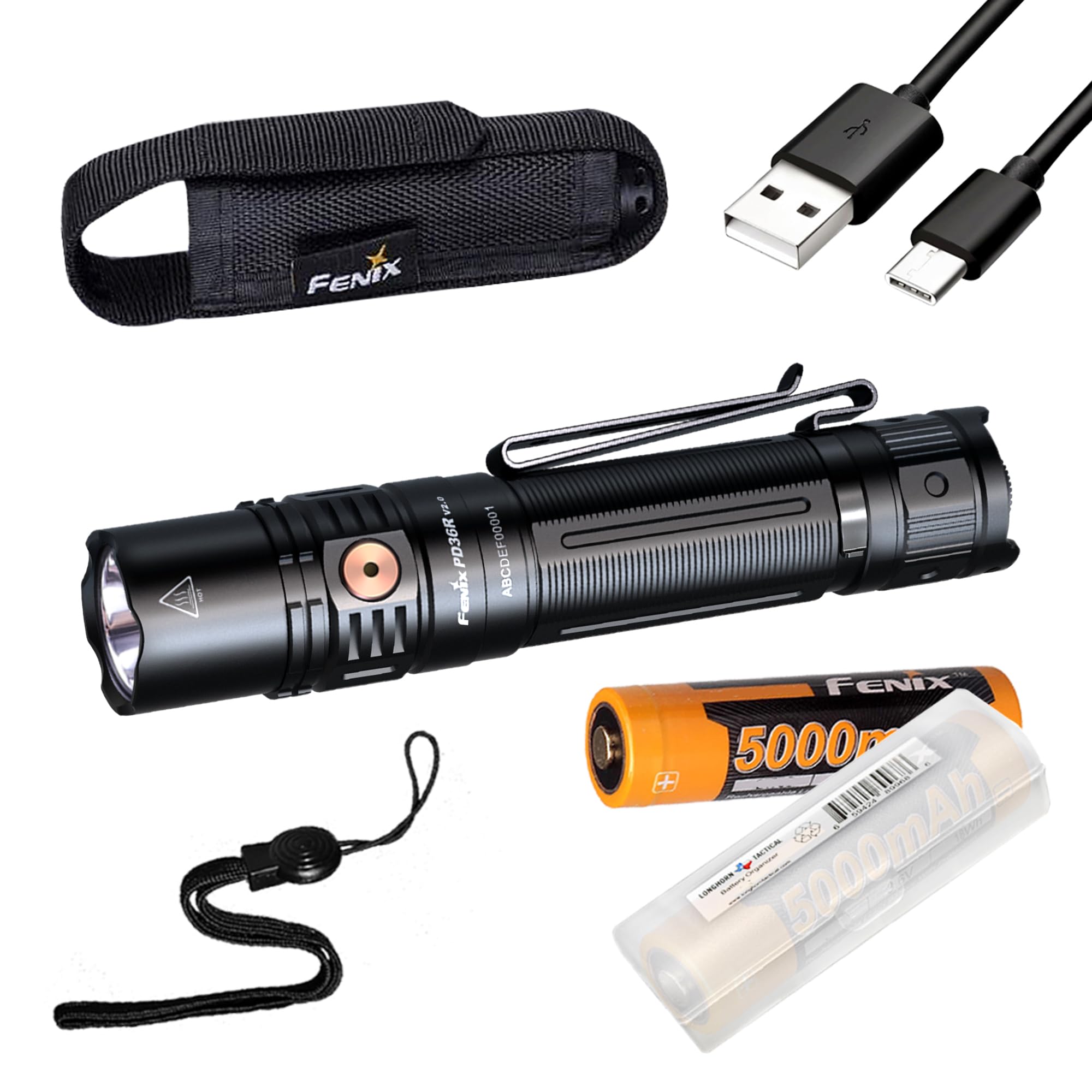
Fenix PD36R V2.0 1700-Lumen Tactical Light
Fenix's duty-sized tactical light: 1,700 lumens, a 396-metre beam and a 21700 cell, sold as a bundle with two spare batteries.
- Max output: 1700 lumens (maker rating)
- Beam distance: 396 m (Fenix rating)

Streamlight ProTac 2L-X USB 500-Lumen Tactical
Streamlight's multi-fuel tactical light: 500 lumens, a 165-metre beam and a Ten-TAP switch you can program to your own habits.
- Max output: 500 lumens (Amazon listing)
- Beam distance: 165 m on high
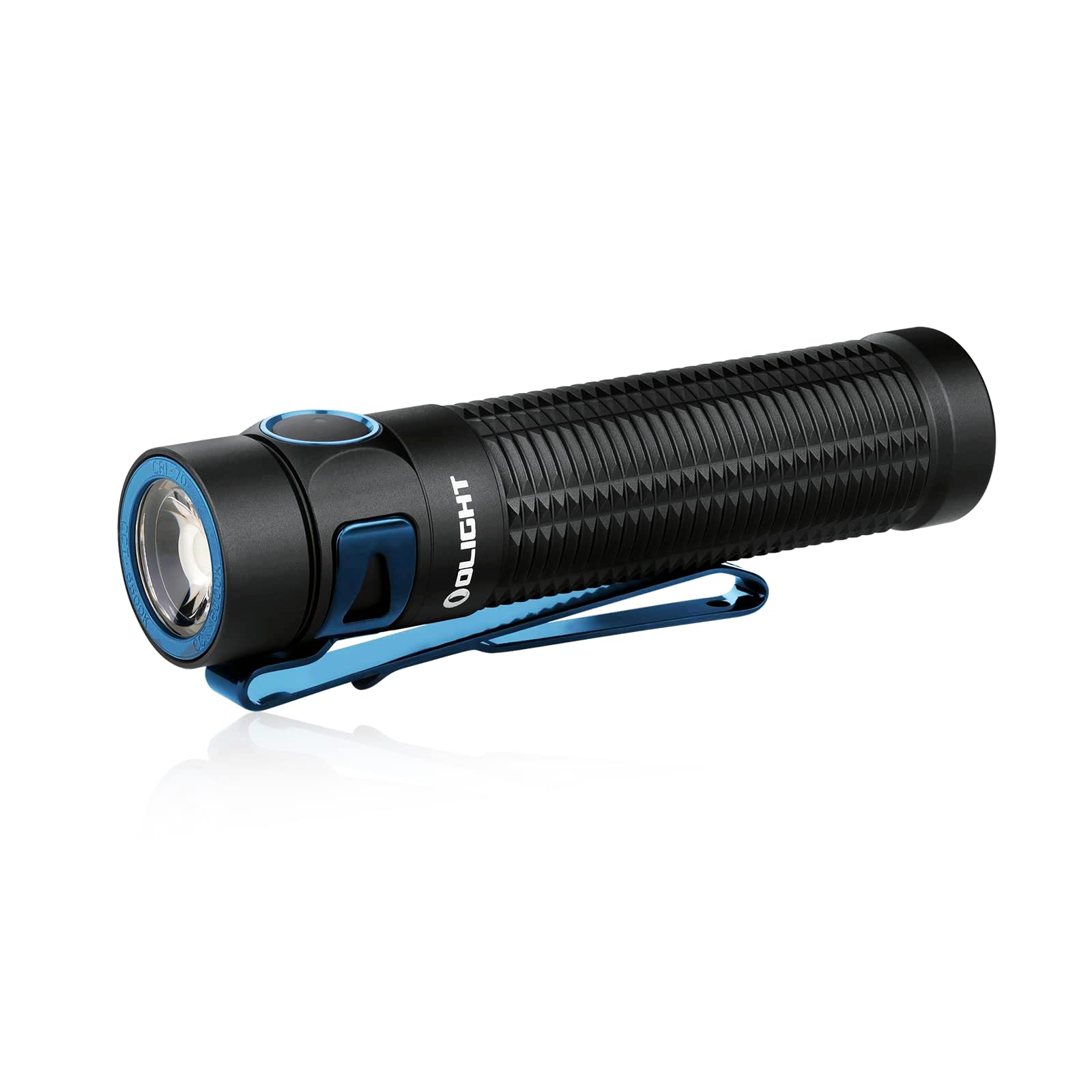
Olight Baton 3 Pro 1500-Lumen EDC Flashlight
Olight's pocket rocket: 1,500 lumens from a light shorter than a finger, with magnetic charging and a stand that turns it into a lantern.
- Max output: 1500 lumens (Amazon listing)
- Charging: MCC3 magnetic cable
Questions, answered
How much should I spend on a flashlight?
For a drawer light used a few times a year, a budget two-pack like the GearLight S1000 does the job honestly. For regular use, step up to a rechargeable light like the Anker Bolder LC90, because the cell pays for itself in a few months of AAA savings. For daily carry or duty use, the Fenix E28R V2.0 or the PD36R V2.0 repay their higher tier in beam, battery and build, and a duty light that fails on shift is the most expensive light of all.
What is the difference between lumens and candela?
Lumens measure total light output, and candela measures how concentrated that output is in one direction. A light with high lumens and low candela floods a room. A light with modest lumens and high candela throws a tight beam hundreds of metres. Beam distance, which makers publish, is the practical number: it tells you how far the light actually throws, and it is the figure to compare when you choose between two lights.
Do I need a tactical flashlight?
Only if you need what makes it tactical: a tail switch for momentary-on, a programmable mode sequence, and a body built for duty use. For a night walk, a campsite or a fuse box, an EDC light like the Fenix E28R V2.0 or the Olight Baton 3 Pro is the better tool, because it is smaller, lighter and easier to carry. Tactical is a job description, not a quality grade, and a tactical light bought for household use is money spent on features you will never press.
How do I store a flashlight I rarely use?
Remove the batteries from a light that runs on AAs or D-cells, because alkaline cells leak when they sit for months and the leak can ruin the light. For a rechargeable light, store it at about half charge rather than full or flat, and top it up every few months. Keep the light in a dry place, and check the switch and the O-rings once a year: a dried O-ring is the most common reason a sealed light stops being sealed.
Every guide on Flashlights15 pages
- Topic hubFlashlights
- Best ofThe Best Flashlights (2027)
- Camping inverts the usual flashlight ranking. Turbo output barely matters, because nobody camps on turbo: it drains the cell in minutes and blinds everyone at the tent. What matters is runtime on the low and medium levels, a low mode dim enough to use inside a tent without waking the camp, and charging that works from a power bank or a car. This ranking weights the sustained levels and the battery story above the headline lumens, and it rewards lights that share a battery with the rest of the camp kit.The Best Flashlights for Camping (2027)
- Everyday carry is a size test first and a brightness test second. A light that does not fit a pocket does not get carried, and a light that does not get carried is a drawer ornament. This ranking weights size, weight and pocket clip above everything else, and it rewards lights that charge from the cable already in your pocket. Turbo output is judged by the sustained level, not the headline, because a pocket light that steps down in a minute is a 300-lumen light with a party trick.The Best Flashlights for Everyday Carry (2027)
- Budget here means value per hour of light, not the cheapest torch in the drawer. A light that costs very little and eats a set of AAA batteries every week is not a bargain. This ranking weights honest output, a usable low mode and the running cost above everything else, and it rewards lights that include a rechargeable cell or run on cheap AAs. The two premium entries appear because they are the cheapest way onto a proper USB-C light for buyers who already own the cable, not because a first-time buyer should stretch for a tactical light.The Best Budget Flashlights (2027)
- ReviewFenix PD36R V2.0 1700-Lumen Tactical Light Review (2027)
- ReviewStreamlight ProTac 2L-X USB 500-Lumen Tactical Review (2027)
- ReviewOlight Baton 3 Pro 1500-Lumen EDC Flashlight Review (2027)
- ReviewFenix E28R V2.0 1700-Lumen EDC Flashlight Review (2027)
- ReviewNitecore MH12 V2 1200-Lumen Tactical Light Review (2027)
- ReviewThruNite TC15 V3 2403-Lumen EDC Flashlight Review (2027)
- Head to headFenix PD36R V2.0 1700-Lumen Tactical Light vs Streamlight ProTac 2L-X USB 500-Lumen Tactical (2027)
- Head to headFenix E28R V2.0 1700-Lumen EDC Flashlight vs Nitecore MH12 V2 1200-Lumen Tactical Light (2027)
- Fix itFlashlight Won't Turn On? Fixes (2027)