In-depth review
Kinco 387P Hydroflector Buffalo Leather Gloves Review (2027)
Kinco's 387P pairs full grain buffalo leather with a water-resistant treatment, unlined for finger feel. Our research-based verdict for wet-weather leather work.
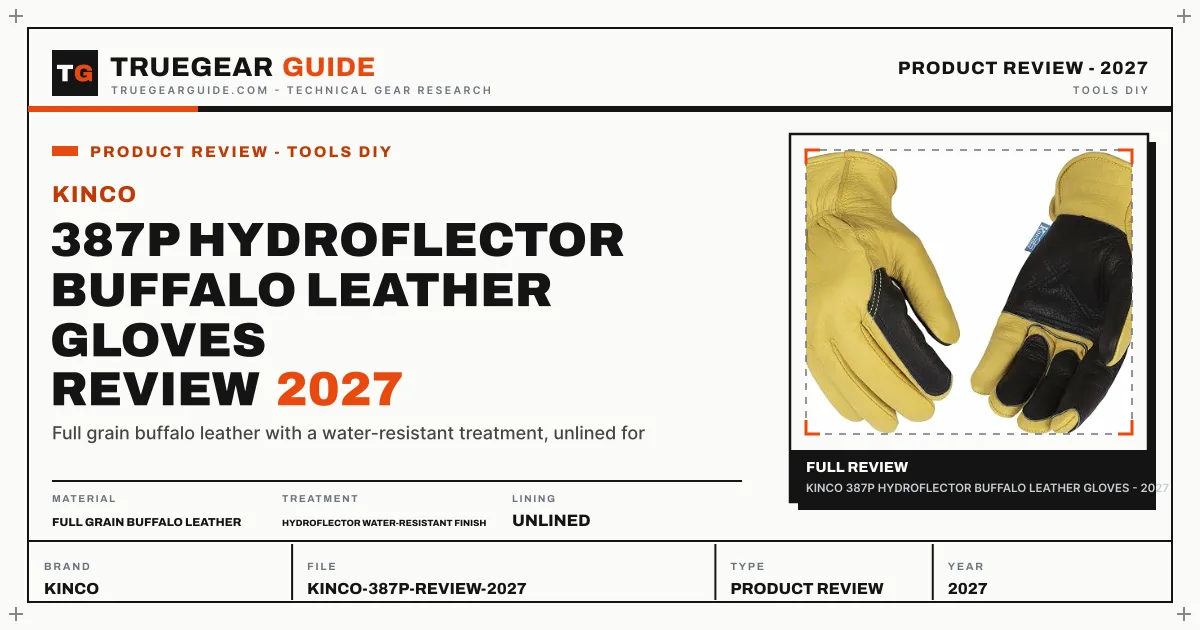

Kinco 387P Hydroflector Buffalo Leather Gloves
Full grain buffalo leather with a water-resistant treatment, unlined for the dexterity leather gloves usually lose.
Our verdict
The 387P answers a specific complaint about leather gloves: they go soggy in wet work. Full grain buffalo leather gives it the toughest palm in this guide's leather bench, the Hydroflector treatment sheds rain and wet material, and the unlined build keeps finger feel that lined leather drivers sacrifice. It is heavier than goatskin and its water resistance needs re-treatment with hard use, but for wet-weather outdoor work it is the leather glove to beat in 2027.
What we like
- Full grain buffalo leather palm and back resist abrasion and punctures better than split leather or synthetic palms
- Hydroflector treatment sheds water so the glove stays workable in rain and wet material instead of going soggy
- Unlined construction keeps more finger feel than lined leather drivers, a rare combination with this much leather
- Easy-on cuff slides on quickly with cold or dirty hands, without a strap to fuss over
What to watch out for
- Water resistance fades with heavy use and needs re-treatment to stay effective
- Buffalo leather is heavier than goatskin, and owners notice it on long fine-handling jobs
- No dedicated knuckle guard, so it is not the pick for crush or impact hazards
What owners report: Kinco 387P Hydroflector Buffalo Leather Gloves
Synthesized from recurring themes in long-term owner feedback.
Most praised
- The buffalo palm survives wet lumber and muddy equipment work that ruins lighter gloves
- Hands stay drier in drizzle than in untreated leather drivers owners compared it with
- The unlined fit lets owners pick up bolts and clips without taking the gloves off
Common complaints
- The water shedding weakens after a season of hard use and needs redoing
- The leather feels heavy during all-day fine work compared with goatskin
- Owners with wider palms find the finger length generous before the palm breaks in
Who it is for
Outdoor workers, equipment operators and material handlers who work in rain, mud and wet material and still want a real leather palm.
Buffalo leather, and why it matters here
Buffalo leather is denser and heavier than cowhide, and that weight buys abrasion and puncture resistance on rough material. The 387P uses full grain buffalo on palm and back, so there is no split leather weak point waiting to tear. For equipment operation, fencing and wet lumber handling, that density is the point: the glove meets the material with its strongest face forward, and it keeps meeting it after other palms have thinned.
Water resistance without a lining
The clever part of the 387P is what it leaves out. Most water-resistant leather gloves add a lining, which costs finger feel and slows drying. Kinco treats the leather itself and leaves the glove unlined, so owners keep enough feel to pick up bolts and clips without removing the gloves, and the glove dries faster between wet jobs. The trade is honest: treatments fade with heavy use and need reapplying, and this is not a waterproof glove for submerged work.
Weight and the missing guards
Buffalo leather's weight shows on long fine-handling days, where goatskin's flexibility wins. There are also no impact guards and no insulation, so the 387P is a wet-weather leather glove, not an all-hazard glove. Owners who accept those two limits get the most durable wet-work leather palm in this guide at a mid tier, which is a fair trade for the work it is built for.
Key specifications
- Material
- Full grain buffalo leather
- Treatment
- Hydroflector water-resistant finish
- Lining
- Unlined
- Cuff
- Easy-on cuff
- Model
- 387P
- Wired size
- Large child listing; family page offers other sizes
Also consider

Wells Lamont 1132 Cowhide Leather Work Gloves
The classic saddletan cowhide driver: full leather, gunn cut, and a wrist closure that keeps it put.
Why consider it: Lighter, cheaper cowhide for dry general work where water resistance is not needed
- Material: Cowhide leather, saddletan
- Pattern: Gunn cut with keystone thumb

Wells Lamont 3203 HydraHyde Leather Palm Gloves
A leather palm glove with a stretch back: HydraHyde water resistance where it wears, flex where it bends.
Why consider it: A lighter water-resistant leather palm with a stretch back, for owners who want less weight
- Palm: HydraHyde water-resistant leather
- Back: Polyester and spandex stretch fabric
Research-based assessment. TrueGear has not hands-on tested this product; this evaluation synthesizes manufacturer specifications, retailer documentation, and published expert reviews.
Questions, answered
How waterproof is the 387P?
Water resistant, not waterproof. The Hydroflector treatment sheds rain and wet material well, but submerged or all-day soaking work will eventually wet through, and the treatment fades with heavy use. Re-treat the leather when water stops beading, and keep a waterproof option for truly soaked work.
Is buffalo leather better than cowhide?
Tougher and heavier, generally. Buffalo leather resists abrasion and punctures better than cowhide, at the cost of weight and a longer break-in. For heavy wet work the trade favours buffalo. For light general work cowhide is lighter, cheaper and entirely sufficient.
Does the unlined build make it cold in winter?
Yes, in freezing weather. Unlined leather, even treated leather, is not insulation. The 387P suits cool and wet work, but true winter shifts need an insulated glove like the ColdWork Original, or a liner worn underneath if the fit allows.
Every guide on Work Gloves16 pages
- Topic hubWork Gloves
- Best ofThe Best Work Gloves (2027)
- This ranking covers only gloves with a real leather palm and a leather story worth telling: cowhide value, buffalo toughness, water-resistant leather and premium double-layer goatskin. Synthetic mechanics gloves are excluded here even though they outsell leather, because the buyer asking for leather has already chosen the trade: more break-in and weight in exchange for abrasion life and heat tolerance.The Best Leather Work Gloves (2027)
- This ranking is for work where fingertips matter: turning wrenches, handling small fasteners, wiring and diagnostics. Leather drivers are included only where their fit genuinely serves fine work, which is why the double-layer goatskin glove appears here as the leather exception. Everything else is synthetic, washable and built to be forgotten on the hand.The Best Mechanics Work Gloves (2027)
- This ranking covers only gloves with real back-of-hand guards, because impact protection is a specific hazard feature, not a marketing word. The two guarded picks serve different crews: one hi-viz mechanics-pattern glove for general heavy work, and one heavy-handling glove with reflective trim for equipment and rigging. The heavy utility glove appears as the unguarded bridge for owners who want heavy abrasion without guard bulk.The Best Impact Work Gloves (2027)
- ReviewWells Lamont 1132 Cowhide Leather Work Gloves Review (2027)
- ReviewMechanix Wear Original MG-05 Work Gloves Review (2027)
- ReviewIronclad General Utility GUG Work Gloves Review (2027)
- ReviewMechanix Wear M-Pact 2 Hi-Viz Impact Gloves Review (2027)
- ReviewMechanix Wear ColdWork Original Winter Gloves Review (2027)
- Head to headWells Lamont 1132 vs Kinco 387P (2027)
- Head to headMechanix Wear Original vs Ironclad General Utility (2027)
- Buying guideWork Gloves Buying Guide (2027)
- Fix itWork Gloves Too Tight or Too Loose? Fixes (2027)
- Fix itWork Gloves Wearing Out Too Fast? Fixes (2027)