Buying guide
Measuring Tape Buying Guide (2027)
How to buy a measuring tape in 2027: length, blade width, standout, lock types, hooks and blade print explained without the marketing.
Length first: 25 ft or 16 ft
Twenty-five feet is the jobsite length because framing, decking and exterior layout need it. Sixteen feet is the indoor length because rooms, trim and cabinets do not, and a shorter tape carries far more comfortably. The mistake is buying 25 ft for a tape that never leaves the house, or 16 ft for a tape that must lay out a wall. If you do both kinds of work, own both lengths; tapes are cheap enough that one compromise tape serves neither job well.
Blade width and standout, honestly stated
Blade width drives standout: 3/4 inch blades fold early, 1 inch blades are the general standard, and 1-1/4 inch and wider blades hold straight for solo spans. Maker standout and reach figures assume a calm, level pull, so expect less in wind or at an angle. For solo work, buy the widest blade you will carry; for pocket carry, accept a narrower blade and a helper for long spans.
Lock types and how you actually measure
Slide locks are simple and glove-friendly. Self-locks hold the blade out without thumb pressure, which solo markers love. Finger brakes give fine retraction control. Grip control, as on the Komelon True Control, removes the button entirely for one-handed work. There is no best lock, only the lock that matches your hand and your workflow; if possible, try the lock in a store before committing to a dozen tapes for a crew.
Hooks, print and the accuracy chain
The hook slides by its own thickness so inside and outside measurements agree, and a loose or bent hook breaks that agreement silently. Check hook play before trusting a tape, and retire tapes whose hooks wobble. Blade print matters next: high-contrast markings, fractions for finish work, and backside or dual-sided print for overhead work all prevent the re-measures that eat a day. A tape that reads clearly in your working light is worth more than a tape with a bigger standout number you never use.
Cases, coatings and realistic lifespan
Chrome cases wipe clean and look smart; rubber-armoured cases grip better and survive drops more gracefully. Blade coatings, Mylar, nylon, BladeArmor and their rivals, protect print against abrasion, but all coatings wear first at the hook end, where the blade meets the world. Treat tapes as consumables with a lifespan set by abuse: a framing tape lasts months of hard use, a home tape lasts years, and a kinked blade is finished regardless of brand.
Start with our top 3
The three highest-ranked products in our full measuring tapes ranking. Read the in-depth review where one exists, or jump to the product in the ranked list.

Stanley FatMax 25 ft Tape Measure (33-725)
The wide-blade jobsite standard, with a 1-1/4 inch blade and long solo reach.
- Length: 25 ft
- Blade width: 1-1/4 in
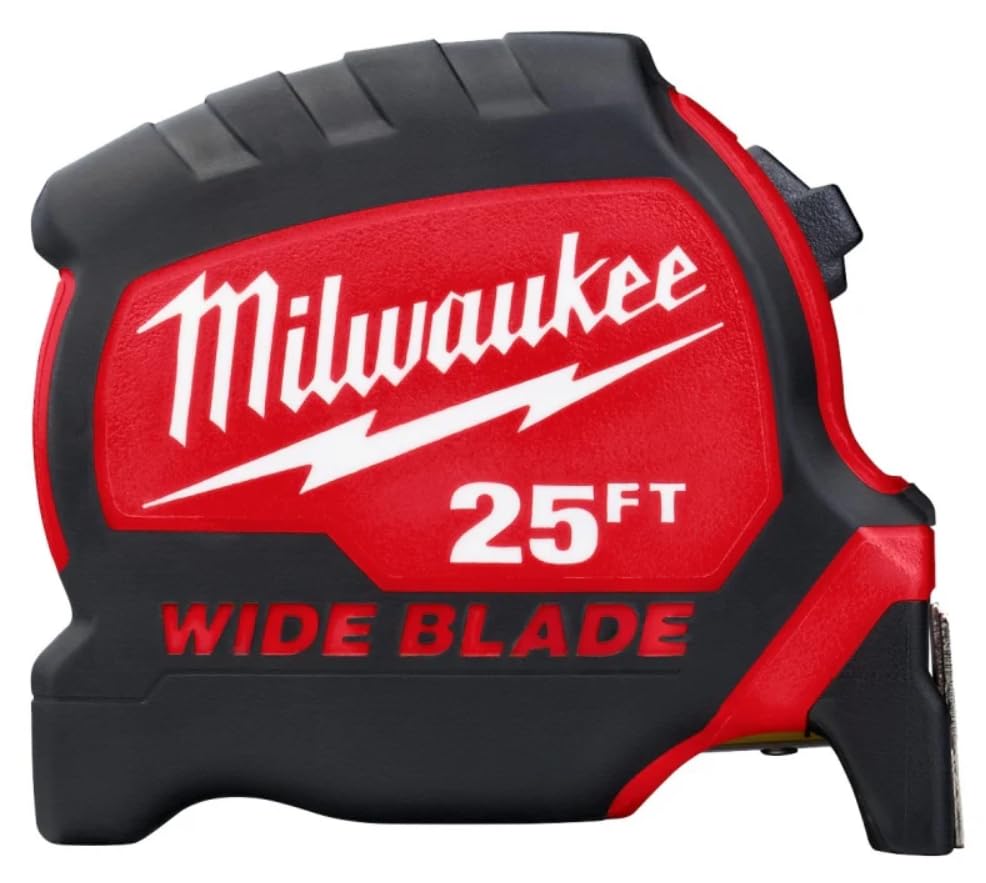
Milwaukee Wide Blade 25 ft (48-22-0225)
Milwaukee's wide-blade answer for MEP and framing work, built around standout.
- Length: 25 ft
- Blade width: 1.3 in

Crescent Lufkin Shockforce Nite Eye 25 ft (L1125B-02)
A black-blade, dual-sided pro tape built for low light and hard drops.
- Length: 25 ft
- Blade width: 1-3/16 in
Questions, answered
How do I check whether my tape is still accurate?
Measure a known length, such as a factory-cut board or a steel rule, with both an inside and an outside measurement. If the two disagree, the hook is the suspect: check for looseness, bending or debris. Also compare against a second tape; a consistent offset points at the hook, while a growing error along the blade points at a stretched or damaged blade.
What does the hook slide do?
The hook moves by exactly its own thickness. On an outside measurement it sits flush against the object's end; on an inside measurement it slides in so the zero point stays true. That tiny movement is deliberate engineering, not looseness, but excessive play beyond that slide means the hook is worn.
Are digital or laser measures replacing tapes?
For long interior distances, laser measures are faster and often more accurate. For layout, marking, framing and any job where the tape itself is the straightedge, a blade tape remains irreplaceable. Most pros now carry both, and this guide's companion topic on laser distance measures covers the laser side.
How long should a tape measure last?
It depends on abuse, not age. A home tape can last a decade; a framing tape worked daily may last a year before hook wear or a kink ends it. Retire a tape when the hook loosens, the blade kinks, or print wears off the working end, because an inaccurate tape is worse than no tape.
Every guide on Measuring Tapes15 pages
- Topic hubMeasuring Tapes
- Best ofThe Best Measuring Tapes (2027)
- Framing is the harshest tape test there is: long solo spans, lumber dust, concrete contact, drops from staging and a blade that must hold straight in wind. This ranking weights standout and blade width first, case toughness second, and treats pocketability as irrelevant. Stud markings earn a mention because layout speed is framing speed.The Best Measuring Tapes for Framing (2027)
- Home measuring is a different job from framing: rooms, furniture placement, curtain drops, garden beds and the occasional picture wall. Readability, a forgiving lock and a case that does not intimidate matter more than standout. This ranking favours tapes that a non-professional enjoys using, and it punishes bulk that keeps a tape in a drawer.The Best Measuring Tapes for DIY and Home Use (2027)
- Compactness is a real constraint for finish carpenters, electricians on service calls and anyone who carries a tape in a pocket rather than a pouch. This ranking treats case bulk and weight as primary criteria and accepts shorter standout as the price. A tape that is left behind because it is bulky is worthless, however far its blade holds.The Best Compact Measuring Tapes (2027)
- ReviewStanley FatMax 25 ft Tape Measure (33-725) Review (2027)
- ReviewMilwaukee Wide Blade 25 ft Tape Measure (48-22-0225) Review (2027)
- ReviewCrescent Lufkin Shockforce Nite Eye 25 ft Tape Measure (L1125B-02) Review (2027)
- ReviewStanley PowerLock 25 ft Tape Measure (33-525) Review (2027)
- ReviewKomelon Contractor TS 25 ft Tape Measure (93425) Review (2027)
- ReviewKomelon True Control 25 ft Tape Measure (TC25) Review (2027)
- Head to headStanley FatMax 25 ft vs Milwaukee Wide Blade 25 ft (2027)
- Head to headStanley PowerLock 25 ft vs Komelon Contractor TS 25 ft (2027)
- Fix itTape Measure Problems and Fixes (2027)