Buying guide
Robot Vacuum Buying Guide (2027)
How to buy a robot vacuum in 2027: navigation, self-emptying docks, mopping systems, brushes, bins and floor fit explained without the marketing.
Navigation first: LiDAR, camera or bump
Navigation is the feature you live with every day. LiDAR robots map precisely, clean in rows and work in the dark, which suits night schedules and multi-room homes. Camera robots recognise objects and avoid pet messes and cables, which suits cluttered and pet homes, but they want light to see. Bump robots wander without a map, which suits a small flat and a tight budget and frustrates everyone else. Choose navigation by your floor's clutter and your schedule, not by the suction headline.
Self-emptying docks: bagged, bagless and wash docks
Self-emptying is the single biggest ownership upgrade in this category, because it removes the daily bin chore. Bagged bases seal dust away and suit allergy homes, but charge for bags for years. Bagless bases cost nothing ongoing and suit budget-conscious owners, but ask for a careful tip into the bin. Wash-and-dry docks add mop care and water refilling, and suit large hard-floor homes, but need floor space and a water routine. Read the dock before the robot, and measure the station, not just the disc.
Suction, brushes and bins for real floors
Suction figures from 1300Pa to 6000Pa look decisive and mostly are not: brush design, floor contact and pass pattern matter as much on real floors. Rubber and self-cleaning rollers beat bristle rollers for hair, dual rollers beat single rollers for carpet, and a floating brush stays in contact on uneven floors. Bin size matters in pet homes, where a small onboard bin without a dock fills mid-clean. Buy the brush and bin system for your shedding and your carpet, and treat the Pascal figure as a secondary signal.
Mopping: wipe, scrub or wash dock
Robot mopping spans three honest tiers. Drag pads wipe dust and freshen floors. Sonic pads scrub light grime. Wash-and-dry docks keep pads clean so scrubbing stays effective across a house. No tier replaces a manual scrub on dried stains, and every tier except the wash dock asks the owner to rinse pads by hand. Carpet protection matters as much as scrubbing: liftable mops, carpet detection and no-mop zones each keep rugs dry, and a combo without one of them is a risk to every rug it crosses.
Floor fit, thresholds and the setup week
Before buying, check the unglamorous fits: door thresholds the robot must climb, rug pile it must cross, dark floors that confuse cliff sensors, and the Wi-Fi band the app requires, since several robots here need 2.4GHz. Expect a setup week: first maps need editing, room names need fixing, and no-go zones need testing before schedules behave. Owners who budget that week love their robots; owners who expect perfection on day one return them.
Start with our top 3
The three highest-ranked products in our full robot vacuums ranking. Read the in-depth review where one exists, or jump to the product in the ranked list.
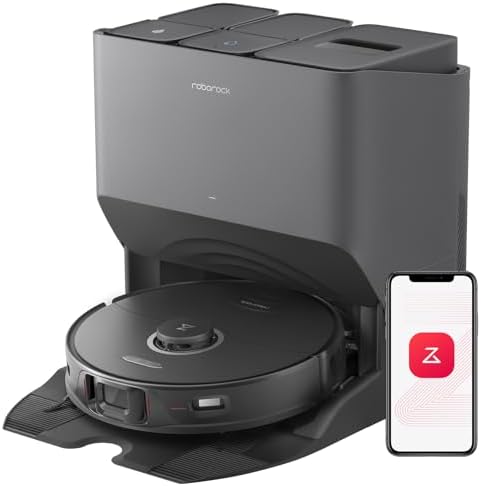
Roborock S8 Pro Ultra Vacuum and Mop, RockDock Ultra
The do-everything dock flagship: self-washing and self-drying mop, self-refilling water, self-emptying dust bag and 6000Pa suction in one station.
- Suction: 6000Pa (maker rating, Max+ mode)
- Dock: RockDock Ultra: self-washing, self-drying, self-emptying, self-refilling

Roborock Q8 Max+ Robot Vacuum and Mop, Self-Emptying
The sweet-spot Roborock: 5500Pa suction, DuoRoller brushes, app-controlled mopping and a self-empty dock without the flagship dock price.
- Suction: 5500Pa HyperForce suction (maker rating)
- Brushes: DuoRoller dual rubber brushes

iRobot Roomba j7+ Self-Emptying Robot Vacuum (7550)
The obstacle-avoidance specialist: a camera that steers around cords, shoes and pet messes, plus a Clean Base that empties itself for weeks.
- Suction: 10x Power-Lifting Suction, per maker rating against the Roomba 600 series
- Navigation: PrecisionVision camera navigation with obstacle avoidance
Questions, answered
How much robot vacuum do I actually need?
Match the robot to your floor, not your ambition. A small flat with hard floors: the eufy 11S or the Shark RV2310. A pet home with carpet: a self-empty robot with rubber brushes, like the Q8 Max+ or the AV2501AE. A large mixed-floor home: a wash-and-dry flagship like the S8 Pro Ultra. A cluttered pet home: a camera robot like the j7+. Overspending on a dock you will not use is as wasteful as underspending on mapping you need daily.
Do robot vacuums work on dark floors and thick rugs?
Dark floors can confuse cliff sensors on some robots, which read dark surfaces as drops and refuse to cross them. Thick rugs challenge low-clearance robots and drag-pad mops alike. If either describes your home, prefer a LiDAR robot with adjustable cliff behaviour and a liftable mop, and test the robot on your darkest floor and thickest rug during the return window.
What maintenance does a robot vacuum actually need?
Weekly: empty the bin or check the base, wipe sensors, and check the brushroll for wrapped hair. Monthly: wash or replace the filter, check side brushes for wear, and clean the wheels and cliff sensors. With a dock: change bags or tip the bagless cup on its interval, and wash mop pads after every mop run unless the dock does it. A robot with no maintenance plan becomes a parked robot within months.
Can I run a robot vacuum while I am out?
Yes, and that is the point of scheduling, provided the floor is prepped: cables picked up, small objects off the floor, and pet mess risks handled by a camera robot or a pre-clean check. Camera and LiDAR robots handle an empty house best, while bump robots in a cluttered empty house are the ones that get stuck and wait for rescue.
Every guide on Robot Vacuums15 pages
- Topic hubRobot Vacuums
- Best ofThe Best Robot Vacuums (2027)
- Pet hair changes the ranking completely. Suction alone does not win here: a bristle roller that wraps in one run, a tiny bin that fills before the lounge is done, and a base that puffs dust back into the room all fail pet homes even when their spec sheets look strong. This ranking weighs brush design, bin and base capacity, and filtration first, and treats mapping as the tool that lets the robot run twice a day without supervision.The Best Robot Vacuums for Pet Hair (2027)
- Mopping is where robot marketing stretches furthest, so this ranking sorts systems by what they actually do to a floor. A drag pad wipes, a sonic pad scrubs, and a wash-and-dry dock keeps the pad clean enough to keep scrubbing. Carpet handling separates the serious combos from the ones that soak rugs: liftable mops, no-mop zones and carpet detection are not extras, they are the difference between a combo and a mistake.The Best Robot Vacuums with Mopping (2027)
- Budget robot buying has a trap: a cheap robot with a tiny bin, no mapping and a bristle roller costs little to buy and much to live with. This ranking weighs the whole cost, including bags, filters and the time spent rescuing a lost robot, and it is honest about what budget money cannot buy: no budget pick here maps four floors or washes its own mop.The Best Budget Robot Vacuums (2027)
- ReviewRoborock S8 Pro Ultra Review (2027)
- ReviewiRobot Roomba j7+ Review (2027)
- ReviewRoborock Q8 Max+ Review (2027)
- ReviewShark AV2501AE AI Ultra Review (2027)
- ReviewiRobot Roomba Combo j5+ Review (2027)
- ReviewRoborock Q5+ Review (2027)
- Head to headRoborock S8 Pro Ultra vs Q8 Max+ (2027)
- Head to headiRobot Roomba j7+ vs Combo j5+ (2027)
- Fix itRobot Vacuum Not Cleaning Properly? Fixes (2027)