Buying guide
How to Buy Snow Boots 2027
How to choose snow boots: pac boot versus hiking boot, temperature ratings, insulation, shaft height and fit.
Pac boot or hiking-style boot?
Start with the job. A pac boot such as the Sorel Caribou keeps feet warm standing still in deep cold, because it pairs a removable felt liner with a waterproof rubber shell. A hiking-style winter boot such as the KEEN Revel IV or the North Face Chilkat V is lighter and better for walking, with better ankle support and lug grip. A pull-on neoprene boot such as the Muck Arctic Sport is the work pick: step in, stay dry, step out. Choose the pac boot for cold and still, the hiking boot for walking and trails, and the pull-on for work.
Temperature ratings and insulation
Makers measure temperature ratings differently, so a minus 40 rating from one brand is not the same as minus 40 from another. Use the rating to sort boots into cold and colder, then check the insulation grams and the liner. The Caribou, the NationPlus, the Revel IV and the Arctic Sport all claim minus 40, but they achieve it with different liners: felt, Heat-MX, recycled PET and neoprene. A removable liner is the most useful feature in a snow boot, because it dries overnight and can be replaced when it wears out.
Waterproofing and the shaft
A waterproof membrane or a sealed rubber shell keeps slush out, while a boot that is only water-resistant will wet out on a slushy day. Check the construction, not just the label: seam-sealed, a waterproof bootie and a rubber shell are the signs to look for. Shaft height decides whether snow stays out: a 13-inch shaft such as the Bogs Classic High keeps drifts out, while an ankle boot such as the Thermo Chill lets powder in over the top, no matter how warm it is.
Traction on snow and ice
A warm boot that slips on ice is a bad boot. Look for a lugged rubber outsole with a winter compound: the Revel IV's Polar Traction outsole, the Chilkat's aggressive lugs and the Bugaboot's Omni-Grip all grip packed snow and wet concrete. On glare ice, even the best rubber needs add-on cleats, so carry a pair if you walk on ice regularly. Test the boot on a wet, smooth floor before you commit.
Fit and sizing
Measure your foot with the socks you will actually wear, and size up if you are between sizes. A boot that is too tight cuts circulation and makes cold feet worse. The Bugaboot III and the Chilkat V run small, so order a size up in those models. Pull-on boots cannot be adjusted, so try them with thick socks before you commit. Break the boot in before a long day out, and check that the heel is locked in place when you walk.
Start with our top 3
The three highest-ranked products in our full snow boots ranking. Read the in-depth review where one exists, or jump to the product in the ranked list.
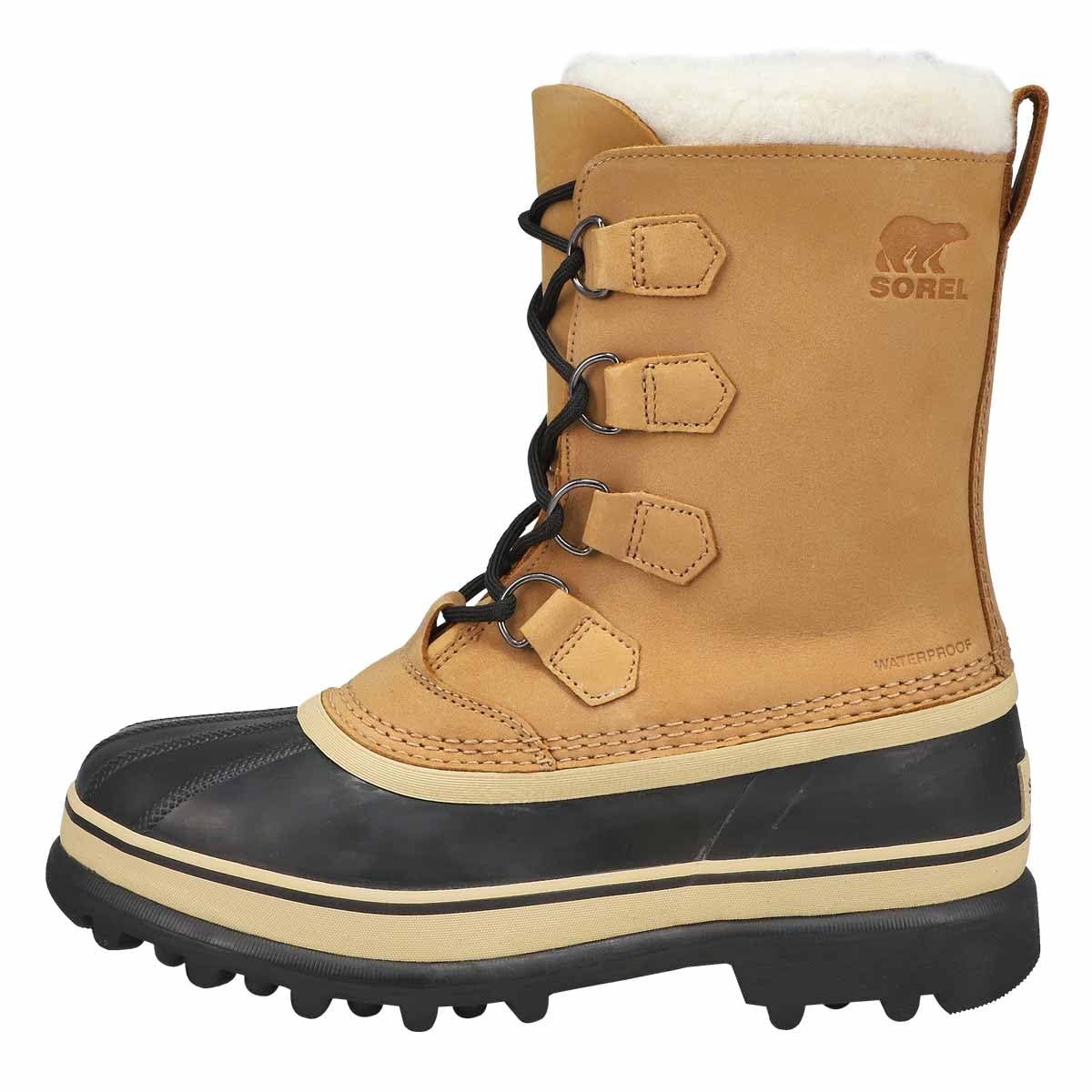
The classic pac boot: waterproof leather, a removable 9mm felt liner and a minus 40 rating.
- Model: 1002871
- Outsole: Vulcanized rubber

The women's pac boot: waterproof suede, a removable felt liner and a faux fur cuff.
- Upper: Waterproof suede
- Style: 211518

Columbia Bugaboot III Snow Boot
A mid-price men's winter boot with 200g insulation, Omni-Tech waterproofing and an Omni-Grip outsole.
- Insulation: 200g Omni-Heat
- Temperature rating: Minus 25 degrees Fahrenheit
Questions, answered
How should snow boots fit?
Roomy enough for thick socks and a handwarmer, with the heel locked in place. If your heel slips, the boot is too big or too wide. Size up if you are between sizes, and try the boot with the socks you will actually wear.
How do I dry snow boots overnight?
Pull the liner out if it is removable, open the boot wide, and stand it in a warm room with airflow. Do not put leather boots on a radiator or near a fire, because direct heat cracks leather. A boot dryer on a low setting helps, and newspaper stuffed inside absorbs moisture.
When should I replace snow boots?
Replace them when the sole wears smooth, the liner packs out and no longer springs back, or the waterproofing no longer keeps water out. A pac boot with a replaceable liner can last many seasons. A budget boot usually lasts two to four seasons of regular use.
Every guide on Snow Boots16 pages
- Topic hubSnow Boots
- Best ofBest Snow Boots 2027
- Men's fit and warmthBest Snow Boots for Men 2027
- Women's fit and warmthBest Snow Boots for Women 2027
- Value under premium pricesBest Budget Snow Boots 2027
- ReviewSorel Caribou Review (2027)
- ReviewSorel Joan of Arctic Review (2027)
- ReviewColumbia Bugaboot III Review (2027)
- ReviewKEEN Revel IV High Polar Review (2027)
- ReviewThe North Face Chilkat V 400 Review (2027)
- ReviewUGG Adirondack III Review (2027)
- Head to headSorel Caribou vs Columbia Bugaboot III 2027
- Head to headSorel Joan of Arctic vs UGG Adirondack III 2027
- Fix itSnow Boots Leaking: Fixes for Wet Feet 2027
- Fix itSnow Boots Too Cold: Fixes for Cold Feet 2027