In-depth review
BAND-AID All-Purpose 160-Piece First Aid Kit Review (2027)
The BAND-AID 160 is the familiar red case with name-brand medicines for everyday knocks. Our research-based verdict for home and car.
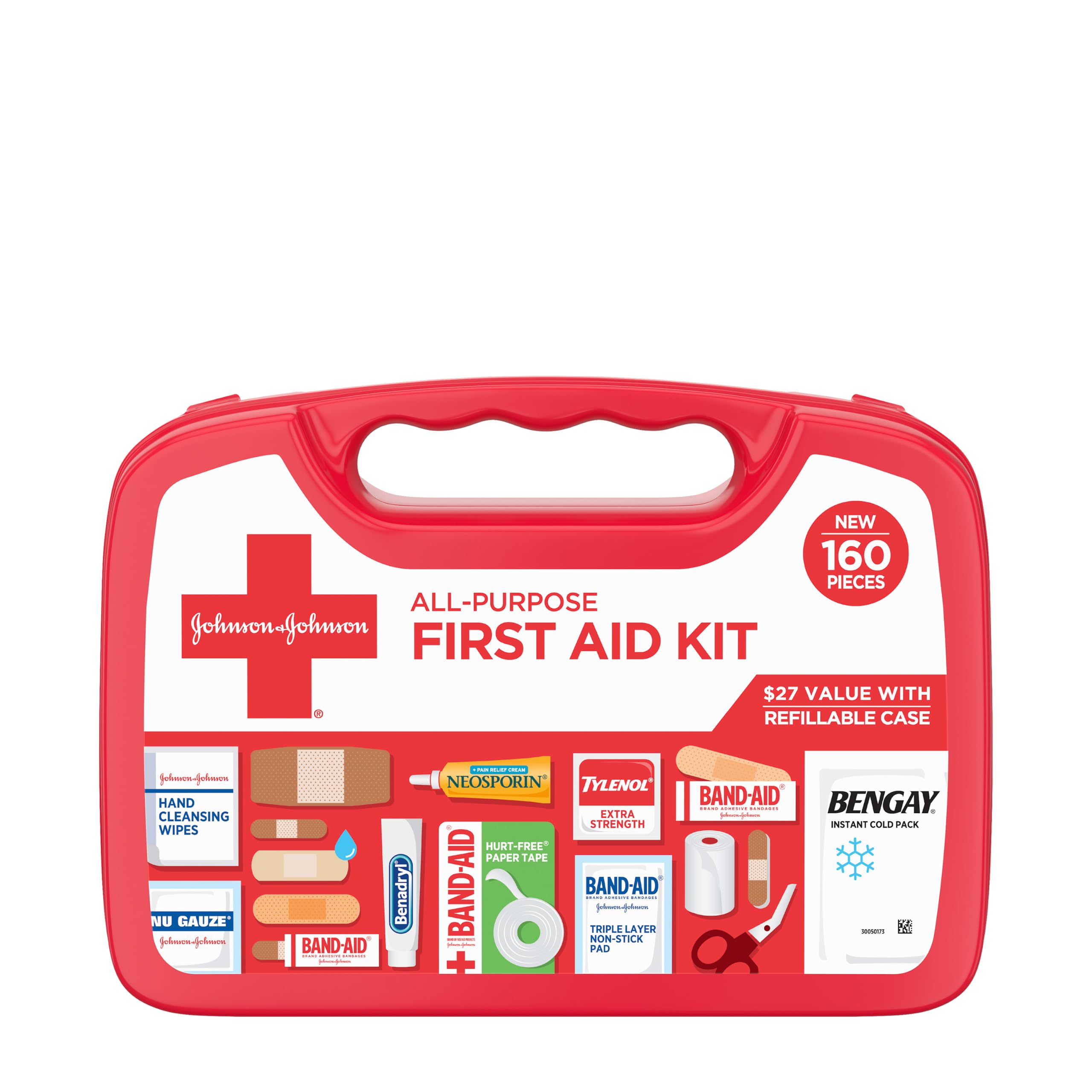
BAND-AID All-Purpose First Aid Kit, 160 Piece
The familiar red case with name-brand medicines for everyday knocks.
Our verdict
The BAND-AID 160 wins on trust. It is built around medicines people already know, Band-Aid, Neosporin, Tylenol, Benadryl and Bengay, in a hard refillable case with a handle, FSA and HSA eligible, at a budget price. It is a general minor-injury kit only, with no trauma gear, and the piece count is padded by small bandages. For a home or car kit that anyone in the family can use without guessing at unlabelled packets, it is the default recommendation.
What we like
- Built around familiar name-brand medicines, Band-Aid, Neosporin, Tylenol, Benadryl and Bengay, rather than unbranded packets
- FSA and HSA eligible, per listing
- Hard refillable carry case with handle, easy to grab and to restock
- Compact footprint for a 160-piece kit, suited to home, car and travel
What to watch out for
- A general minor-injury kit only; no trauma pad, splint or tourniquet
- Hard case takes fixed shelf or boot space and does not compress like a soft pouch
- Piece count is padded by many small bandages, so the range of distinct treatments is narrower than 160 suggests
What owners report: BAND-AID All-Purpose First Aid Kit, 160 Piece
Synthesized from recurring themes in long-term owner feedback.
Most praised
- Parents like reaching for brands they already trust instead of guessing at unlabelled packets
- The case survives being tossed in a car boot and still opens cleanly
- The handle and flat shape make it easy to keep by the kitchen or in a glovebox
Common complaints
- Buyers expecting a deep kit find it thin once the bandages are set aside
- The hard case is bulkier than the piece count suggests for a small car
- Some wish the medicine selection were wider for headaches, allergies and stomach upsets
Who it is for
Families and drivers who want a recognisable-brand kit for everyday cuts, scrapes and burns, at home or in the car.
Name-brand medicines are the whole pitch
The case front says it: Neosporin, Tylenol, Benadryl, Bengay and Band-Aid packets, pictured on the case itself. In an emergency, reaching for a brand you already trust beats guessing at an unlabelled packet, and parents mention this more than any other feature. The hard carry case is refillable, so the kit can be restocked rather than replaced, and the handle and flat shape make it easy to keep by the kitchen or in a glovebox. At 9.5 by 7 by 3.25 inches and 1.19 pounds, it is compact for a 160-piece kit.
What 160 pieces actually means
Like every kit in this guide, the count is padded by small bandages, so the range of distinct treatments is narrower than 160 suggests. Buyers expecting a deep kit find it thin once the bandages are set aside, and some wish the medicine selection were wider for headaches, allergies and stomach upsets. That is the honest limit of a minor-injury kit: it covers cuts, scrapes and burns, and it does not pretend to cover trauma.
The hard case, for and against
A hard case survives being tossed in a car boot and still opens cleanly, which owners praise, and it takes fixed shelf or boot space and does not compress like a soft pouch, which owners complain about in a small car. The trade-off is real: the case is the reason the kit survives, and the reason it does not fit everywhere. For a kitchen shelf or a boot, it is right; for a glovebox, the FAO-442 pouch fits better.
Key specifications
- Pieces
- 160 pieces
- Case
- Hard carry case
- Contents
- Band-Aid bandages, Neosporin, Tylenol, Benadryl, Bengay cold pack
- Size
- 9.5 x 7 x 3.25 in
- Weight
- 1.19 lb
- Eligibility
- FSA and HSA eligible
Also consider

Thrive Home Essentials First Aid Kit, 291 Pieces
A one-pound, 291-piece soft bag that stows where hard cases cannot.
Why consider it: A lighter soft-bag alternative with more pieces and inner pockets, for a car seat or a drawer
- Pieces: 291 pieces
- Bag: Rip-stop nylon bag
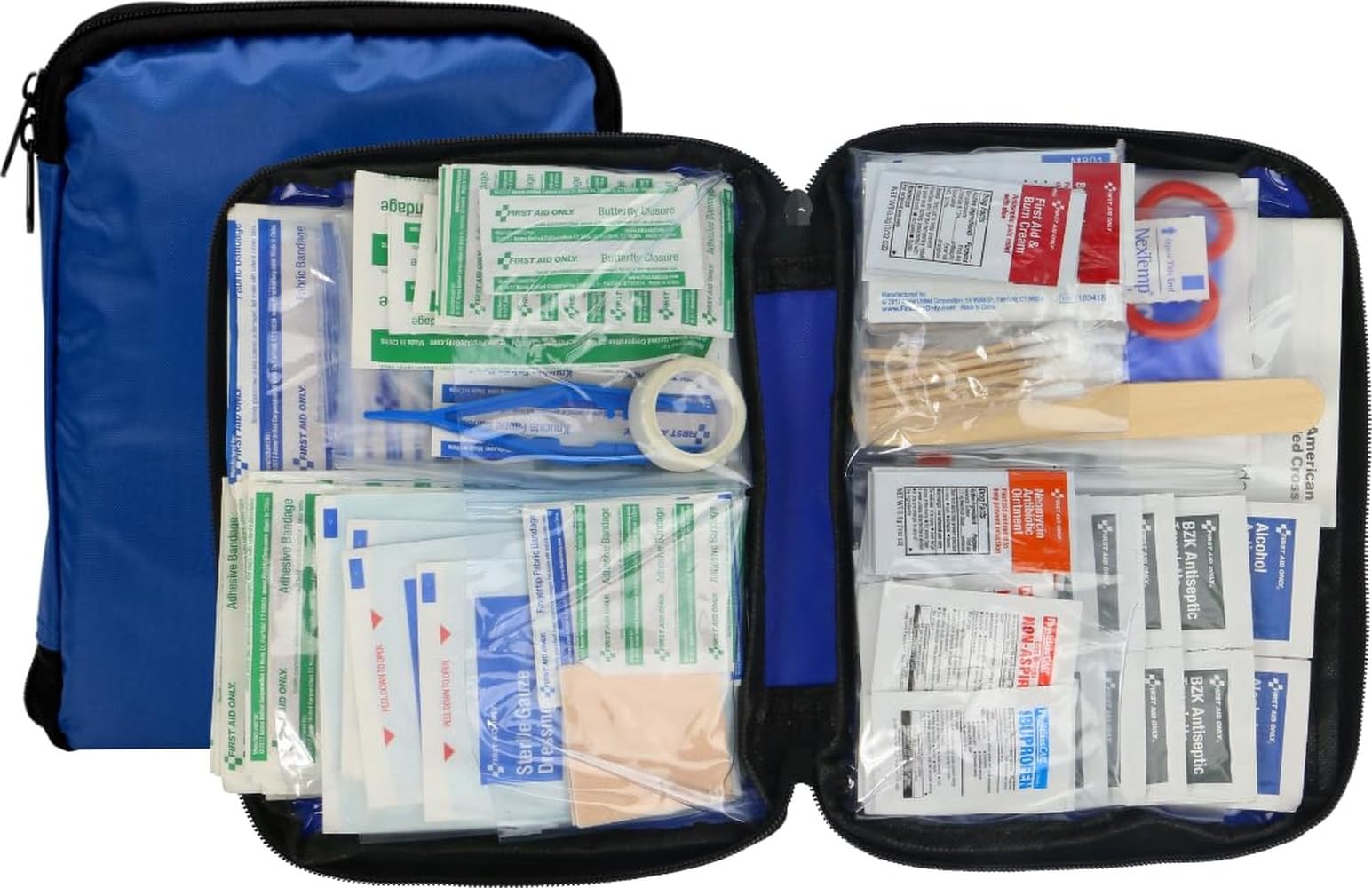
First Aid Only 299-Piece All-Purpose First Aid Kit (FAO-442)
A featherweight 299-piece pouch that goes anywhere, bandage-heavy and all.
Why consider it: A featherweight pouch alternative, cheaper and thinner, for a glovebox or a bag
- Pieces: 299 pieces
- Model: FAO-442, soft zip pouch
Research-based assessment. TrueGear has not hands-on tested this product; this evaluation synthesizes manufacturer specifications, retailer documentation, and published expert reviews.
Questions, answered
Is the BAND-AID 160 FSA and HSA eligible?
Yes, per the listing. That means it can be bought with flexible spending or health savings account funds, which matters for families who keep a kit in the house and one in the car.
Can I refill the BAND-AID 160 case?
Yes, the case is refillable, and owners praise that. Restock the bandages and medicines you use most, check the expiry dates twice a year, and the case itself lasts far longer than its contents.
Does the BAND-AID 160 include trauma supplies?
No. It is a general minor-injury kit for cuts, scrapes and burns. For trauma gear, a splint, trauma shears or a trauma pad, look at the Surviveware 238 or the M2 Basics 300 in this guide.
Every guide on First Aid Kits16 pages
- Topic hubFirst Aid Kits
- Best ofThe Best First Aid Kits (2027)
- The qualifying keyword here is best baby first aid kit, but the honest answer is that no baby kit on its own is a first aid kit. The Frida and Safety 1st kits are baby health and grooming: aspirators, thermometers, nail clippers and medicine dispensers. A new parent needs one of those plus a real wound-care kit, and this ranking says so plainly, pairing the baby kits with the family kits that complete the shelf.The Best Baby First Aid Kits (2027)
- A car kit lives in the worst place in the house: a hot boot in summer, a freezing one in winter, and a glovebox that gets opened in a hurry. This ranking weighs size and weight first, because a kit that does not fit the car is a kit left at home, and case type second, because a soft bag survives a boot better than a hard case survives a glovebox. Medicines expire faster in heat, so the ranking also says which kits need checking most often.The Best First Aid Kits for the Car (2027)
- Workplace kits are bought against a standard, not a preference. This ranking starts from the compliance claim, the Be Smart 326 exceeds OSHA and ANSI guidance for 100 people, the First Aid Only 91248 is OSHA-compliant for 50, and the Thrive 291 is ANSI and OSHA compliant per its maker, then asks whether the case, the lid and the compartments suit a fixed shelf and a busy site. A compliance claim does not make a kit a trauma kit, and this ranking says so.The Best OSHA First Aid Kits (2027)
- ReviewFirst Aid Only 299-Piece All-Purpose Kit (FAO-442) Review (2027)
- ReviewFrida Baby Basics Kit Review (2027)
- ReviewSurviveware Large 238-Piece First Aid Kit Review (2027)
- ReviewBe Smart Get Prepared 326-Piece OSHA First Aid Kit Review (2027)
- ReviewAdventure Medical Kits Ultralight/Watertight .7 Review (2027)
- Head to headBAND-AID 160 vs Thrive 291 (2027)
- Head to headBe Smart 326 vs First Aid Only 91248 (2027)
- Buying guideFirst Aid Kit Buying Guide (2027)
- Fix itFirst Aid Kit Supplies Expired? Fixes (2027)
- Fix itFirst Aid Kit Missing Supplies When You Need Them? Fixes (2027)