Buying guide
First Aid Kit Buying Guide (2027)
How to buy a first aid kit in 2027: reading contents lists instead of piece counts, choosing a case for where the kit lives, understanding OSHA compliance, and keeping the kit checked and restocked.
Read the contents list, not the piece count
Piece counts are the least honest number on the box. The First Aid Only FAO-442 is 196 small bandages out of 299 pieces, per Outdoor Gear Lab testing. The Thrive 291 is 90 cotton balls and swabs between them. Read the contents list and count distinct treatments instead: bandage sizes, gauze, burn care, medicines, trauma pads and tools. The M2 Basics 300 publishes 40 unique items alongside its 300-piece count, which is the honest way to read a piece number, and it is the standard you should hold every other listing to.
Buy the kit for the place it will live
A kit that does not fit where it lives is a kit left at home. A glovebox wants a thin pouch like the FAO-442. A boot wants a hard case with a handle like the BAND-AID 160. A drawer wants a soft bag like the Thrive 291. A workplace wall wants a hard, wall-mountable station like the Be Smart 326. A nappy bag wants a silicone case like the Frida Basics Kit. A hiking pack wants a watertight pouch like the AMK .7. Buy the case for the place, and the contents for the injuries.
Organisation is a safety feature
In an emergency you search a kit with one hand while holding a wound with the other. Labelled compartments, like the Surviveware 238, and clear lids, like the Be Smart 326 and the First Aid Only 91248, let you find the right dressing fast. A soft pouch with two big compartments, like the M2 Basics, lets everything slide together. If the kit will be used by someone other than you, a babysitter, a colleague, a teenager, organisation matters more than contents, because they cannot search what they cannot see.
OSHA compliance, and what it does not mean
OSHA and ANSI guidance applies to workplaces, where a kit serves employees and must meet a standard for a given headcount. The Be Smart 326 exceeds both for 100 people, and the First Aid Only 91248 is OSHA-compliant for 50. A home kit does not need a compliance claim, and a compliance claim does not make a kit a trauma kit: both workplace picks here are still general first-aid kits. Buy the compliance for the workplace, buy the contents for the home, and buy proper trauma equipment and training separately for a high-risk site.
Baby kits are health kits, and the check schedule
The Frida Baby Basics Kit and the Safety 1st Deluxe kit are baby health and grooming, thermometers, aspirators, nail clippers and medicine dispensers, with no bandages or antiseptic. They belong on a new parent's shelf, but they do not replace a wound-care kit: buy one of each. And whatever kit you buy, check it twice a year and after every use. Medicines carry 1-2 year expiry dates, and owners regularly discover expired packets only when they need them. Restock from the contents list, not from memory, and replace the items you reach for most.
Start with our top 3
The three highest-ranked products in our full first aid kits ranking. Read the in-depth review where one exists, or jump to the product in the ranked list.
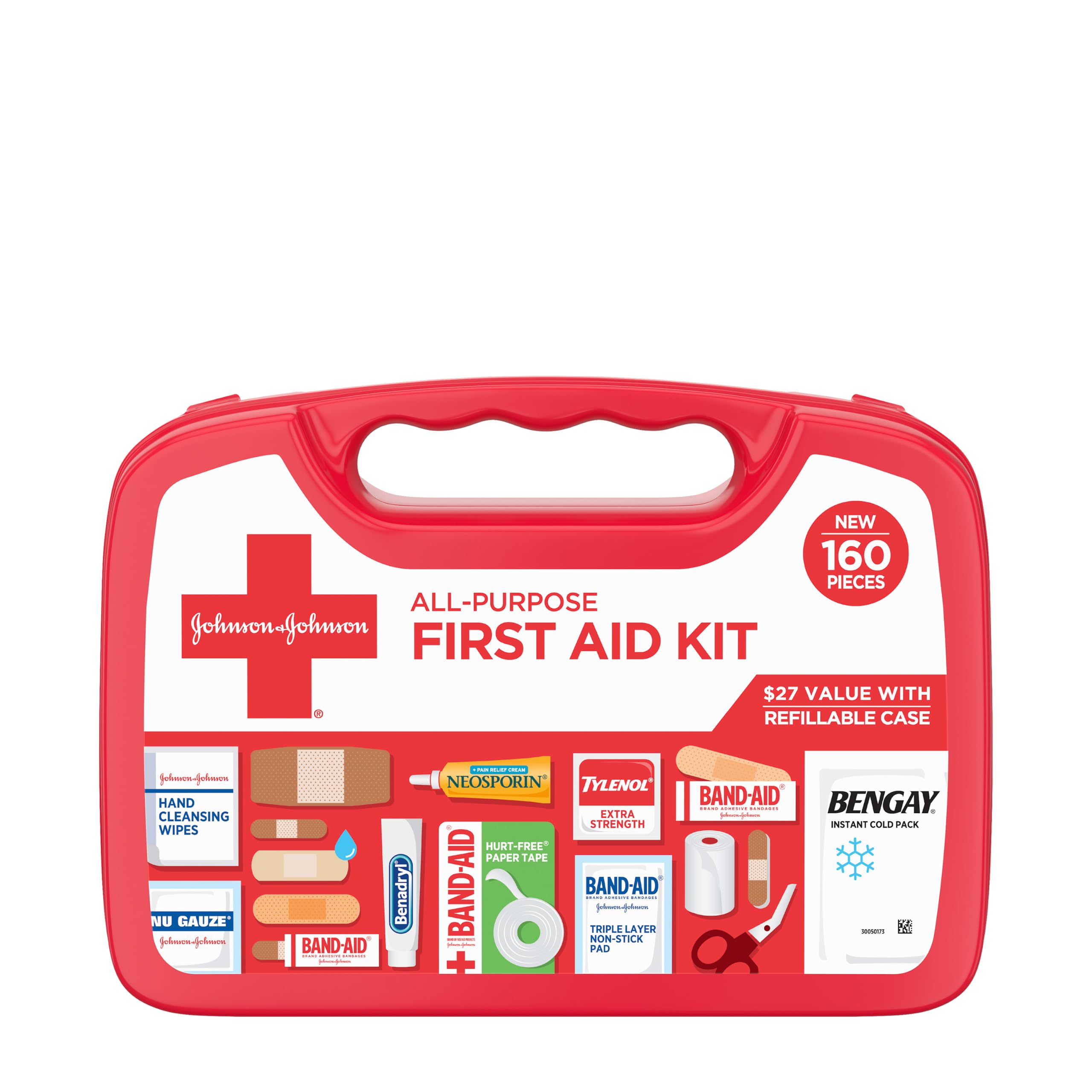
BAND-AID All-Purpose First Aid Kit, 160 Piece
The familiar red case with name-brand medicines for everyday knocks.
- Pieces: 160 pieces
- Case: Hard carry case
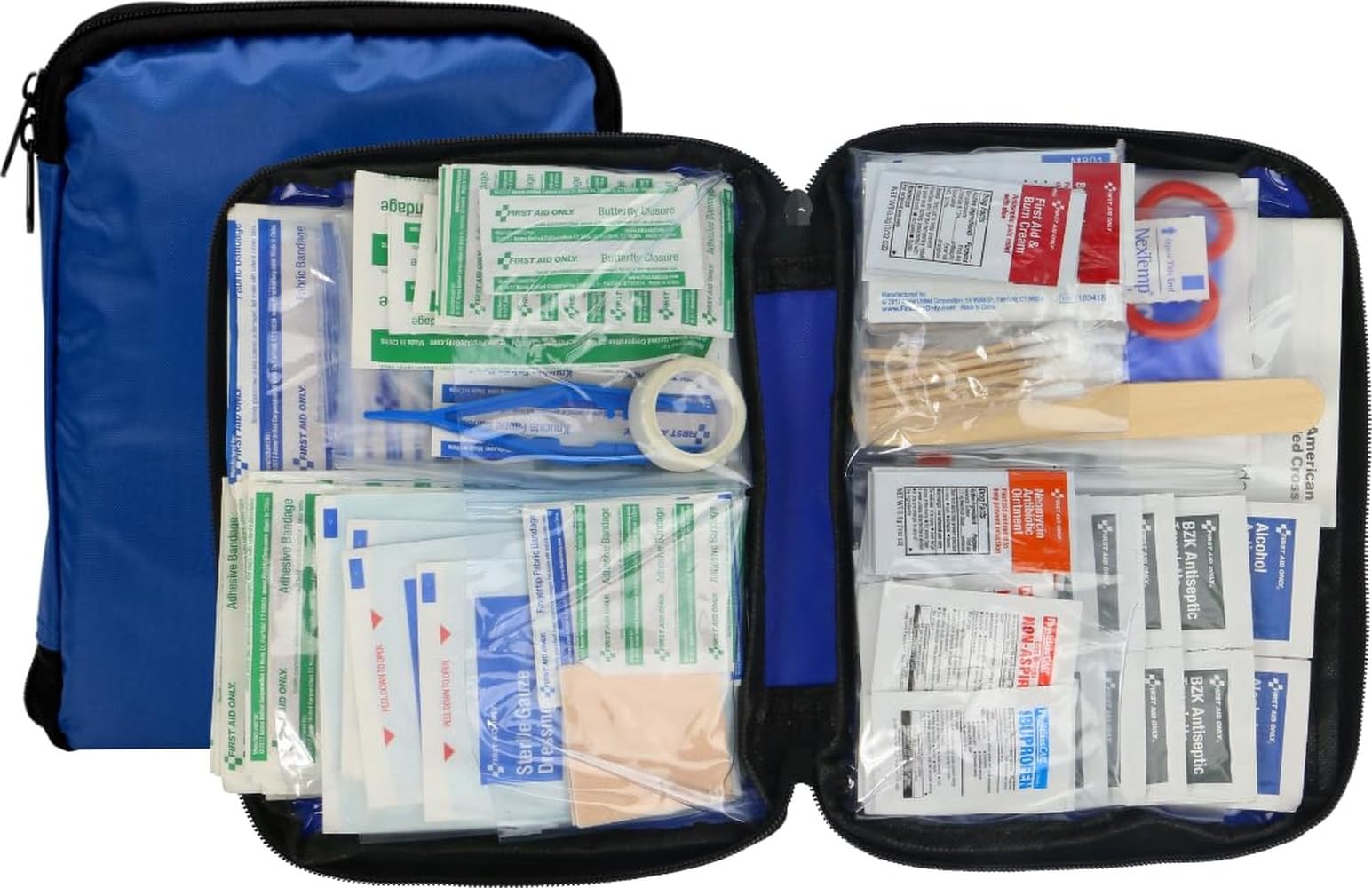
First Aid Only 299-Piece All-Purpose First Aid Kit (FAO-442)
A featherweight 299-piece pouch that goes anywhere, bandage-heavy and all.
- Pieces: 299 pieces
- Model: FAO-442, soft zip pouch

Be Smart Get Prepared 326-Piece First Aid Kit, OSHA/ANSI, 100-Person
The wall-mountable 100-person station for workplaces and big households.
- Pieces: 326 pieces
- Coverage: 100-person, OSHA/ANSI
Questions, answered
How much should I spend on a first aid kit?
Match the spend to the use. A budget kit like the FAO-442 or the Thrive 291 is right for a home, a car or a dorm, where the kit is used slowly and restocked often. A premium kit like the Surviveware 238 is right for a family that travels and camps, where organisation and trauma gear matter. A workplace station like the Be Smart 326 is right for a site that must meet a standard. The worst spend is a kit in the wrong case for where it lives.
Should I build my own first aid kit instead?
It is a reasonable option for experienced users who know exactly what they need, but a bought kit is cheaper than the sum of its parts for most people, and its case and organisation are part of the value. A practical middle ground is to buy a good kit, like the BAND-AID 160 or the Surviveware 238, and add your own medicines and the items you reach for most.
What should I add to a bought first aid kit?
Your own medicines, a pen and paper for notes, emergency contact numbers, and any personal medication the household needs. The Thrive 291 has extra space for exactly this. Do not add items you do not know how to use: a tourniquet without training is worse than no tourniquet at all.
When should I replace my first aid kit?
When the case is broken, the zips have failed, or the contents have expired and restocking costs more than replacing. Most kits are restocked rather than replaced: check twice a year, replace what is used or expired, and keep the case. A kit that is checked is a kit that works.
Every guide on First Aid Kits16 pages
- Topic hubFirst Aid Kits
- Best ofThe Best First Aid Kits (2027)
- The qualifying keyword here is best baby first aid kit, but the honest answer is that no baby kit on its own is a first aid kit. The Frida and Safety 1st kits are baby health and grooming: aspirators, thermometers, nail clippers and medicine dispensers. A new parent needs one of those plus a real wound-care kit, and this ranking says so plainly, pairing the baby kits with the family kits that complete the shelf.The Best Baby First Aid Kits (2027)
- A car kit lives in the worst place in the house: a hot boot in summer, a freezing one in winter, and a glovebox that gets opened in a hurry. This ranking weighs size and weight first, because a kit that does not fit the car is a kit left at home, and case type second, because a soft bag survives a boot better than a hard case survives a glovebox. Medicines expire faster in heat, so the ranking also says which kits need checking most often.The Best First Aid Kits for the Car (2027)
- Workplace kits are bought against a standard, not a preference. This ranking starts from the compliance claim, the Be Smart 326 exceeds OSHA and ANSI guidance for 100 people, the First Aid Only 91248 is OSHA-compliant for 50, and the Thrive 291 is ANSI and OSHA compliant per its maker, then asks whether the case, the lid and the compartments suit a fixed shelf and a busy site. A compliance claim does not make a kit a trauma kit, and this ranking says so.The Best OSHA First Aid Kits (2027)
- ReviewBAND-AID All-Purpose 160-Piece First Aid Kit Review (2027)
- ReviewFirst Aid Only 299-Piece All-Purpose Kit (FAO-442) Review (2027)
- ReviewFrida Baby Basics Kit Review (2027)
- ReviewSurviveware Large 238-Piece First Aid Kit Review (2027)
- ReviewBe Smart Get Prepared 326-Piece OSHA First Aid Kit Review (2027)
- ReviewAdventure Medical Kits Ultralight/Watertight .7 Review (2027)
- Head to headBAND-AID 160 vs Thrive 291 (2027)
- Head to headBe Smart 326 vs First Aid Only 91248 (2027)
- Fix itFirst Aid Kit Supplies Expired? Fixes (2027)
- Fix itFirst Aid Kit Missing Supplies When You Need Them? Fixes (2027)