In-depth review
First Nature 32 oz Hummingbird Feeder Review (2027)
First Nature 32 oz feeder offers ten ports and a wide-mouth base for easy nectar care. Our research-based verdict for hummingbird gardens.
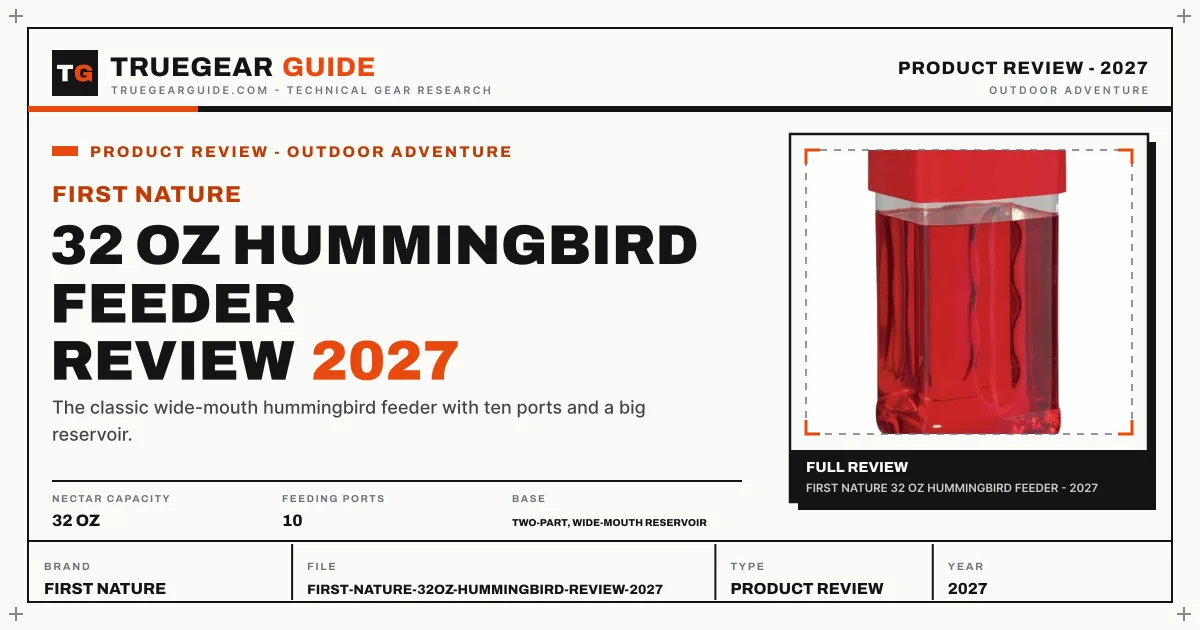

First Nature 32 oz Hummingbird Feeder
The classic wide-mouth hummingbird feeder with ten ports and a big reservoir.
Our verdict
This is the practical hummingbird feeder: large enough for migration, cheap enough to own two of, and designed around the cleaning chore that decides whether hummingbirds stay. Its only real fault is its virtue, since 32 oz of nectar spoils in heat before a quiet garden drinks it. Fill partway, clean often, and it is the nectar feeder most gardens should start with.
What we like
- 32 oz reservoir with 10 feeding ports serves several hummingbirds at once during migration peaks
- Wide-mouth reservoir and two-part base make filling and scrubbing far easier than narrow-neck bottles
- Leak-resistant sealing ring reduces drips that attract ants and bees
- Red base colour is the visual cue hummingbirds notice first in a new garden
What to watch out for
- Large nectar volume ferments fast in heat, so it needs frequent emptying and cleaning in summer
- Plastic construction is light and practical but less handsome than glass nectar feeders
- Bee and ant guards are limited, so insect visitors remain a chore in warm months
What owners report: First Nature 32 oz Hummingbird Feeder
Synthesized from recurring themes in long-term owner feedback.
Most praised
- Filling through the wide mouth is quick and spill-free compared with bottle feeders
- Ten ports mean less chasing and squabbling when several hummingbirds arrive together
- The two-part base comes apart for scrubbing without tools
Common complaints
- Nectar goes cloudy in summer heat well before a quiet garden empties the reservoir
- Ants find the hanging route in warm weather despite the sealing ring
- The plastic body looks utilitarian next to glass feeders in a styled garden
Who it is for
Hummingbird gardens from first feeder to migration-season regulars, especially owners who will clean on schedule.
Ten ports and the migration test
Ten ports matter most when hummingbirds arrive in numbers: several birds feed at once instead of one dominant bird guarding a single port while the rest wait. The red base is the visual signal that draws first visits, and the 32 oz reservoir means a migration-week garden is not refilling daily. In a quiet garden the same reservoir is a reason to fill partway, since fresh nectar beats a full feeder every time.
The base is the feature
The wide-mouth reservoir and two-part base are what owners praise most, because they turn filling and scrubbing from a fiddly chore into a quick job. Narrow-neck bottle feeders spill, trap old nectar in corners and discourage the cleaning that nectar feeding demands. This base comes apart, scrubs clean and reassembles without tools, which is why owners actually maintain it.
Heat, ants and the plastic question
Sugar water ferments fast in summer, so the cleaning interval is days, not weeks, and no feeder design changes that chemistry. Ants use the hanging route and bees investigate the ports in warm weather, so an ant moat and a shaded hang help. The plastic body is light and shatter-resistant but plain beside glass feeders; buyers choosing on looks alone should weigh that against the base design they will live with.
Key specifications
- Nectar capacity
- 32 oz
- Feeding ports
- 10
- Base
- Two-part, wide-mouth reservoir
- Mounting
- Hanging
- Model
- 993055-446
- Food
- Sugar-water nectar
Also consider

First Nature 32 oz Oriole Feeder
The orange nectar feeder built for orioles, with perches sized for bigger birds.
Why consider it: The orange sibling for oriole season, with perches sized for bigger birds
- Nectar capacity: 32 oz
- Colour: Orange base and reservoir

Nature's Hangout Window Bird Feeder
The thick acrylic window feeder that puts cardinals inches from the glass.
Why consider it: The close-viewing companion for the seed birds that share a hummingbird garden
- Material: Quarter-inch cast acrylic
- Mounting: Suction cups on glass
Research-based assessment. TrueGear has not hands-on tested this product; this evaluation synthesizes manufacturer specifications, retailer documentation, and published expert reviews.
Questions, answered
How often should I change the nectar?
Every two to three days in summer heat, and at least weekly in cool weather. Cloudy nectar, mould spots or a sour smell mean it should have been changed sooner. Clean the feeder at each refill, not just when it looks dirty.
Do I need red dye in the nectar?
No. The red base attracts hummingbirds on its own, and dye adds nothing the birds need. Plain sugar water at one part sugar to four parts water is the recipe, and any product that dyes nectar is solving a problem the feeder already solved.
Where should I hang a hummingbird feeder?
In partial shade, near flowers or shrubs where hummingbirds already forage, and where you can see it for cleaning reminders. Full sun ferments nectar fastest, and a feeder hidden behind dense cover gets fewer visits. Keep it away from windows that cause strikes, or hang it close to the glass where birds slow down.
Every guide on Bird Feeders16 pages
- Topic hubBird Feeders
- Best ofThe Best Bird Feeders (2027)
- Cardinals feed differently from finches: they prefer to sit upright on a perch or tray rather than cling to a small peg, and they eat sunflower seed they can crack while seated. This ranking weights perch geometry and tray access above capacity and squirrel mechanisms, and it is honest about the trade: the cage that stops squirrels also stops cardinals, and the open tray cardinals love is the tray squirrels love too.The Best Bird Feeders for Cardinals (2027)
- This guide uses the word resistant on purpose. Makers describe several of these feeders as squirrel-proof, but no mechanism survives bad placement, and this ranking says so for each design. The honest comparison is mechanism plus placement plus cost in batteries, tuning or bulk, and the winner depends on whether your squirrels are casual visitors or a daily siege.The Best Squirrel-Resistant Bird Feeders (2027)
- Hummingbird feeding is a cleaning discipline disguised as a purchase. Nectar ferments in heat, ports clog, and ants arrive by the hanging route, so this ranking weights base design and port count over looks. A large reservoir is a virtue only during migration peaks; in a quiet garden it is a liability that spoils before birds drink it.The Best Hummingbird Feeders (2027)
- ReviewBrome Squirrel Buster Plus Bird Feeder Review (2027)
- ReviewDroll Yankees Yankee Flipper Bird Feeder Review (2027)
- ReviewPerky-Pet Panorama 325S Bird Feeder Review (2027)
- ReviewPerky-Pet Squirrel-Be-Gone 336 Bird Feeder Review (2027)
- ReviewNature's Hangout Window Bird Feeder Review (2027)
- Head to headBrome Squirrel Buster Plus vs Droll Yankees Yankee Flipper (2027)
- Head to headNature's Hangout vs Nature Anywhere Window Feeder (2027)
- Buying guideBird Feeder Buying Guide (2027)
- Fix itSquirrels Emptying Your Bird Feeder? Fixes (2027)
- Fix itBird Feeder Seed Going Mouldy? Fixes (2027)