Head to head
GE APYR50LC 50-Pint Dehumidifier with Pump vs Honeywell TPFIT50PWK 50-Pint Dehumidifier (2027)
The two pump dehumidifiers compared: GE's APYR50LC against Honeywell's TPFIT50PWK, on pump, capacity, modes and availability.
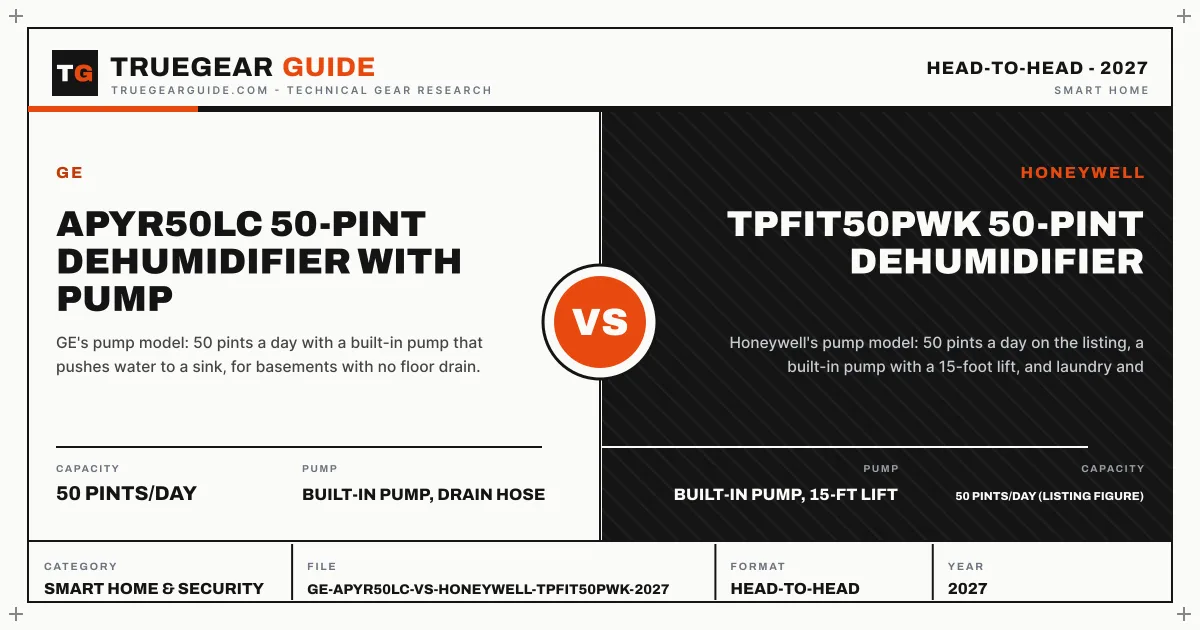
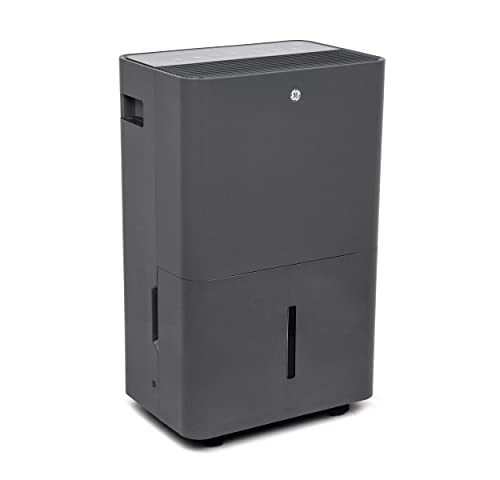
GE APYR50LC 50-Pint Dehumidifier with Pump
GE's pump model: 50 pints a day with a built-in pump that pushes water to a sink, for basements with no floor drain.
- Capacity: 50 pints/day
- Pump: Built-in pump, drain hose
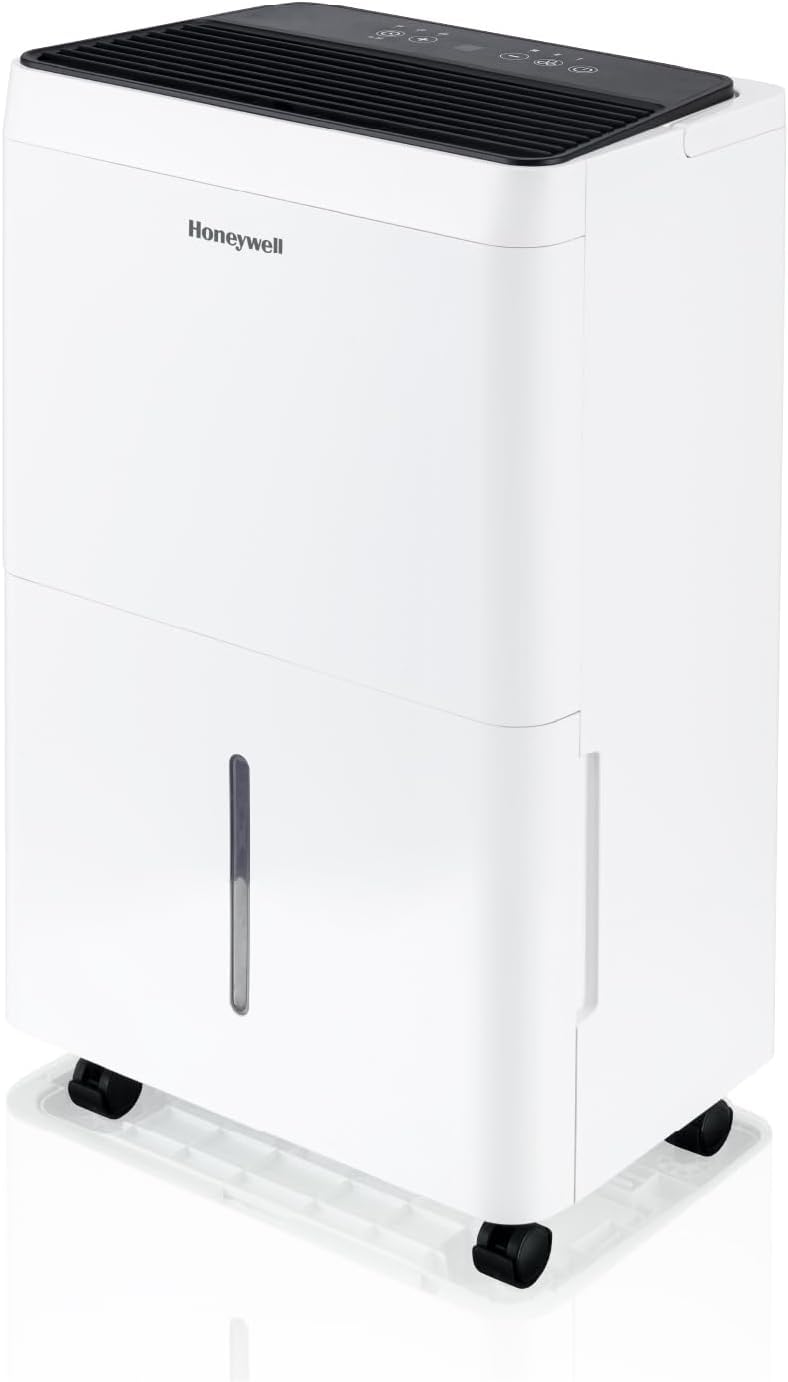
Honeywell TPFIT50PWK 50-Pint Dehumidifier
Honeywell's pump model: 50 pints a day on the listing, a built-in pump with a 15-foot lift, and laundry and auto-comfort modes.
- Capacity: 50 pints/day (listing figure)
- Pump: Built-in pump, 15-ft lift
What owners report
Most praised
- The pump is the reason owners buy it: no bucket, no carrying, just a hose to the sink
- Smart Dry mode earns praise because the unit idles down once the room reaches the set humidity
- The capacity matches the big flagships, so owners get pump convenience without giving up drying power
Common complaints
- Owners who found the listing late discovered the model was discontinued and the stock was limited
- The pump is audible when it runs, and owners in quiet houses notice the cycling
- The noise on the higher fan speeds is too much for a bedroom, and the unit belongs in a basement
What owners report
Most praised
- Laundry mode is the feature owners did not expect to love, because it dries a load overnight in a damp room
- The pump works as promised, and owners with no floor drain call it the only reason the unit was usable
- Auto-comfort mode holds the room steady without constant fiddling, and owners set it once and forget it
Common complaints
- Owners who compared the listing figure with the DOE-2019 figure felt the capacity was overstated
- The second listing for the same model caused confusion, and buyers were unsure which ASIN was the real one
- The unit is heavy at 40.5 lb, and moving it up a flight of stairs is a two-person job
Our recommendation
Choose by availability and by the room, not by the pump alone. The Honeywell TPFIT50PWK is the safer long-term buy: a current model with a two-year warranty, laundry mode and a 15-foot pump lift, built for a laundry room. The GE APYR50LC is the better deal while its clearance stock lasts: the same 50-pint capacity with Smart Dry mode, at a premium tier that may be discounted as the stock clears. If the laundry room is the job, take the Honeywell. If the basement needs a pump now and the price is right, take the GE. If both are available at the same price, the Honeywell wins on warranty and currency.
Pump: lift figures and what they mean
The Honeywell's pump lift is published at 15 feet, which covers a sink or a drain above the unit in most basements. The GE's pump lift figures conflict across guides, with one putting it at 16 feet and another at 15, so no single figure is quoted as fact. In practice both pumps lift water to a sink, and the difference is not the lift, it is the certainty: the Honeywell's figure is settled, and the GE's is not. For a basement with an unusually high drain, measure the lift before you buy either one.
Capacity: 50 pints against about 32
The GE claims 50 pints a day and the figure stands, because no DOE-2019 figure was published for it in the sources checked. The Honeywell claims 50 pints on the listing, but guides put the model family at about 32 pints a day under DOE-2019. That gap matters: the GE is the stronger dryer on paper, and the Honeywell is the weaker one, even though the two listings look identical on capacity. Buyers who need maximum drying power should take the GE. Buyers who need laundry mode and a current model should take the Honeywell and accept the lower DOE figure.
Modes: Smart Dry against laundry mode
The GE has Smart Dry mode, which adjusts the fan and the compressor to the room and idles down once the humidity target is reached. The Honeywell has laundry mode, which runs hard to dry clothes faster, and auto-comfort mode, which holds the room at a comfortable humidity on its own. Smart Dry is the better mode for a basement that just needs to stay dry. Laundry mode is the better mode for a room that doubles as a laundry. The modes decide the room, not the quality.
Availability and warranty
The GE is listed as discontinued by the manufacturer, so its listing is clearance or remaining stock, with a one-year warranty. The Honeywell is a current model with a two-year warranty, the longest among the pump models here. For a buyer who wants a pump now and a good price, the GE is the deal. For a buyer who wants a pump for years, with a warranty behind it, the Honeywell is the buy. The difference is not the pump, it is the future.
Choose GE APYR50LC 50-Pint Dehumidifier with Pump if…
- You want the strongest drying power on paper at 50 pints a day
- Smart Dry mode suits a basement that just needs to stay dry
- The clearance price makes it the better deal right now
- You need a pump today and the stock is available
Choose Honeywell TPFIT50PWK 50-Pint Dehumidifier if…
- You want a current model with a two-year warranty
- Laundry mode for drying clothes matters to you
- A published 15-foot pump lift matters to you
- Auto-comfort mode for holding the room steady matters to you
Questions, answered
Which pump dehumidifier is better?
The Honeywell, for most buyers, because it is a current model with a two-year warranty, laundry mode and a published 15-foot pump lift. The GE is the better deal while its clearance stock lasts, because it gives the same 50-pint capacity with Smart Dry mode. If both are available at the same price, take the Honeywell.
Do these pumps really lift water 15 feet?
The Honeywell's 15-foot lift is published on its listing, and it covers a sink or a drain above the unit in most basements. The GE's lift figures conflict across guides, so no single figure is quoted as fact. For an unusually high drain, measure the lift before you buy either one.
Can I use a pump dehumidifier in a laundry room?
Yes, and the Honeywell is built for it: laundry mode dries clothes faster, and the pump pushes the water to a sink. The GE works in a laundry room too, but it has no laundry mode, so it dries the room rather than the clothes. For a room that doubles as a laundry, the Honeywell is the better tool.
Every guide on Dehumidifiers15 pages
- Topic hubDehumidifiers
- Best ofThe Best Dehumidifiers (2027)
- A basement is the hardest room a dehumidifier can face: damp air, cool walls, no sunlight and often no floor drain. This ranking weights capacity and drainage above everything else, because a 35-pint unit in a wet basement is outmatched within a week, and a bucket unit in a basement without a drain is a chore nobody keeps up. It also weights low-temperature running, because a basement that drops below 41 degrees will ice up a unit without auto defrost. Noise barely matters here, because nobody sleeps in a basement, and size does not matter either, because there is floor space to spare.The Best Dehumidifiers for Basements (2027)
- A bedroom is the opposite of a basement: the unit must be quiet, small and dark. This ranking weights noise and size above capacity, because a 50-pint unit in a bedroom is oversized, loud and wasteful, and a bright display is a night light nobody asked for. It rewards units that run quietly on low overnight and hold a steady humidity without cycling loudly. Capacity is judged by the room, not by the basement: 22 to 35 pints a day is the right size for a bedroom, and anything bigger is the wrong tool for the job.The Best Dehumidifiers for Bedrooms (2027)
- Budget here means value per pint of water removed, not the cheapest box in the drawer. A unit that costs very little and ices up in a cool room is not a bargain. This ranking weights honest capacity under the current test standard, a washable filter and a drain hose above everything else, and it rewards units that run efficiently, because the power bill is the real price of a dehumidifier. The two premium entries appear because they are the cheapest way onto a pump or a connected unit for buyers who need one, not because a first-time buyer should stretch for features they will never use.The Best Budget Dehumidifiers (2027)
- ReviewMidea MAD50C1ZWS 50-Pint Dehumidifier Review (2027)
- ReviewhOmeLabs HME020031N 50-Pint Dehumidifier Review (2027)
- ReviewFrigidaire FFAD2233W1 22-Pint Dehumidifier Review (2027)
- ReviewGE APYR50LC 50-Pint Dehumidifier with Pump Review (2027)
- ReviewHoneywell TPFIT50PWK 50-Pint Dehumidifier Review (2027)
- ReviewFrigidaire FFAD3533W1 35-Pint Dehumidifier Review (2027)
- Head to headMidea MAD50C1ZWS 50-Pint Dehumidifier vs hOmeLabs HME020031N 50-Pint Dehumidifier (2027)
- Buying guideDehumidifier Buying Guide (2027)
- Fix itDehumidifier Not Collecting Water? Fixes (2027)