Buying guide
Pet Door Buying Guide (2027)
How to buy a pet door in 2027: measuring your pet, flap seals, mounting types, microchip and electronic entry, and installation explained.
Measure the pet, not the breed
Start with a tape measure, not a breed chart. Measure the widest part of your pet, usually the shoulders, and the height at the shoulder, then add at least an inch of clearance on each side and above. Check the step-over height too: the bottom of the flap should sit low enough for an older or arthritic pet to step through without jumping. Weight ratings are the maker's ceiling, not a target, and a dog at the top of a size range with a wide chest needs the next size up. A flap that is too small gets ignored, chewed or shouldered through; a flap far too large leaks air and invites animals you did not invite. When two sizes both fit, size up.
Flap seals: single, double and triple
The flap is the insulation. A single flexible flap is a curtain: cheap, light to push, and leaky in wind and cold. Double flaps trap an air pocket between them and close on magnets, which is a large step up in draught control. Triple flaps add a third layer and more trapped air, at the cost of a stiffer push. The frame matters as much as the flap: aluminum and structural foam hold their shape and their seal through seasons, while thin plastic bows in summer heat and gaps at the edges. A slide-in closing panel is the final seal for nights and storms, and any door that offers one should have it kept by the door, not in a cupboard.
Mounting types: door, wall, glass and patio panel
Door-mount flaps suit most houses: cut a hole in an exterior door, fit the frame, done. Wall entries suit the room with no exterior door, but cutting through a wall is a serious job that may need a professional, and the cavity can hide wiring and pipes. Glass mounting suits modern homes and cats, but needs the right adapter and a clean cut. Patio panels suit sliding glass doors and renters because nothing is cut and nothing is permanent, at the cost of a narrower walk-through and a single-flap seal. Choose the mounting type your house allows first, then the best door in that type, not the other way round.
Selective entry: microchip, collar key and motorised
A plain flap opens for anything that pushes it, including strays, raccoons and the wind. Microchip doors read the pet's implanted chip and unlock only for programmed animals, which solves the intruder problem completely for cats and small dogs. Collar-key doors read a tag on the collar, which suits pets that are not chipped but must wear the tag at all times. Motorised doors add a steel deadbolt and a panel that rises on approach, which is the most secure option and the most expensive, needing mains power at the door. All three need batteries or power, and a dead battery locks the pet out, so plan for that failure mode before you buy.
Installation and training
Most door-mount flaps are an afternoon job: mark the template, cut the hole, fit the frame, seal the edges. Wall entries and glass mounts are harder and often worth a professional. Patio panels take minutes. Training matters as much as fitting: prop the flap open for the first day so the pet learns the route, then let one flap fall at a time, with food on the far side. Timid, older and arthritic pets need a lighter flap and more patience, and a stiff triple flap is the wrong first door for a nervous animal. Measure twice, cut once, and train slowly, and the door will be used for years.
Start with our top 3
The three highest-ranked products in our full pet doors ranking. Read the in-depth review where one exists, or jump to the product in the ranked list.
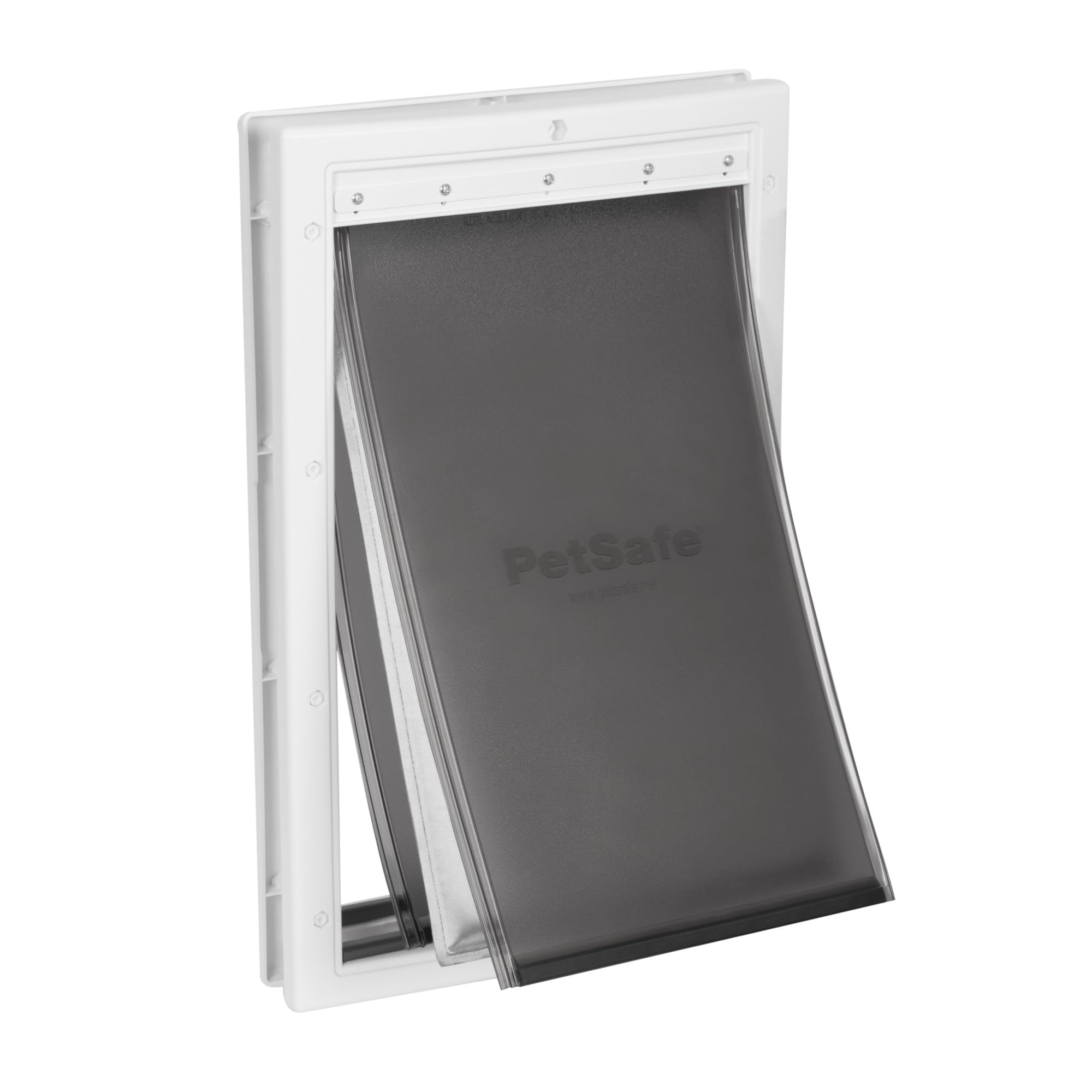
PetSafe Extreme Weather Pet Door, Large
Three flaps against winter, one door for big dogs.
- Flap system: 3-flap insulated system
- Pet size: Up to 100 lb

Endura Flap Double Flap Pet Door for Doors, Large, White
The cold-climate double flap, built like a window.
- Flap system: Double flap, magnetic seal
- Flap opening: 10 x 18 in, Large
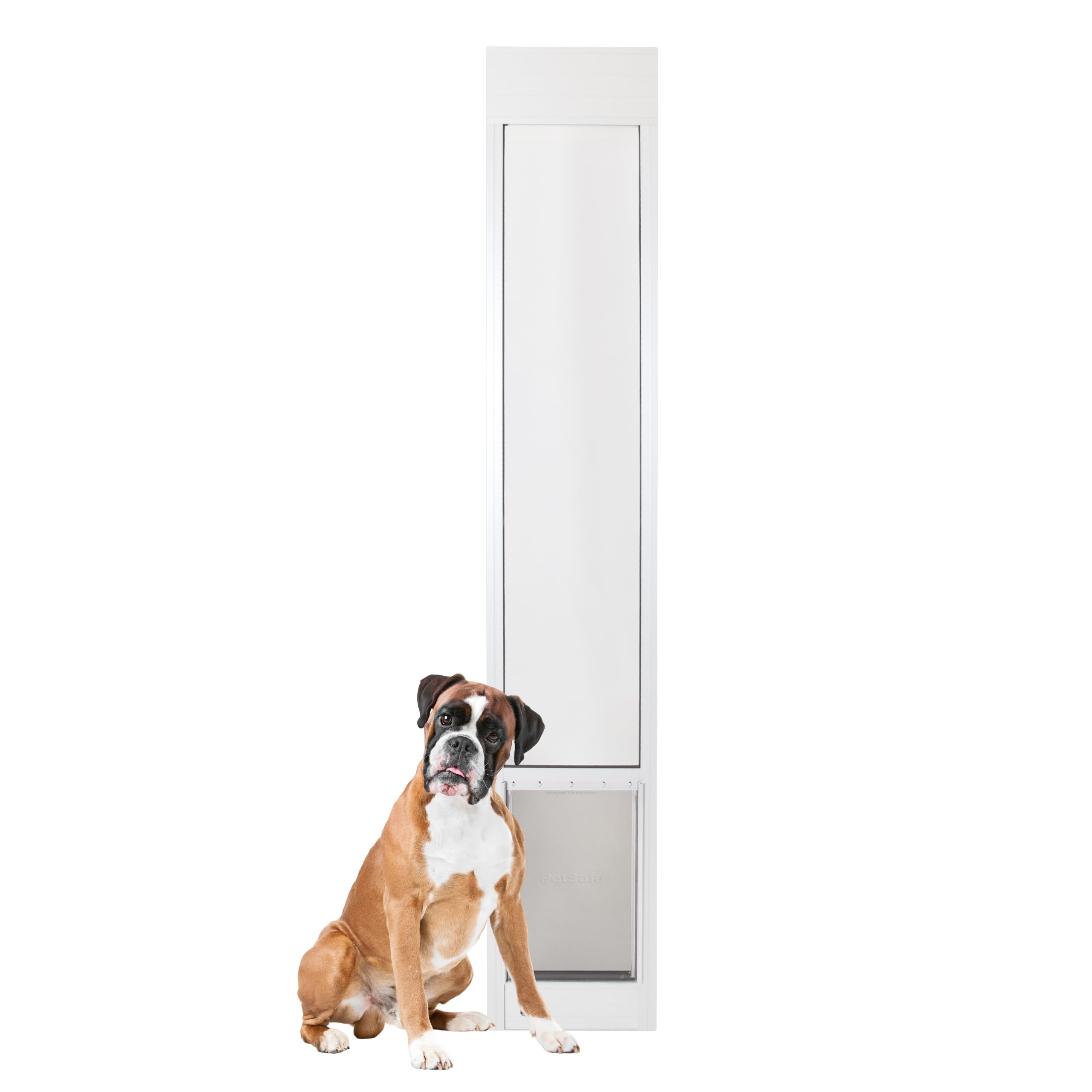
PetSafe Freedom Patio Panel, Large, White, 81 in
No-cut freedom for renters with sliding doors.
- Panel type: 1-piece sliding glass panel
- Pet size: Up to 100 lb
Questions, answered
What is the best pet door for a large dog?
For most large dogs, the PetSafe Extreme Weather in Large, with its triple-flap insulation and 100 lb rating, is the best first buy. Owners in harsh winters should step up to the Endura Flap double flap in aluminum. Giant breeds need the Super Large class, such as the Ideal Ruff-Weather with its 15 x 23.5 in opening. Renters and sliding-door homes should buy a patio panel instead.
Can I fit a pet door in a rented home?
Yes, with a patio panel for a sliding glass door, which drops into the track with no cutting and comes out cleanly when you move. For a solid door in a rental, ask the landlord first, because cutting a door is a permanent change. A panel is the only honest no-permission answer, and it is why renters recommend panels to each other.
How do I stop other animals using the pet door?
Buy selective entry. A microchip door reads your pet's own chip and unlocks only for programmed animals. A collar-key door reads a tag on the collar. A motorised door adds a deadbolt. A plain flap, however well sealed, opens for anything that pushes it, and a closing panel only helps when someone remembers to slide it in.
Do pet doors work for cats and dogs in the same house?
Yes, with a size compromise. A dog-sized flap suits the dog and the cat will use it happily, though the intruder problem grows because any cat can enter. A microchip door sized for the cat keeps other cats out but excludes the dog entirely. Most mixed households fit a dog-sized flap for the dog and accept the intruder trade-off, or fit two doors: a microchip flap for the cat and a large flap for the dog.
Every guide on Pet Doors15 pages
- Topic hubPet Doors
- Best ofThe Best Pet Doors (2027)
- This ranking is built on one measurement that matters in winter: how much cold air the door lets through when the pet is not using it. Single flaps are included only at the bottom, as the cheap option with its weakness stated plainly. The ranking separates on flap count, magnetic sealing, frame material and the presence of a closing panel, because those four things decide whether the back door feels like a wall or a vent in January.The Best Pet Doors for Cold Climates (2027)
- This ranking is built for one constraint: the door is glass and sliding, and nothing may be cut. The two patio panels lead because they are the only no-cut answers, ranked on flap size and height range. The rest of the ranking covers the door-mount and wall alternatives for homes where a second, cuttable door exists, because many sliding-door owners also have a back door they could use instead, and the honest comparison is worth having.The Best Pet Doors for Sliding Glass Doors (2027)
- This ranking is built for cats, which changes the priorities completely. Selective entry matters more than size, because the intruder problem for cats is other cats, and a light flap matters more than insulation, because a timid cat will simply not push a stiff triple flap. The ranking separates on chip reading, timer control, flap weight and opening size, and the big-dog doors are included only where a cat household might actually use them.The Best Pet Doors for Cats (2027)
- ReviewPetSafe Extreme Weather Pet Door, Large Review (2027)
- ReviewEndura Flap Double Flap Pet Door for Doors, Large, White Review (2027)
- ReviewPetSafe Freedom Patio Panel, Large, White, 81 in Review (2027)
- ReviewIdeal Pet Products Designer Series Ruff-Weather Pet Door, Super Large Review (2027)
- ReviewSureFlap Microchip Pet Door, White Review (2027)
- ReviewHigh Tech Pet Power Pet Electronic Pet Door PX-2, Door Mount Review (2027)
- Head to headPetSafe Extreme Weather Pet Door, Large vs Endura Flap Double Flap Pet Door for Doors, Large, White (2027)
- Head to headSureFlap Microchip Pet Door, White vs Cat Mate Elite Microchip Cat Flap with Timer, 355W (2027)
- Fix itPet Door Flap Not Sealing? Fixes (2027)