In-depth review
SureFlap Microchip Pet Door, White Review (2027)
The SureFlap Microchip Pet Door reads your pet's own chip and locks out every other animal. Our research-based verdict on the intruder-proof cat door.
Our verdict
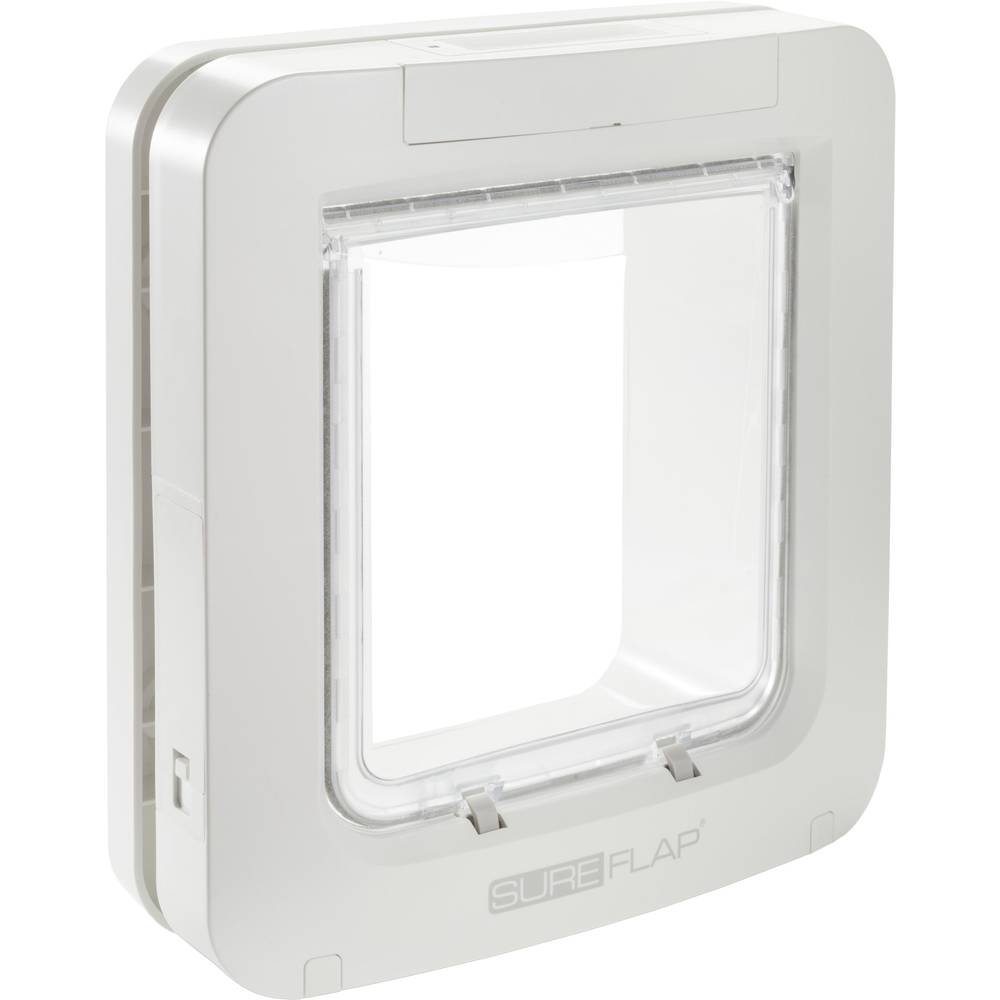
The SureFlap Microchip Pet Door solves a problem that no flap, however well sealed, can solve: the wrong animal coming in. It reads the pet's implanted microchip and unlocks only for up to 32 programmed animals, mounts in a door, wall or glass, and runs on batteries with no cable to the door. The flap is cat-sized, so medium and large dogs are excluded entirely, and the batteries are a running cost that can lock the cat out if forgotten. For a cat household with an intruder problem, it is the door that ends the problem on day one.
What we like
- Reads the pet's implanted microchip and unlocks only for programmed animals, so strays and raccoons stay out
- Mounts in a door, a wall or glass, which covers more homes than a door-only flap
- Learns up to 32 pet identities, enough for a multi-cat household and then some
- Battery powered with a low-battery indicator, so there is no cable to run to the door
What to watch out for
- The flap is cat-sized, so medium and large dogs cannot use it at all
- Four C batteries are a running cost and a dead battery locks the door until replaced
- Programming a nervous cat through the learning mode takes patience on day one
What owners report: SureFlap Microchip Pet Door, White
Synthesized from recurring themes in long-term owner feedback.
Most praised
- The neighbour's cat stopped walking in within a day of fitting it
- The cat learned the click of the latch quickly and now waits for it
- It fits a glass panel cleanly, which most selective-entry doors do not
Common complaints
- A flat battery at the wrong hour leaves the cat staring at a locked flap
- Timid cats take days to trust the latch sound and the heavier flap
- The opening is too small for the household dog, who watches the cat come and go
Who it is for
Cat and small-dog owners whose home is visited by strays, raccoons or the neighbour's cat.
The chip reader is the product
Everything else on this door is ordinary: a white plastic frame, a flap, a battery box. The reader is the product, and it works by scanning for the implanted microchip every pet already carries, then releasing the latch only for a programmed identity. Strays, raccoons and the neighbour's cat simply cannot open it, because their chips are not on the list. That is a different kind of security from a stronger flap, and for households that have found a stranger cat eating from the bowl, it is the only kind that matters.
Mounting in glass, wall or door
Most selective-entry doors are door-only, which limits them to houses with a suitable door. The SureFlap mounts in a door, a wall or a glass panel, which is why it appears in so many flats and modern homes with large glass doors. The glass install needs the right adapter and a clean cut, so it is a job to plan, but the option existing at all is what puts this door in homes the others cannot reach.
Batteries and the timid cat
Four C batteries power the reader, and a dead battery locks the door, which is the failure mode owners must plan for: check the low-battery indicator on a schedule, not when the cat is already locked out. Timid cats also need patience, because the latch click and the heavier flap startle them on day one. Prop the flap open for the first day, let the cat learn the route, and the click becomes a dinner bell within a week.
Key specifications
- Entry control
- Implanted microchip reader
- Pet identities
- Up to 32 programmed pets
- Model
- 185922, white
- Mount
- Door, wall or glass
- Power
- Battery powered, 4 C batteries
Also consider
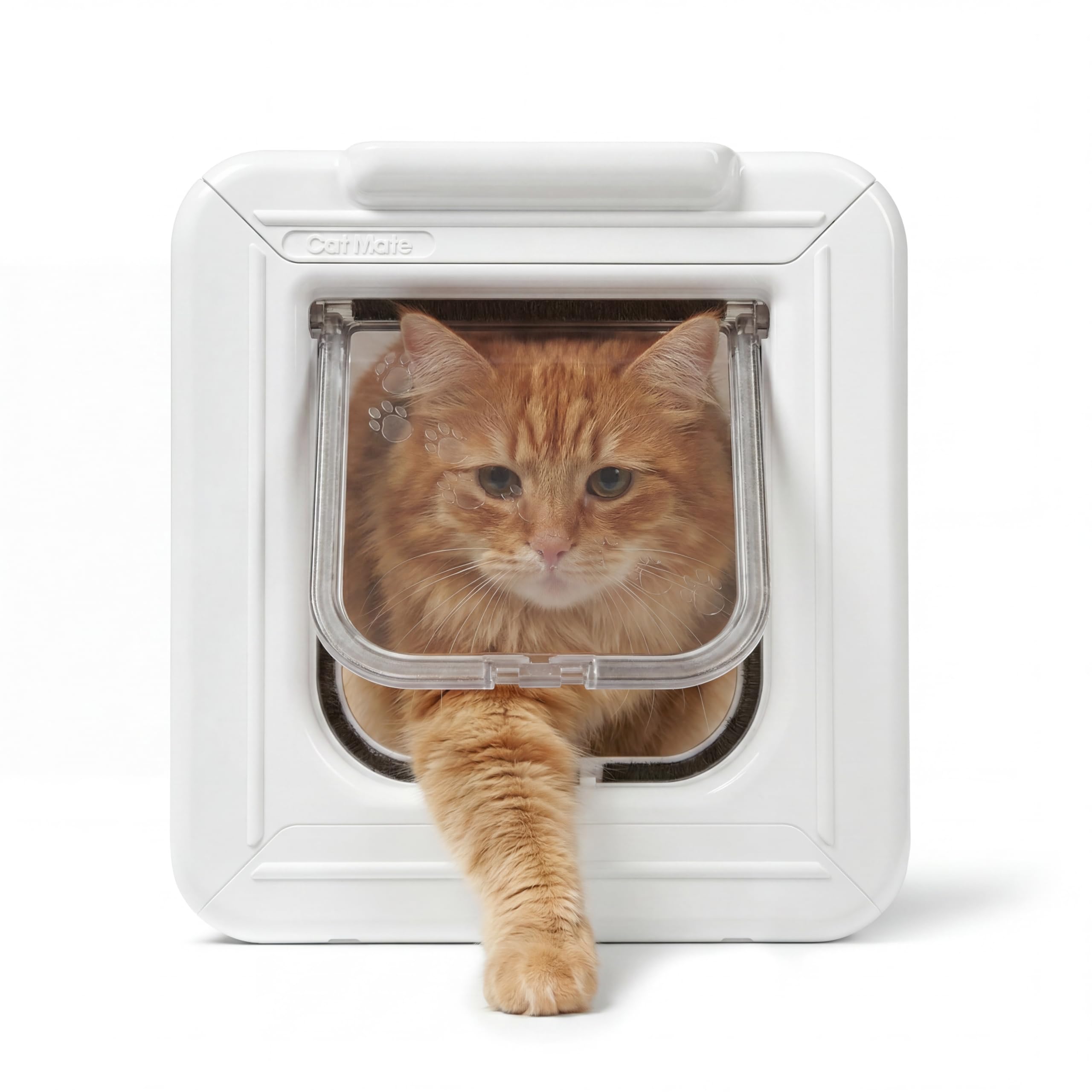
Cat Mate Elite Microchip Cat Flap with Timer, 355W
A curfew timer for cats, no app needed.
Why consider it: The timer alternative: microchip entry plus a built-in curfew, with an I.D. disc for unchipped cats
- Chip reading: 15-digit microchip or I.D. disc
- Cats stored: Up to 9 cats

SureFlap Microchip Pet Door Connect, No Hub
Microchip security with app control when you add the hub.
Why consider it: The connected version: same chip reading, plus app control and an entry log once the hub is added
- Flap opening: 6 3/4 x 7 in
- Entry control: Implanted microchip reader
Research-based assessment. TrueGear has not hands-on tested this product; this evaluation synthesizes manufacturer specifications, retailer documentation, and published expert reviews.
Questions, answered
Does my cat need a microchip for this door?
Yes, an implanted microchip is how the door recognises your cat. Most pet cats already have one from the vet or shelter. If yours does not, a vet can implant one cheaply, or choose the Cat Mate Elite, which also reads a collar I.D. disc for unchipped cats.
How many cats can it remember?
Up to 32 pet identities, which covers any realistic household and then some. Each cat is programmed by letting it pass through once in learning mode, which takes a few minutes per cat and is the whole setup.
What happens when the batteries die?
The door stays locked, which keeps intruders out but also keeps your cat out. The low-battery indicator warns in advance, so check it on a schedule and keep spare C batteries by the door. Some owners keep a spare battery set taped inside a nearby cupboard for exactly this reason.
Every guide on Pet Doors15 pages
- Topic hubPet Doors
- Best ofThe Best Pet Doors (2027)
- This ranking is built on one measurement that matters in winter: how much cold air the door lets through when the pet is not using it. Single flaps are included only at the bottom, as the cheap option with its weakness stated plainly. The ranking separates on flap count, magnetic sealing, frame material and the presence of a closing panel, because those four things decide whether the back door feels like a wall or a vent in January.The Best Pet Doors for Cold Climates (2027)
- This ranking is built for one constraint: the door is glass and sliding, and nothing may be cut. The two patio panels lead because they are the only no-cut answers, ranked on flap size and height range. The rest of the ranking covers the door-mount and wall alternatives for homes where a second, cuttable door exists, because many sliding-door owners also have a back door they could use instead, and the honest comparison is worth having.The Best Pet Doors for Sliding Glass Doors (2027)
- This ranking is built for cats, which changes the priorities completely. Selective entry matters more than size, because the intruder problem for cats is other cats, and a light flap matters more than insulation, because a timid cat will simply not push a stiff triple flap. The ranking separates on chip reading, timer control, flap weight and opening size, and the big-dog doors are included only where a cat household might actually use them.The Best Pet Doors for Cats (2027)
- ReviewPetSafe Extreme Weather Pet Door, Large Review (2027)
- ReviewEndura Flap Double Flap Pet Door for Doors, Large, White Review (2027)
- ReviewPetSafe Freedom Patio Panel, Large, White, 81 in Review (2027)
- ReviewIdeal Pet Products Designer Series Ruff-Weather Pet Door, Super Large Review (2027)
- ReviewHigh Tech Pet Power Pet Electronic Pet Door PX-2, Door Mount Review (2027)
- Head to headPetSafe Extreme Weather Pet Door, Large vs Endura Flap Double Flap Pet Door for Doors, Large, White (2027)
- Head to headSureFlap Microchip Pet Door, White vs Cat Mate Elite Microchip Cat Flap with Timer, 355W (2027)
- Buying guidePet Door Buying Guide (2027)
- Fix itPet Door Flap Not Sealing? Fixes (2027)