Head to head
Sharp Big Bang vs Acedeck 115dB (2027)
The two loudest sound-only alarm clocks compared: the Sharp Big Bang against the Acedeck 115dB on volume, sounds, display and price, for 2027 heavy sleepers.
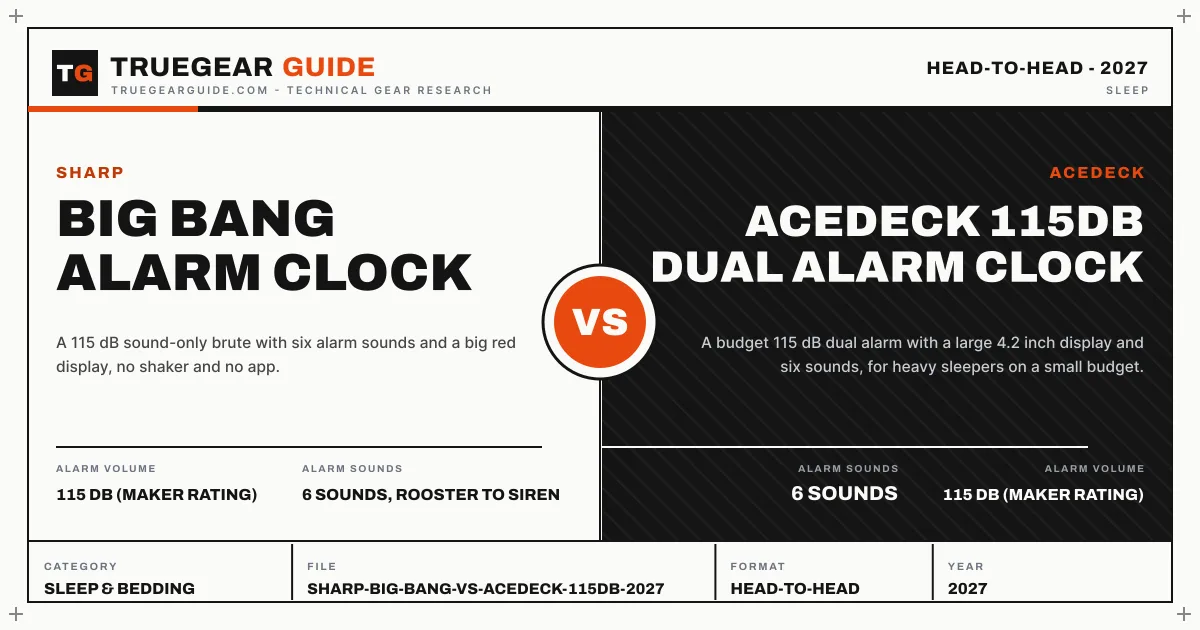
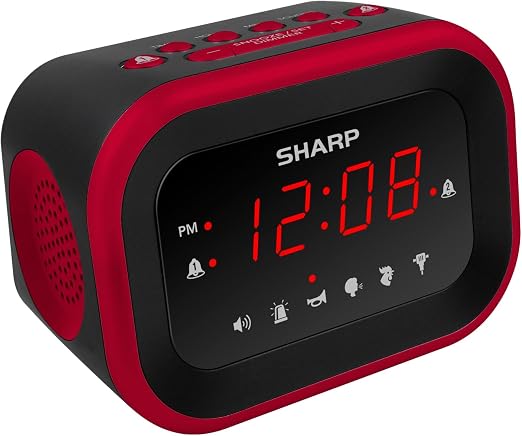
A 115 dB sound-only brute with six alarm sounds and a big red display, no shaker and no app.
- Alarm volume: 115 dB (maker rating)
- Alarm sounds: 6 sounds, rooster to siren

Acedeck Acedeck 115dB Dual Alarm Clock
A budget 115 dB dual alarm with a large 4.2 inch display and six sounds, for heavy sleepers on a small budget.
- Alarm volume: 115 dB (maker rating)
- Alarm sounds: 6 sounds
What owners report
Most praised
- Owners who slept through gentler clocks say the volume finally breaks through, especially on the harsher sounds
- The six sounds let households pick a tone that wakes the sleeper without sounding like a fire alarm
- The big red display is easy to read from bed without glasses, even with the brightness turned down
Common complaints
- Owners in shared rooms say the alarm wakes everyone in the house, not just the intended sleeper
- The sound options are a love-or-hate set, and a few owners find every option irritating
- Some owners report the alarm sounding quieter than the headline figure once the clock sits across a large room
What owners report
Most praised
- Owners say the volume is startling for the price and finally cuts through deep sleep
- The large digits get praise from owners who read the time without glasses in the dark
- Dual alarms let couples set different wake times without buying a second clock
Common complaints
- Owners say the brightest display setting lights the bedroom and needs dimming every night
- The buttons feel light and cheap compared with the sound the clock makes
- Some owners report the alarm tone is harsh enough that they dread it rather than wake gently to it
Our recommendation
Both clocks carry a maker rating of 115 dB, so the decision is not about volume. The Sharp Big Bang is the more considered clock: six distinct sounds including a rooster, a bugle and a nagging voice, a large red LED display and a known brand with a long history in alarm clocks. The Acedeck is the budget version: the same headline volume, six sounds and dual alarms, with a bigger 4.2 inch display, at a lower price and with plainer build and buttons. Buy the Sharp for the sound choices and the display; buy the Acedeck when the budget is the deciding factor and the volume is all that matters.
Volume: a tie on paper
Both carry a maker rating of 115 dB, and both are sound-only clocks with no vibration channel. Maker ratings are not lab measurements, so the tie on paper does not guarantee equal loudness in a bedroom, but owners of both report alarms that are startling at full volume. Neither clock will help a sleeper who cannot hear, and neither will help a snooze-hitter who silences the alarm in their sleep.
Alarm sounds
The Sharp offers six named sounds: a rooster, a bugle, a nagging voice, a jackhammer, a siren and a plain beep. The Acedeck offers six sounds as well, but without the same characterful set. The Sharp's range matters because the brain learns a repeated tone and starts filtering it; switching sounds is the cheapest defence against habituation. Owners report the Sharp's harsher sounds working longest before familiarity sets in.
Display and build
The Acedeck has the bigger display at 4.2 inches, against the Sharp's large red LED digits. Both are readable across a dark bedroom. The Sharp feels like the more finished product, with a cleaner case and better-placed buttons, while the Acedeck's build and buttons feel plain next to it. At a budget price that is the expected trade, and it shows in the hand rather than in the sound.
Price and availability
The Acedeck is the cheaper clock by a clear margin, which is its whole argument. The Sharp carries a brand premium and a stock caveat: its listing showed no featured offers on the last crawl, so availability should be checked before ordering. The Acedeck is the safer buy when the budget is fixed and the clock is needed now; the Sharp is the better clock when the sound choices and the display justify the extra cost.
Choose Sharp Big Bang Alarm Clock if…
- You want six distinct alarm sounds to rotate against habituation
- A large red LED display that reads across a dark room matters to you
- Build quality and button feel are worth a premium to you
- You trust the Sharp name in alarm clocks
Choose Acedeck Acedeck 115dB Dual Alarm Clock if…
- The budget is the deciding factor and the volume is all that matters
- A bigger 4.2 inch display is more useful to you than sound variety
- You need the clock now and want the simpler, cheaper purchase
- You accept plainer build and buttons in exchange for the lower price
Questions, answered
Are they really equally loud?
On paper, yes: both carry a maker rating of 115 dB. In practice the figures are not comparable across brands, because makers measure at different distances with different tones. Owners of both report alarms that are startling at full volume, and neither clock has a meaningful loudness advantage in a real bedroom. Buy on sounds, display and price, not on the decibel tie.
Which one is better for a heavy sleeper?
Neither, if the sleeper has already slept through loud alarms. Both are sound-only clocks, and a sleeper who can sleep through 115 dB needs a second channel, not a different 115 dB clock. The honest upgrade is a bed shaker: the Sonic Bomb Dual or the USCCE UE-188. Between these two, the Sharp's sound variety gives it a small edge against habituation over months of use.
Do either of them have a snooze button?
Both have a snooze function with dual alarms. The Sharp and the Acedeck both let the sleeper delay the alarm, which is the standard behaviour and also the standard failure mode for snooze-hitters. For sleepers whose real problem is snoozing, CLOCKY is the answer, because it rolls away and makes the sleeper stand up to silence it.
Every guide on Alarm Clocks16 pages
- Topic hubAlarm Clocks
- Best ofThe Best Alarm Clocks (2027)
- This ranking starts from the admission that volume alone fails most heavy sleepers. The clocks that earn the top spots add a second wake-up channel: vibration under the pillow, flashing lights, or a clock that rolls away and forces the sleeper upright. Sound-only clocks are included only at the loudest end of the scale, and the note says plainly that they are a weaker answer for the sleepers this guide is for.The Best Alarm Clocks for Heavy Sleepers (2027)
- This guide covers only the clocks with a genuine vibration channel, which is four products out of the twelve in the main ranking. The comparison is between two kinds of shaker: the bedside clocks with a wired puck, the Sonic Bomb Dual and the USCCE UE-188, and the app-paired pebbles, the iLuv SmartShaker 3 and the Bellman Vibio. The wired pucks are stronger and simpler; the pebbles are quieter, more portable and far richer in alarms.The Best Bed-Shaker Alarm Clocks (2027)
- A dorm clock has different priorities from a bedroom clock. The nightstand is tiny, the room is shared, and a 115 dB alarm at 7 a.m. is a roommate problem, not a personal one. This ranking weights compact size, a dimmer that keeps the room dark, a USB port for phone charging, and vibration options that wake one person without waking the room. The loudest clocks in the main guide are deliberately left out of the top spots here.The Best Alarm Clocks for Dorms and Small Nightstands (2027)
- ReviewSonic Bomb Dual Alarm Clock with Bed Shaker Review (2027)
- ReviewSharp Big Bang Alarm Clock Review (2027)
- ReviewCLOCKY Rolling Alarm Clock Review (2027)
- ReviewUSCCE UE-188 Dual Alarm Clock with Bed Shaker Review (2027)
- ReviewiLuv SmartShaker 3 Review (2027)
- ReviewPeakeep MHP6010 Large Numbers Alarm Clock Review (2027)
- Head to headSonic Bomb Dual vs USCCE UE-188 (2027)
- Buying guideAlarm Clock Buying Guide (2027)
- Fix itAlarm Clock Too Quiet or Slept Through? Fixes (2027)
- Fix itAlarm Clock Losing Time or Not Sounding? Fixes (2027)