Buying guide
Ski Goggles Buying Guide (2027)
How to buy ski goggles in 2027: VLT and lens tints, cylindrical against spherical against toric, magnetic lens changes, OTG glasses fit and fog control.
VLT: the first number to check
VLT is the share of visible light a lens lets through, and it decides what you can see. A lens near 10% VLT suits bright bluebird sun and glare off fresh snow. A lens near 18 to 25% VLT suits mixed sun and cloud, which is the most common resort day. A lens above 50% VLT, or a clear lens, suits storms and flat light, when the slope goes grey and terrain disappears. No single VLT covers all three, which is why the best goggles in this guide ship with two lenses or swap lenses magnetically in seconds. Buy the goggle by the light you ski in most, and make sure the second lens covers the light you ski in second most.
Lens shape: cylindrical, spherical and toric
A cylindrical lens curves in one direction and reads flat at the edges, which suits boarders who like a wide, low-profile view and a lower tier. A spherical lens curves in two directions, mimicking the eye, and gives a more natural view with less distortion, which suits skiers who scan the slope constantly. A toric lens splits the difference, curving more across than up and down, which widens the view while keeping the optics true. None of the three is wrong, and the shape matters less than VLT and fog control, but it is worth trying before a trip: the shape decides how the slope looks at the edge of your vision, and a shape you dislike will annoy you every run.
Magnetic changes and photochromic lenses
There are two honest answers to changing light. The first is a magnetic lens change: Smith's MAG, Anon's Magna-Tech and the magnetic systems from OutdoorMaster, ZIONOR and Wildhorn all swap tints in seconds with gloves on, so you actually change lenses when the cloud moves. The second is a photochromic lens, which darkens in sun and lightens in cloud on its own: Julbo's REACTIV lenses span from near-clear to dark, and Smith sells photochromic ChromaPop options the same way. Photochromic suits skiers who hate changing lenses, but it changes more slowly than a magnetic swap and costs more. For most skiers, a magnetic two-lens set is the better answer, because it gives the exact tint for the hour, not an average of the day.
OTG glasses fit and helmet fit
If you wear glasses, the OTG question decides the purchase before optics do. The frame must be deep enough for your frames, the foam must seal around the arms without pressing them into your temples, and the maker should state the glasses size if it can: the ZIONOR X fits glasses up to 5.5 by 1.65 inches, which is the honest way to sell the feature. Try the goggle on over your own frames with your helmet, because a frame that squeezes the temples will hurt by the second run. Helmet fit matters for everyone: the goggle and the helmet must meet without a gap, because a gap lets cold air in and fogs the lens from the top. Bring your helmet to the shop, or try the pair on together at home before the trip.
Fog control, foam and the small features
Fog is a ventilation problem, not a coating problem. A lens fogs when warm, moist air from your face meets a cold lens, and the goggles that stay clear combine a dual-layer lens, which insulates the inner pane, with vents that move moist air out of the frame. Foam matters too: triple-layer foam seals the frame to your face, so breath goes out through the vents instead of up into the lens, and it stays soft on cold mornings when single-density foam goes stiff. After that, the details decide: a strap that fits over a helmet without pulling the goggle off line, a spare lens case that actually protects the second lens, and a lens cloth in the box, because wiping the inner lens with a glove damages the anti-fog coating and makes the next fog worse.
Start with our top 3
The three highest-ranked products in our full ski goggles ranking. Read the in-depth review where one exists, or jump to the product in the ranked list.
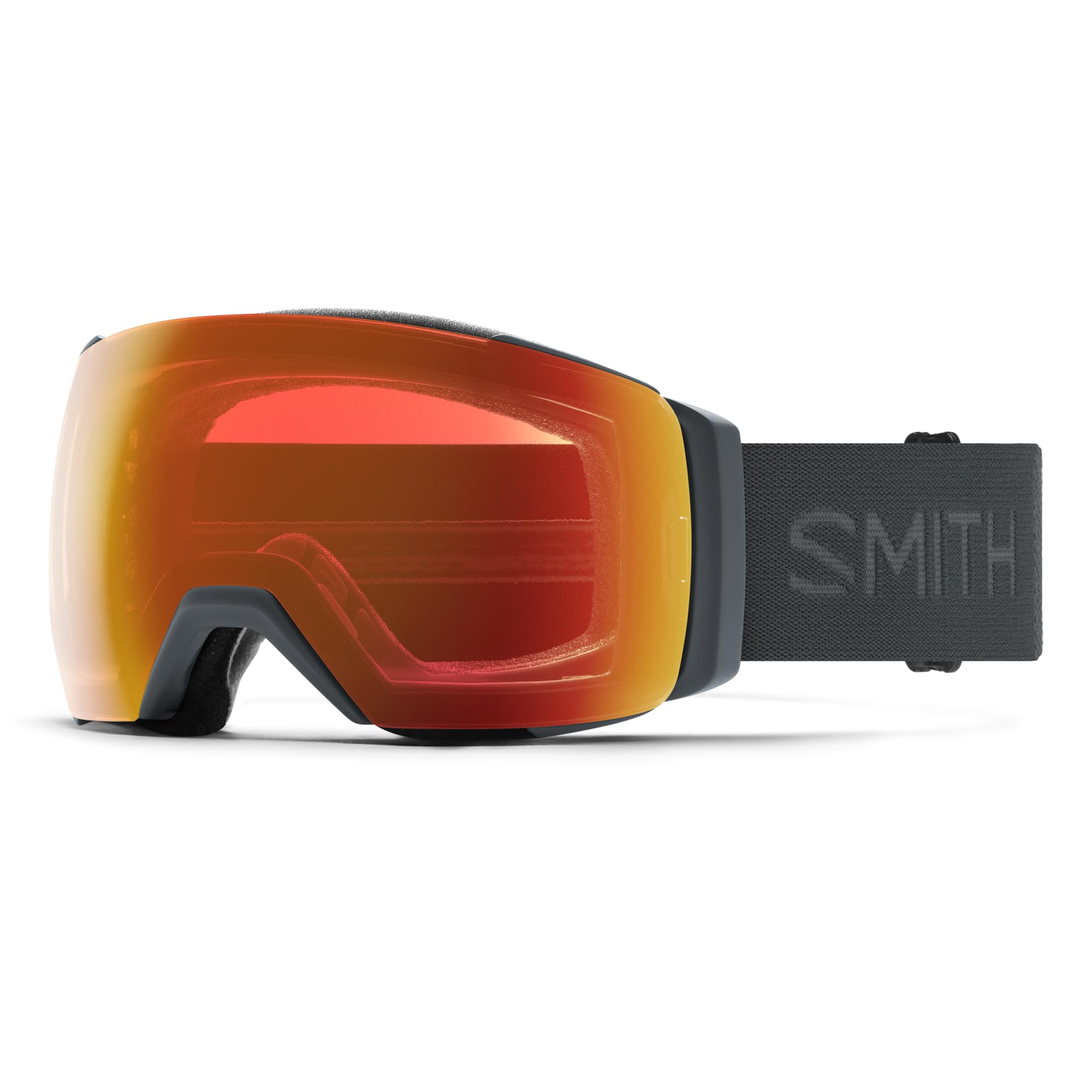
Smith I/O MAG XL ChromaPop Ski Goggles
Smith's flagship magnetic goggle: a spherical ChromaPop lens, a bonus low-light lens and the best anti-fog here.
- Lens: Spherical ChromaPop, MAG
- VLT: Varies by ChromaPop tint
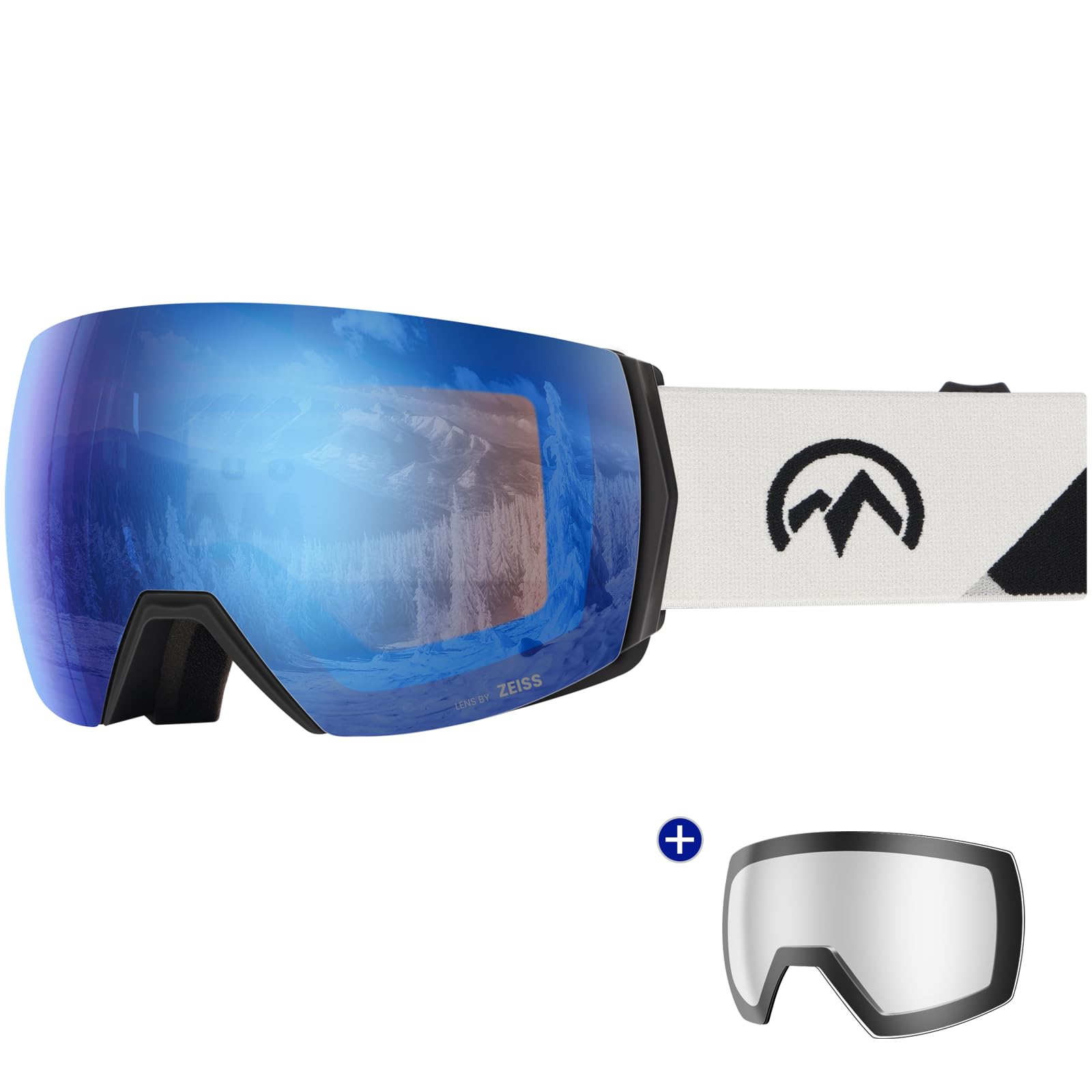
OutdoorMaster Ultra ZEISS Magnetic Ski Goggles
ZEISS glass, a magnetic swap and a clear spare lens in the box: the closest thing to a premium goggle at a mid tier.
- Lens: ZEISS, magnetic swap
- VLT: 11% (navy blue lens)
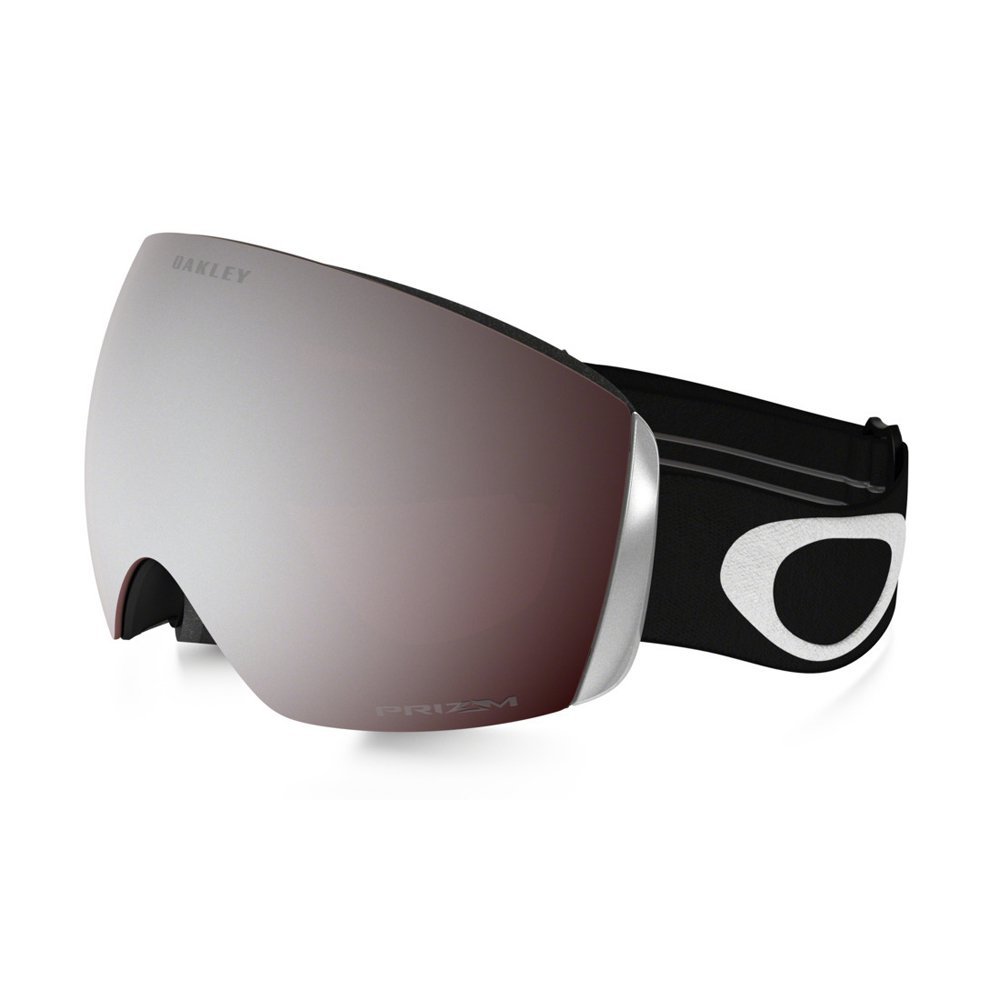
Oakley Flight Deck L Prizm Ski Goggles
Oakley's rimless fighter-pilot visor: the widest view here, with a Prizm lens tuned for snow contrast.
- Lens: Prizm Black Iridium
- Frame: Rimless, large fit
Questions, answered
How much should I spend on ski goggles?
For a few resort days a year, a budget goggle like the EXP VISION EX5400 or the OutdoorMaster OTG does the job honestly. For regular skiing, step up to a magnetic goggle like the ZIONOR X4 or the OutdoorMaster PRO. For changing light all day, the OutdoorMaster Ultra or the Smith I/O MAG XL repay their tier in vision and comfort, because the second lens and the fast swap are what a full day demands.
What is the difference between cylindrical and spherical lenses?
A cylindrical lens curves in one direction and reads flat at the edges, which suits a wide, low-profile view at a lower tier. A spherical lens curves in two directions, mimicking the eye, and gives a more natural view with less distortion. A toric lens sits between the two, curving more across than up and down. Try each shape if you can, because the difference shows at the edge of your vision, not in the middle.
Do I need a goggle with a spare lens?
Yes, if you ski full days in the mountains. One lens cannot cover bluebird sun at 10% VLT and flat storm light above 50% VLT. A goggle that ships with two lenses, or swaps lenses magnetically in seconds, covers both. The OutdoorMaster Ultra, Heron, Smith I/O MAG XL, Smith Squad and Anon M4 all include a spare lens in the box.
How do I stop my ski goggles fogging?
Keep the vents clear of snow, do not push the goggle up onto a wet helmet between runs, and make sure the foam seals against your face so breath goes out through the vents. Never wipe the inner lens with a glove, because that damages the anti-fog coating. Let the goggle dry fully between days, and store it in its case rather than loose in a boot bag.
Every guide on Ski Goggles15 pages
- Topic hubSki Goggles
- Best ofThe Best Ski Goggles (2027)
- Glasses fit decides this ranking before optics do. A goggle that squeezes the temples or presses the frames into the nose will hurt by the second run, whatever its lens. This ranking weights frame depth, foam that seals around glasses arms, and a stated glasses size above everything else, and it demotes goggles that call themselves OTG without giving a size. Lens quality still matters, but only after the glasses question is answered.The Best Ski Goggles for Glasses Wearers (2027)
- Mountain light changes faster than any single lens can follow: bluebird at nine, cloud by eleven, flat white by lunch. This ranking weights the ability to adapt above everything else, which means two things: a lens change fast enough to do on a chairlift, and a second lens in the box for the other end of the light. A goggle with one superb lens and no way to change it ranks below a goggle with two good lenses and a magnetic swap.The Best Ski Goggles for Changing Light (2027)
- Budget here means value per ski day, not the cheapest goggle in the drawer. A goggle that costs very little and fogs on the first lift is not a bargain. This ranking weights honest performance on a resort day above everything else: an anti-fog lens that holds, foam that seals, and a strap that fits a helmet. It rewards goggles that do one job well over goggles that promise everything, and it keeps two premium picks at the bottom as the stretch targets the budget picks are measured against.The Best Budget Ski Goggles (2027)
- ReviewSmith I/O MAG XL ChromaPop Ski Goggles Review (2027)
- ReviewOutdoorMaster Ultra ZEISS Magnetic Ski Goggles Review (2027)
- ReviewOakley Flight Deck L Prizm Ski Goggles Review (2027)
- ReviewAnon M4 Toric Perceive Ski Goggles Review (2027)
- ReviewOutdoorMaster Heron Toric Magnetic Ski Goggles Review (2027)
- ReviewZIONOR X4 Magnetic Lens Ski Goggles Review (2027)
- Head to headSmith I/O MAG XL vs Oakley Flight Deck L (2027)
- Head to headOutdoorMaster Ultra vs ZIONOR X4 (2027)
- Fix itSki Goggles Fogging Up? Fixes (2027)