Best of
The Best Carbon Monoxide Detectors (2027)
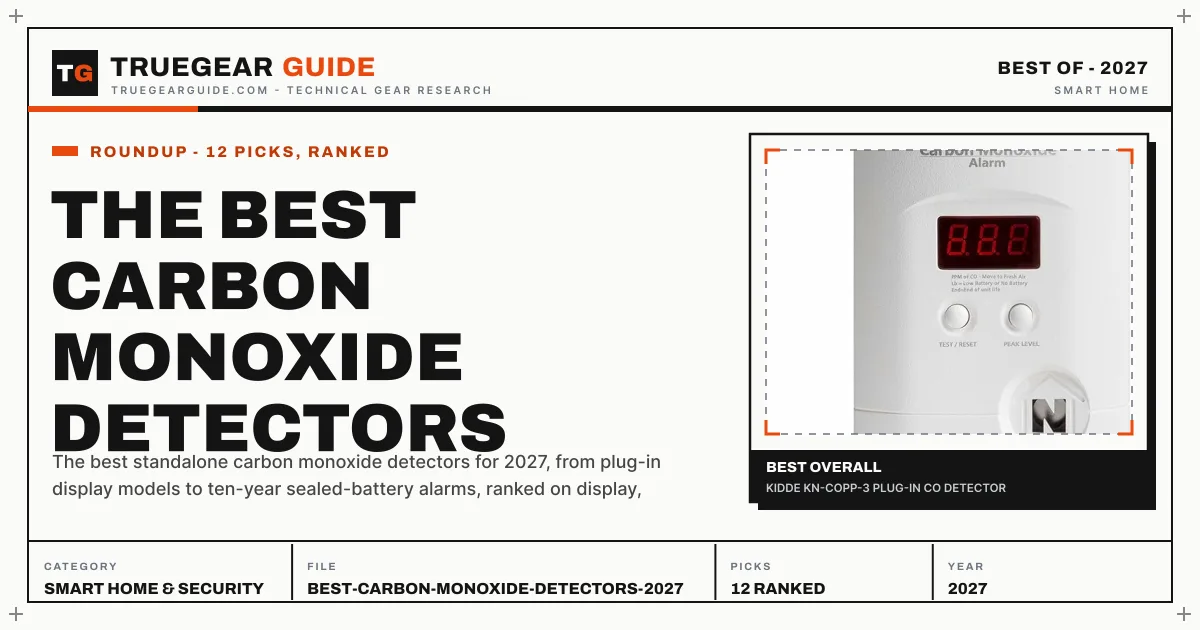
The best standalone carbon monoxide detectors for 2027, from plug-in display models to ten-year sealed-battery alarms, ranked on display, power and sensor life.
The short answer
For most homes the right CO detector is a plug-in with a live display: the Kidde KN-COPP-3 shows the CO level in ppm and remembers the peak, and the First Alert CO615 adds a backlit screen for night-time reading. If there is no socket where the detector must go, the Kidde C3010D gives the same display on a ten-year sealed battery, and the First Alert CO710 adds a temperature readout. For a wired home, the Kidde KN-COP-IC is the only hardwired pick here. Whatever the power source, fit one detector outside each sleeping area and one on every level, and replace it at its end-of-life signal.
Our top picks at a glance
- Kidde KN-COPP-3 Plug-In CO DetectorThe long-running Nighthawk plug-in, with a live ppm display and a 9V battery behind it.Best overall
- First Alert CO615 Plug-In CO DetectorFirst Alert's plug-in with a backlit display, peak memory and a 6 ft cord.Best plug-in display
- Kidde C3010D Sealed Battery CO AlarmKidde's sealed-battery alarm with a proper ppm display and peak memory.Best sealed-battery display
- First Alert CO710 Sealed Battery CO AlarmA ten-year sealed battery and a display that shows temperature as well as CO.Best for power cuts
- Kidde KN-COP-IC Hardwired CO AlarmThe only hardwired pick: mains power, 9V backup and a round ceiling-friendly body.Best hardwired
The picks, ranked
| # | Product | Award | Power | Display | Sensor | Alarm | Cord |
|---|---|---|---|---|---|---|---|
| 1 | Kidde KN-COPP-3 Plug-In CO Detector | Best overall | 120V AC, 9V battery backup | Digital, 30 to 999 ppm | Electrochemical (Nighthawk) | 85 dB | 6 ft power cord |
| 2 | First Alert CO615 Plug-In CO Detector | Best plug-in display | 120V AC, 2x AA backup | Backlit digital, peak memory | Electrochemical | 85 dB at 10 ft | 6 ft power cord |
| 3 | Kidde C3010D Sealed Battery CO Alarm | Best sealed-battery display | 10-year sealed lithium battery | Digital, 30 to 999 ppm | Electrochemical | 85 dB | - |
| 4 | First Alert CO710 Sealed Battery CO Alarm | Best for power cuts | 10-year sealed lithium battery | Digital, temperature and CO | Electrochemical | - | - |
| 5 | Kidde KN-COP-IC Hardwired CO Alarm | Best hardwired | Hardwired 120V, 9V backup | Digital LED, ppm readout | Electrochemical (Nighthawk) | 85 dB | - |
| 6 | Kidde KN-COP-DP-10YL Plug-In CO Detector | Best plug-in for a decade | 120V AC plug-in | Digital LED display | - | 85 dB at 10 ft | - |
| 7 | Kidde COPD Plug-In CO Detector | Best new-generation plug-in | 120V AC, 2x AA backup | Backlit digital display | - | 85 dB | - |
| 8 | X-Sense XC01-R Battery CO Alarm | Best compact display alarm | CR123A lithium, replaceable | Digital LCD, real-time ppm | Figaro electrochemical | 85 dB at 3 m | - |
| 9 | Kidde KN-COPP-B-LPM Battery CO Detector | Best large-display battery model | 3x AA batteries, included | Large backlit digital display | Electrochemical | - | - |
| 10 | Universal Security Instruments MC304SB Sealed Battery CO Alarm | Best fit-and-forget alarm | 10-year sealed battery | None, LED indicators | CO only, no smoke sensing | End-of-service alarm | - |
| 11 | Kidde KN-COB-LP2 Battery CO Alarm | Best budget battery alarm | 2x AA batteries, included | None, LED indicators | Electrochemical | - | - |
| 12 | First Alert CO400 Battery CO Alarm | Best simple alarm | Battery powered | None, LED indicators | Electrochemical | 85 dB | - |
Best overall
Kidde KN-COPP-3 Plug-In CO Detector
The long-running Nighthawk plug-in, with a live ppm display and a 9V battery behind it.

Strengths
- Digital display shows live CO from 30 to 999 ppm and updates every 15 seconds, per the manual
- Peak-level memory recalls the highest CO level recorded since the last reset
- Plug-in power with a 9V battery backup keeps the sensor running through a power cut
- Six-foot power cord gives real choice about where the unit sits relative to the bed
Limitations
- Needs a wall socket, so placement follows the outlet rather than the ideal sensing spot
- The 9V backup battery is a consumable that needs periodic replacement
- The display reads in ppm only, with no temperature or humidity readout
What owners report
Most praised
- The live ppm display turns a silent alarm into something the household can actually read and understand
- Peak-level memory settles the argument about whether the alarm sounded for a real reason
- It keeps working through power cuts, which is when heating appliances are most likely to misbehave
Common complaints
- Finding a free socket at the right height near the bed is harder than buyers expect
- The 9V backup battery needs remembering, and a dead backup shows up at the worst time
- The display is small enough that older eyes need to stand close to read it
| Power | 120V AC, 9V battery backup |
|---|---|
| Display | Digital, 30 to 999 ppm |
| Sensor | Electrochemical (Nighthawk) |
| Alarm | 85 dB |
| Cord | 6 ft power cord |
| Life | 10-year life, per manual |
Best for: Bedrooms and living rooms where a live CO reading on the wall is worth more than a silent alarm.
Skip if: You have no spare socket near the sleeping area, or you want a unit that never needs a battery change; a sealed-battery model fits better.
Best plug-in display
First Alert CO615 Plug-In CO Detector
First Alert's plug-in with a backlit display, peak memory and a 6 ft cord.

Strengths
- Backlit digital display shows the CO level in ppm, readable in a dark hallway
- Peak-level memory stores the highest CO concentration detected
- Plug-in power with two AA batteries as backup for outages
- Seven-year operational life with a seven-year limited warranty, per the maker
Limitations
- Seven-year life is shorter than the ten-year units elsewhere in this guide
- The housing looks almost identical to First Alert's battery models, which confuses comparison shoppers
- It still occupies a socket that a lamp or charger might also want
What owners report
Most praised
- The backlit display is the feature owners mention first, because it works at 3 a.m. without a lamp
- Peak memory gives a number to show a landlord or technician after an alarm event
- The plug-in form means no mounting screws and no battery routine to remember
Common complaints
- Owners who bought it expecting a ten-year life are surprised by the seven-year rating
- It looks so like the battery version that households buy the wrong power type by mistake
- A socket low on the wall puts the display at ankle height in some rooms
| Power | 120V AC, 2x AA backup |
|---|---|
| Display | Backlit digital, peak memory |
| Sensor | Electrochemical |
| Alarm | 85 dB at 10 ft |
| Cord | 6 ft power cord |
| Life | 7-year life and warranty |
Best for: Hallways and bedrooms where a backlit reading is useful at night and the socket is already there.
Skip if: You want a ten-year sensor life; this unit is rated for seven years of operation.
Best sealed-battery display
Kidde C3010D Sealed Battery CO Alarm
Kidde's sealed-battery alarm with a proper ppm display and peak memory.

Strengths
- Ten-year sealed lithium battery never needs replacing over the unit's life
- Digital display shows CO from 30 to 999 ppm and updates every 15 seconds
- Peak-level memory records the highest CO level since the last reset
- Three LEDs separate normal operation, CO alarm and replace states clearly
Limitations
- Battery-only, so there is no mains option for homes that prefer wired power
- Some retailer tables list AA batteries for this model, which contradicts the manual and confuses buyers
- The sealed battery means the whole unit is replaced at end of life, not just a cell
What owners report
Most praised
- The ppm display plus peak memory is the combination owners say finally makes CO visible
- Ten years without touching a battery compartment is a genuine quality-of-life gain
- The three LEDs make the unit's state obvious from across the room
Common complaints
- Conflicting battery information in retailer tables makes buyers doubt the sealed claim
- It is heavier on the wall than the plain AA models, which shows on weak fixings
- The display blanks between readings in a way some owners read as the unit being off
| Power | 10-year sealed lithium battery |
|---|---|
| Display | Digital, 30 to 999 ppm |
| Sensor | Electrochemical |
| Alarm | 85 dB |
| LEDs | Green, red and amber LEDs |
| Life | 10-year limited warranty |
Best for: Households that want a display and a decade of battery-free operation in one unit.
Skip if: You need mains power or a plug-in form; this is battery-only by design.
Best for power cuts
First Alert CO710 Sealed Battery CO Alarm
A ten-year sealed battery and a display that shows temperature as well as CO.

Strengths
- Built-in ten-year sealed lithium battery never needs changing over the unit's life
- Digital display shows temperature alongside the CO level, so the unit earns its wall space daily
- Battery power means it works during power outages, when heating faults are most likely
- Ten-year operational life with a ten-year limited warranty, per the maker
Limitations
- The display's headline reading is temperature, so the CO number is not the first thing seen
- A sealed battery cannot be swapped, so a battery fault means replacing the whole unit
- No plug-in option, so households that prefer mains power must look elsewhere
What owners report
Most praised
- Never buying or changing a battery for ten years is the reason owners pick this one
- The temperature display means the unit gets looked at daily instead of forgotten
- It keeps guarding through power cuts, which plug-in-only alarms cannot do
Common complaints
- Owners who wanted a ppm-first display find the temperature-led screen a mild letdown
- The sealed battery is a strength until the day it is not, and then the whole unit goes
- It costs more than the plain battery alarms that do the same core job
| Power | 10-year sealed lithium battery |
|---|---|
| Display | Digital, temperature and CO |
| Sensor | Electrochemical |
| Battery | Sealed, never needs changing |
| Life | 10-year life and warranty |
| Outages | Works during power outages |
Best for: Bedrooms and flats where a battery alarm must keep working through power cuts for a decade.
Skip if: You want a plug-in unit with a live ppm number front and centre; this display leads with temperature.
Best hardwired
Kidde KN-COP-IC Hardwired CO Alarm
The only hardwired pick: mains power, 9V backup and a round ceiling-friendly body.

Strengths
- Hardwired 120V power with a 9V battery backup, so it stays live through outages
- Digital LED display shows the CO level in ppm, with peak-level memory
- Round 5.75 inch body suits ceiling and high-wall mounting near wired alarm points
- Ten-year limited warranty, per the maker, on a long-established model
Limitations
- Needs a wired connection and a competent install, which rules out most renters
- One retailer's item-type field wrongly labels it a combination smoke and CO detector
- The 9V backup still needs periodic replacement despite the mains supply
What owners report
Most praised
- Wired power ends the battery routine entirely, which is the point for owners who chose it
- The round body looks at home beside wired smoke alarms on a ceiling
- Peak memory plus a ppm display gives a wired alarm the brains of a plug-in unit
Common complaints
- Installation needs wiring knowledge, and renters cannot fit it at all
- The combination-detector label in one retailer's data field causes needless confusion
- A 9V backup battery still has to be remembered even though the mains does the work
| Power | Hardwired 120V, 9V backup |
|---|---|
| Display | Digital LED, ppm readout |
| Sensor | Electrochemical (Nighthawk) |
| Alarm | 85 dB |
| Size | 5.75 in diameter, 1.8 in deep |
| Life | 10-year limited warranty |
Best for: Homes with wired alarm circuits that want CO protection on the mains, not on batteries.
Skip if: You rent, or you have no wired alarm circuit; a plug-in or battery model is the honest choice.
Best plug-in for a decade
Kidde KN-COP-DP-10YL Plug-In CO Detector
Plug-in power with a ten-year sealed lithium backup, so the display never goes dark.

Strengths
- Plug-in 120V power with a ten-year sealed lithium battery backup, per the manual
- Digital LED display with peak-level memory, readable at a glance
- Test and Hush button plus peak-level control in one familiar layout
- 85 dB alarm at 10 ft, UL 2034 listed, with a ten-year limited warranty
Limitations
- The premium tier pays for the sealed backup, which many homes will never test
- The sealed backup cannot be replaced, so a backup fault means a new unit
- Do not confuse it with the Wi-Fi variant of the same model family, which is a different product
What owners report
Most praised
- The ten-year sealed backup is the feature owners cite when justifying the premium price
- The display stays live and readable even when the mains is out
- It is the plug-in that finally ends the battery-replacement routine
Common complaints
- The price premium over the standard plug-in models is hard to justify for a second room
- A sealed backup that fails means replacing the detector, not a battery
- The model name is long and close to the Wi-Fi variant, so buyers must check the box
| Power | 120V AC plug-in |
|---|---|
| Backup | 10-year sealed lithium backup |
| Display | Digital LED display |
| Buttons | Test and Hush, Peak Level |
| Alarm | 85 dB at 10 ft |
| Life | 10-year limited warranty |
Best for: Bedrooms where the detector must stay live through outages for a full decade.
Skip if: You want a budget plug-in; the KN-COPP-3 and CO615 cover the same wall for less.
Best new-generation plug-in
Kidde COPD Plug-In CO Detector
Kidde's new-generation plug-in, with a rotating plug and a backlit display.

Strengths
- Backlit digital display shows the CO level clearly, day or night
- Rotating plug adapts to horizontal and vertical sockets without blocking the second outlet
- Plug-in power with two AA batteries as backup for power cuts
- UL 2034 5th Edition listed, with a ten-year limited warranty, per the listing
Limitations
- A new model, so long-term owner history is thinner than the KN-COPP-3's
- The display in the listing photo shows an unclear string rather than a ppm number
- It still needs a socket, so placement follows the outlet
What owners report
Most praised
- The rotating plug is a small detail owners notice immediately, because it frees the second socket
- The backlit display is bright enough to read without switching on a light
- It feels like the current generation of the Kidde plug-in line, not a relic
Common complaints
- Owners coming from the KN-COPP-3 ask what, exactly, the new model improves
- The listing photo's display does not show a ppm number, which invites questions
- As a new model it has fewer long-term owner reports than the established picks
| Power | 120V AC, 2x AA backup |
|---|---|
| Display | Backlit digital display |
| Plug | Rotating plug |
| Buttons | Test and Hush, Peak Level |
| Alarm | 85 dB |
| Life | 10-year limited warranty |
Best for: Modern bedrooms where a rotating plug and a bright display matter more than legacy branding.
Skip if: You want the cheapest plug-in in the guide; the older KN-COPP-3 covers the same job for less.
Best compact display alarm
X-Sense XC01-R Battery CO Alarm
The compact X-Sense alarm with a real-time ppm LCD and a replaceable lithium cell.

Strengths
- Digital LCD shows the real-time CO level in ppm, not just an alarm state
- Peak-value memory keeps the highest reading for later checking
- Replaceable CR123A lithium battery lasts up to five years, per the maker
- Ten-year sensor life with UL 2034 listing, at a budget-tier price
Limitations
- The CR123A cell is less common in a kitchen drawer than AA batteries
- The main product image is a lower-resolution 500-pixel file, so the listing photo is softer than rivals
- Five-year battery life is shorter than the sealed ten-year units in this guide
What owners report
Most praised
- The live ppm number on the LCD makes this feel like an instrument rather than a beeper
- Its small oval body fits on walls and shelves where the big rectangular units look wrong
- Owners like that the battery can be replaced instead of the whole unit being thrown away
Common complaints
- Finding a CR123A battery locally takes a trip, unlike AA cells from any shop
- The display is small, so the ppm reading needs a close look
- Some owners expected the sealed-battery version and were surprised by the replaceable cell
| Power | CR123A lithium, replaceable |
|---|---|
| Display | Digital LCD, real-time ppm |
| Sensor | Figaro electrochemical |
| Alarm | 85 dB at 3 m |
| Battery life | 5-year battery life |
| Sensor life | 10-year sensor life |
Best for: Small rooms, caravans and flats where a compact alarm with a live reading beats a silent box.
Skip if: You want a plug-in unit or a sealed ten-year battery; this one runs on a replaceable CR123A cell.
Best large-display battery model
Kidde KN-COPP-B-LPM Battery CO Detector
A battery detector with a large backlit display and peak memory, for rooms without sockets.

Strengths
- Large backlit digital display is the most readable in this guide at a glance
- Peak-level memory recalls the highest CO level recorded since the last reset
- Battery operated with three included AA batteries, so it mounts anywhere
- Test and Reset buttons plus LEDs make status checks quick and obvious
Limitations
- Three AA batteries are a recurring cost and a routine to remember
- The premium tier buys display size rather than a longer sensor life
- The listing headline omits the display, so buyers must read the description to find it
What owners report
Most praised
- The big backlit display is readable from the doorway, which smaller screens cannot match
- Peak memory gives a concrete number to quote to a gas engineer after an event
- Battery power means it goes exactly where the bedroom needs it, not where the socket is
Common complaints
- Three AA batteries drain faster than owners expect when the display is checked often
- The price sits above the sealed-battery models that never need a cell change
- Some buyers missed the display entirely because the listing headline does not mention it
| Power | 3x AA batteries, included |
|---|---|
| Display | Large backlit digital display |
| Sensor | Electrochemical |
| Memory | Peak-level memory |
| Buttons | Test and Reset buttons |
| Warranty | 5-year warranty, per listing |
Best for: Bedrooms and studies where a big readable display matters and no socket is nearby.
Skip if: You want a sealed ten-year battery or a plug-in unit; this one runs on three AA cells.
Best fit-and-forget alarm
Universal Security Instruments MC304SB Sealed Battery CO Alarm
A tall, sealed-battery CO-only alarm with an end-of-service signal and ETL listing.

Strengths
- Ten-year sealed battery never needs replacing over the alarm's life
- CO-only by design, per the manual, with no smoke sensing to confuse the job
- End-of-service alarm sounds after about ten years, so replacement is never a guess
- ETL listed to UL 2034, with California State Fire Marshal approval, per the maker
Limitations
- No display, so there is no reading to report after an alarm event
- The tall housing suits some walls and looks awkward on others
- The brand is less familiar on shelves than Kidde or First Alert, so buyers research it longer
What owners report
Most praised
- The ten-year sealed battery is the whole pitch, and owners say it delivers exactly that
- The end-of-service signal removes the guesswork about when to replace the unit
- Landlords like a CO-only unit with no display to be misread by tenants
Common complaints
- Without a display, an alarm leaves the household with a sound and no number
- The tall shape needs a clear stretch of wall that some rooms do not offer
- The unfamiliar brand name makes first-time buyers hesitate before the reviews win them over
| Power | 10-year sealed battery |
|---|---|
| Display | None, LED indicators |
| Sensor | CO only, no smoke sensing |
| Alarm | End-of-service alarm |
| Listing | ETL listed to UL 2034 |
| Life | 10-year limited warranty |
Best for: Landlords and homeowners who want a fit-and-forget CO alarm with a ten-year battery.
Skip if: You want a display; this unit signals with LEDs only and shows no ppm reading.
Best budget battery alarm
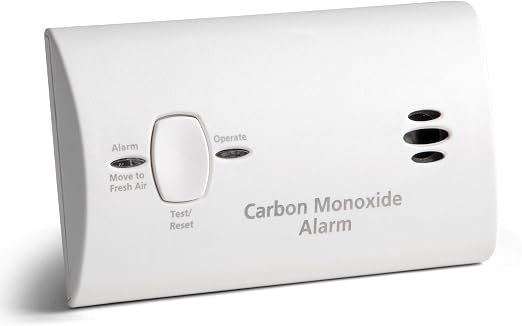
Kidde KN-COB-LP2 Battery CO Alarm
Kidde's basic battery alarm, running on two AA batteries with clear LED signals.
Strengths
- Runs on two included AA batteries, with no wiring and no socket needed
- LED indicators separate alarm, operation and low-battery states at a glance
- Alarm response follows the UL 2034 pattern: 70 ppm over 60 to 240 minutes, per the manual
- End-of-life beep after ten years from power-up tells the household it is time to replace it
Limitations
- No digital display, so the alarm gives a sound and LEDs but no reading
- AA batteries need replacing, and the unit is only as reliable as the last change
- The plain rectangular housing is easy to confuse with older Kidde models
What owners report
Most praised
- The LED set makes a quick glance enough to know the unit is alive and watching
- Two AA batteries are cheap and easy to find, so the unit is never waiting on a special cell
- Owners buy several at once because the price makes whole-house coverage realistic
Common complaints
- Without a display, a low-level CO event leaves nothing to show a technician
- The low-battery chirp is the same sound family as the alarm, which causes confusion
- It looks unremarkable on the wall, so guests sometimes unplug nothing but still ignore it
| Power | 2x AA batteries, included |
|---|---|
| Display | None, LED indicators |
| Sensor | Electrochemical |
| Alarm points | 70 ppm: 60-240 min |
| Temp range | 40 to 100 degrees F |
| Life | 10-year end-of-life signal |
Best for: Budget buyers who want a named-brand battery alarm in a second room or a rental.
Skip if: You want a display or a ten-year sealed battery; this is the plainest alarm in the guide.
Best simple alarm
First Alert CO400 Battery CO Alarm
The plain battery alarm: no display, no socket, just a loud warning where you put it.

Strengths
- Battery powered, so it mounts anywhere without a socket or wiring
- Simple one-button test and silence control with no menus to learn
- End-of-life signal tells the household when the unit must be replaced
- UL 2034 listed, with a sensor rated to last up to five years
Limitations
- No display means an alarm gives no number to act on or report
- Batteries are a recurring job, and a flat battery silences the protection
- The same housing is shared with other First Alert models, so the box deserves a careful read
What owners report
Most praised
- It goes up in minutes with no wiring and no socket hunt, which renters value
- The single button is simple enough that every adult in the house can test it
- Owners like that there is nothing to configure and nothing to misread
Common complaints
- After an alarm there is no reading to explain what happened, only the memory of the sound
- Battery changes fall to whoever remembers, and the chirp always starts at night
- Five-year sensor life is short next to the ten-year units in this guide
| Power | Battery powered |
|---|---|
| Display | None, LED indicators |
| Sensor | Electrochemical |
| Alarm | 85 dB |
| Button | Test and silence button |
| Life | Sensor life up to 5 years |
Best for: Renters, spare rooms and anywhere a socket is out of reach and a simple alarm is enough.
Skip if: You want to see a CO reading or a peak level; this unit has no display at all.
How we chose
A display turns an alarm into information
A detector without a display can only shout. A detector with a live ppm display and peak memory tells the household how much CO was present and when, which is what a gas engineer asks for first. Nine of the twelve picks here show a number, and the three that do not are the cheapest alarms in the guide, priced for second rooms rather than bedrooms.
Power source decides placement
Plug-in units need a socket and suit bedrooms and hallways. Battery units go anywhere, including rooms with no spare outlet, but they need a battery routine. Sealed-battery units remove that routine for ten years, at a higher price. Hardwired units suit homes with a wired alarm circuit and need an installer. Buy the power type that matches the wall, not the one the marketing prefers.
Every detector has an expiry date
CO sensors age and die on a schedule: five years for the cheapest sensor here, seven for the First Alert plug-in and battery display models, ten for most of the rest. The end-of-life signal, a chirp or a dedicated LED, is not a fault to silence, it is the instruction to replace the unit. A detector past its life may look alive while sensing nothing.
CO-only means the comparison stays honest
Combination smoke and CO alarms exist and have their place, but they answer a different question and live under different rules. This guide excludes them entirely, so a plug-in Kidde is compared with a plug-in First Alert on display and power, not against a smoke alarm that happens to include a CO sensor. The sister topic on the site covers the smart and combination detectors separately.
Questions, answered
Where should I put a carbon monoxide detector?
Fit one outside each sleeping area and one on every level of the home, including the basement. Place it at breathing height where possible, near but not directly above fuel-burning appliances, and away from steamy bathrooms and draughty windows. A plug-in unit belongs in a socket near the bed; a battery unit belongs where the household sleeps, not in a cupboard.
What CO level sets off the alarm?
Under UL 2034, a detector alarms at 70 ppm after 60 to 240 minutes, at 150 ppm after 10 to 50 minutes, and at 400 ppm after 4 to 15 minutes. The delay at low levels is deliberate: it avoids nuisance alarms from brief, harmless exposures while still warning before dangerous accumulation. A display model shows the level building before the alarm sounds.
How long does a carbon monoxide detector last?
It depends on the sensor: five years for the cheapest sensor in this guide, seven years for the First Alert plug-in and display models, and ten years for most of the rest. Every unit here signals its end of life with a chirp, an LED or a display message. When it signals, replace the unit; a detector past its life may look alive while sensing nothing.
Do I need a CO detector if I have a smoke alarm?
Yes. A smoke alarm does not sense carbon monoxide, and a CO detector does not sense smoke. They are different sensors for different dangers. Combination alarms exist and cover both, but this guide covers standalone CO detectors only; the site's smart smoke and CO topic covers the combination and connected models.
Every guide on Carbon Monoxide Detectors15 pages
- Topic hubCarbon Monoxide Detectors
- A display is the dividing line in this category. Without one, an alarm is a binary event: silent, then shouting. With one, the household can watch a number climb, check a peak after an event, and give a technician a figure to work from. This ranking covers only the nine picks in the guide that show a reading, and it ranks them on how readable that reading is, whether peak memory is included, and what power source sits behind the screen.The Best Carbon Monoxide Detectors with a Display (2027)
- Battery power is what frees a CO detector from the socket, and it comes in three honest forms: ordinary replaceable cells, a replaceable lithium cell, and a sealed battery that lasts the life of the unit. This ranking covers the seven battery picks in the guide and weighs the real trade: a cheap alarm that needs cells every year or two, against a sealed unit that costs more once and is never opened again.The Best Battery Carbon Monoxide Detectors (2027)
- The bedroom is where a CO detector earns its keep, because carbon monoxide kills in sleep before anyone smells anything, and there is nothing to smell. This ranking weights the bedroom questions first: can the display be read in the dark, does the unit remember the peak overnight, will it survive a power cut, and will its low-battery chirp wake the household at 3 a.m. for the wrong reason. Plug-in models lead where a socket sits near the bed; battery models lead everywhere else.The Best Carbon Monoxide Detectors for Bedrooms (2027)
- ReviewKidde KN-COPP-3 Carbon Monoxide Detector Review (2027)
- ReviewFirst Alert CO615 Carbon Monoxide Detector Review (2027)
- ReviewKidde C3010D Carbon Monoxide Alarm Review (2027)
- ReviewFirst Alert CO710 Carbon Monoxide Alarm Review (2027)
- ReviewKidde KN-COP-IC Hardwired CO Alarm Review (2027)
- ReviewKidde KN-COP-DP-10YL Plug-In CO Detector Review (2027)
- Head to headKidde KN-COPP-3 vs First Alert CO615 (2027)
- Head to headKidde C3010D vs First Alert CO710 (2027)
- Buying guideCarbon Monoxide Detector Buying Guide (2027)
- Fix itCarbon Monoxide Detector Beeping? Fixes (2027)
Related topics in Smart Home & Security

Smart Home & Security
The Best Water Leak Detectors (2027)
Leak and freeze sensors ranked on alert speed, probe design, and hub requirements.

Smart Home & Security
The Best Smart Smoke & CO Detectors (2027)
Connected smoke and carbon monoxide alarms ranked on sensing, interconnect, and alert reliability.

Smart Home & Security
The Best Laundry Hampers (2027)
Laundry hampers ranked on footprint, capacity, ventilation and how easily they move.

Smart Home & Security
The Best Shower Caddies (2027)
Shower caddies ranked on whether they stay put, resist rust and fit real bottles.