Head to head
Epson FastFoto FF-680W Photo Scanner vs Plustek ePhoto Z300 Photo Scanner (2027)
The two photo feeders compared: the FastFoto FF-680W against the Plustek ePhoto Z300, on speed, batch size, duplex and size.
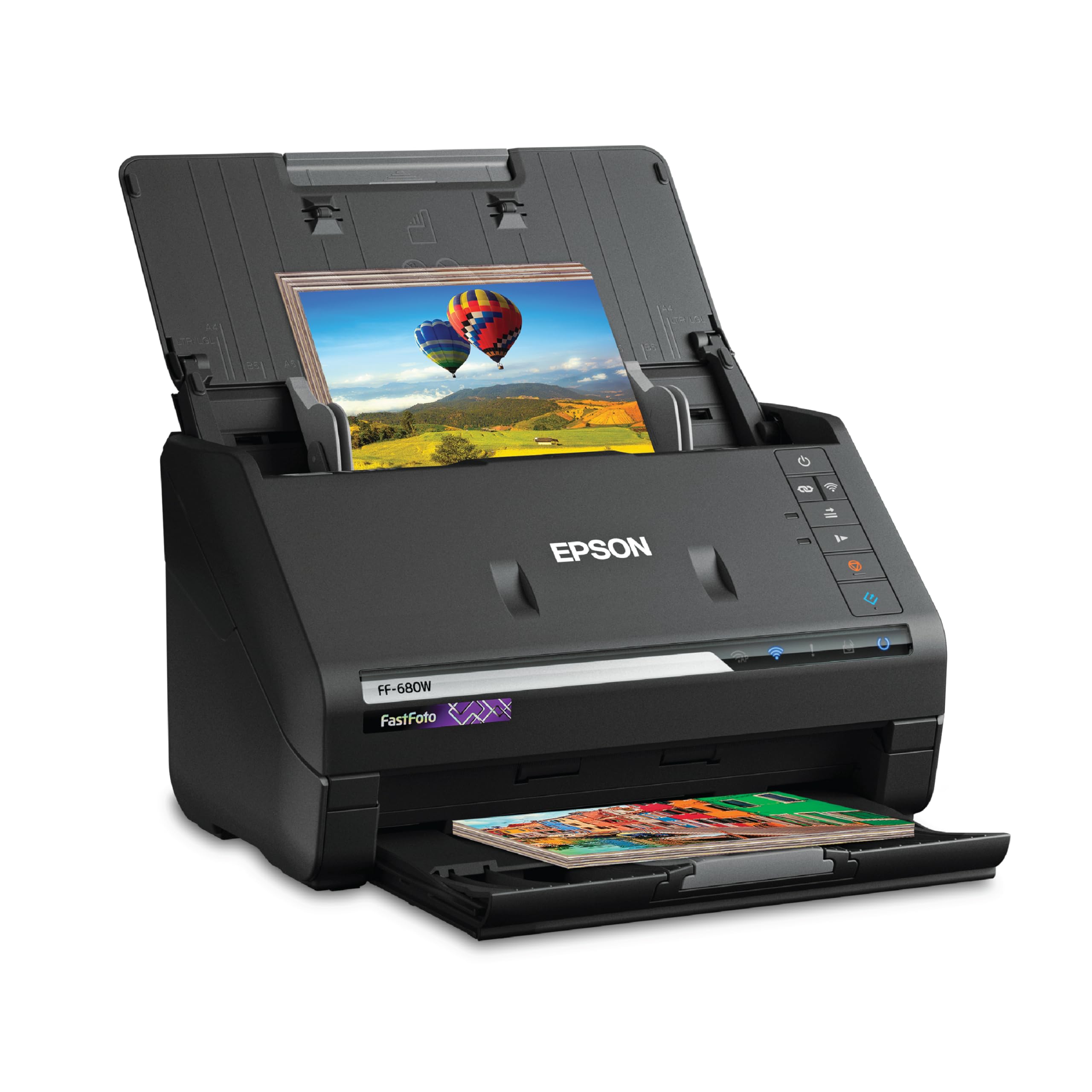
Epson FastFoto FF-680W Photo Scanner
The fastest way through a shoebox of prints, feeding photos one per second with automatic cleanup.
- Speed: 1 photo per second at 300 dpi
- Batch size: Up to 36 photos at a time

Plustek ePhoto Z300 Photo Scanner
A compact photo feeder that turns a stack of prints into files in about two seconds per photo.
- Speed: 2 seconds per 4x6 photo
- Resolution: 600 dpi optical resolution
What owners report
Most praised
- A box of prints that sat for years turns into files in an afternoon
- The auto-enhance pass makes faded prints look brighter without extra editing
- Feeding a stack and walking away feels effortless
Common complaints
- Older curled prints sometimes feed crooked and need a second pass
- The software occasionally mis-crops a photo edge
- High-resolution scans slow the advertised pace considerably
What owners report
Most praised
- Feeding prints one after another feels quick and simple
- The auto-crop saves the step of trimming each scan by hand
- The small blue-and-white body fits on a crowded desk
Common complaints
- Scans sometimes come out with a slight blue tint
- The software only allows limited batch sizes per run
- The feed can skew a photo that is not placed straight
Our recommendation
Choose by the size of the print collection. The FastFoto FF-680W is the feeder for a shoebox: a photo per second, a 36-photo feeder, duplex capture of the backs of prints, and wireless links to a phone app. The Plustek Z300 is the feeder for a drawer: a 4x6 in about two seconds with auto crop and deskew, in a small body that fits on a crowded desk. For a few hundred prints, the Z300 is enough and the FastFoto is overkill. For a few thousand, the FastFoto earns its premium in hours saved. Neither scans film, so a flatbed still belongs in the house for negatives.
Speed: one photo per second against two seconds a photo
The FF-680W scans about one photo per second at 300 dpi, while the Z300 scans a 4x6 in about two seconds. Over a hundred prints the difference is a few minutes. Over a thousand it is hours, and the FastFoto's 36-photo feeder against the Z300's single-sheet feed widens the gap further, because the owner loads a stack and walks away instead of feeding each print by hand.
Duplex: backs of prints against fronts only
The FF-680W captures both sides of each print in one pass, so the notes, dates and names written on the backs are saved automatically. The Z300 scans the front only, so the backs need a second manual pass or they are lost. For inherited collections where the backs carry the history, this is the single biggest practical difference between the two feeders.
Size and noise: a desk unit against a pocket feeder
The FF-680W is loud and bulky for a home desk, and it needs a dedicated spot while it works. The Z300 is a small blue-and-white body that fits on a crowded desk and runs quietly enough to use in a shared room. Buyers with small desks and small collections prefer the Z300's footprint; buyers with big collections accept the FastFoto's bulk as the price of speed.
Resolution and destinations
Both feeders top out at 600 dpi, which suits prints shared online and reprinted at the same size, and neither enlarges small prints well. The FF-680W adds wireless links and a smartphone app, sending scans to a phone as well as a computer. The Z300 works with Mac and PC over USB. Neither is an archival film scanner, and neither pretends to be one.
Choose Epson FastFoto FF-680W Photo Scanner if…
- Your print collection numbers in the hundreds or thousands
- The backs of prints carry notes worth saving automatically
- You want wireless scanning and a phone app
- Speed is the whole job and the bulk is acceptable
Choose Plustek ePhoto Z300 Photo Scanner if…
- Your print collection fits in a drawer, not a shoebox
- A small, quiet body matters more than maximum speed
- You want auto crop and deskew without the premium tier
- Your desk has no room for a large feeder
Questions, answered
Which feeder is faster for a shoebox of prints?
The FastFoto FF-680W, by a wide margin: about one photo per second from a 36-photo feeder, against the Z300's two seconds per photo with single-sheet feeding. For a shoebox of a thousand prints, the FastFoto finishes in an afternoon and the Z300 takes considerably longer.
Do either of these feeders scan film?
No. Both are print-only feeders with a 600 dpi ceiling and no film handling. Negatives and slides need a flatbed like the Epson V600 or V850 Pro, or a standalone digitizer like the Kodak Slide N Scan.
Which one is better for a small desk?
The Plustek Z300. Its small blue-and-white body fits on a crowded desk and runs quietly, while the FastFoto is loud and bulky and needs a dedicated spot. For small collections the Z300's size is a genuine advantage.
Every guide on Photo Scanners15 pages
- Topic hubPhoto Scanners
- Best ofThe Best Scanners for Photos (2027)
- Old photos are three different jobs wearing one name. Loose prints in a shoebox want a feeder, because a flatbed places each one by hand and a thousand prints at one minute each is a lost weekend. Fragile prints, prints glued into albums and oversized originals want a flatbed, because a feeder roller will damage them. And slides and negatives want film handling with dust removal, because a print scanner cannot see through film at all. This ranking weights the job first and the scanner second, so the feeder leads for loose prints, the flatbed leads for fragile ones, and the film tools rank on dust removal rather than speed.The Best Scanners for Old Photos (2027)
- A flatbed is the only scanner that takes almost anything: prints, film in holders, pages from a bound album, a fragile print that would never survive a roller, an object too thick for a feeder. This ranking weights the glass first: optical resolution for the detail, a transparency unit for film, dust removal for old negatives, and a lid that rises for thick originals. Feeders appear at the bottom only as honest alternatives, for buyers who came looking for a flatbed and actually need speed more than they need the glass.The Best Flatbed Photo Scanners (2027)
- Budget here means value per scan, not the cheapest scanner in the drawer. A scanner that costs very little and cannot scan your film, or that scans so slowly you never finish the box, is not a bargain. This ranking weights honest performance on everyday prints above everything else, and it rewards scanners that do one job well over scanners that promise everything. The premium entries appear because they are the stretch worth making when the job is film or a thousand prints, not because a first-time buyer should buy them for one album.The Best Budget Photo Scanners (2027)
- ReviewEpson Perfection V600 Photo Scanner Review (2027)
- ReviewEpson Perfection V850 Pro Photo Scanner Review (2027)
- ReviewEpson FastFoto FF-680W Photo Scanner Review (2027)
- ReviewEpson Perfection V550 Photo Scanner Review (2027)
- ReviewPlustek ePhoto Z300 Photo Scanner Review (2027)
- ReviewCanon CanoScan LiDE 400 Slim Scanner Review (2027)
- Head to headEpson Perfection V600 Photo Scanner vs Epson Perfection V850 Pro Photo Scanner (2027)
- Buying guidePhoto Scanner Buying Guide (2027)
- Fix itPhoto Scanner Giving Blurry or Streaked Scans? Fixes (2027)