Complete coverage
Telescopes
Telescopes ranked on aperture, mount, finding help and real first-night usability.
A telescope purchase goes wrong in one predictable way: the buyer shops for magnification and ends up with a shaky mount, a finder that fights them, or a tube they never carry outside. Aperture decides how much light the scope gathers, the mount decides whether the image stays still enough to enjoy, and the finding system decides whether a beginner ever lands on anything beyond the Moon. Those three choices matter far more than the biggest magnification number on the box.
The twelve telescopes below cover the honest spread. Short refractors suit first nights and daytime use, a manual equatorial reflector teaches sky motion the slow way, StarSense scopes let a phone point a manual mount, GoTo scopes find and track on their own, a collapsible Dobsonian gives the most aperture for the money, and a smart telescope skips the eyepiece entirely and builds a photo on a phone. Every pick is sold on Amazon, every aperture and focal length below is the maker figure, and no pick claims hands-on testing by TrueGear.
Every guide on telescopes
14 guides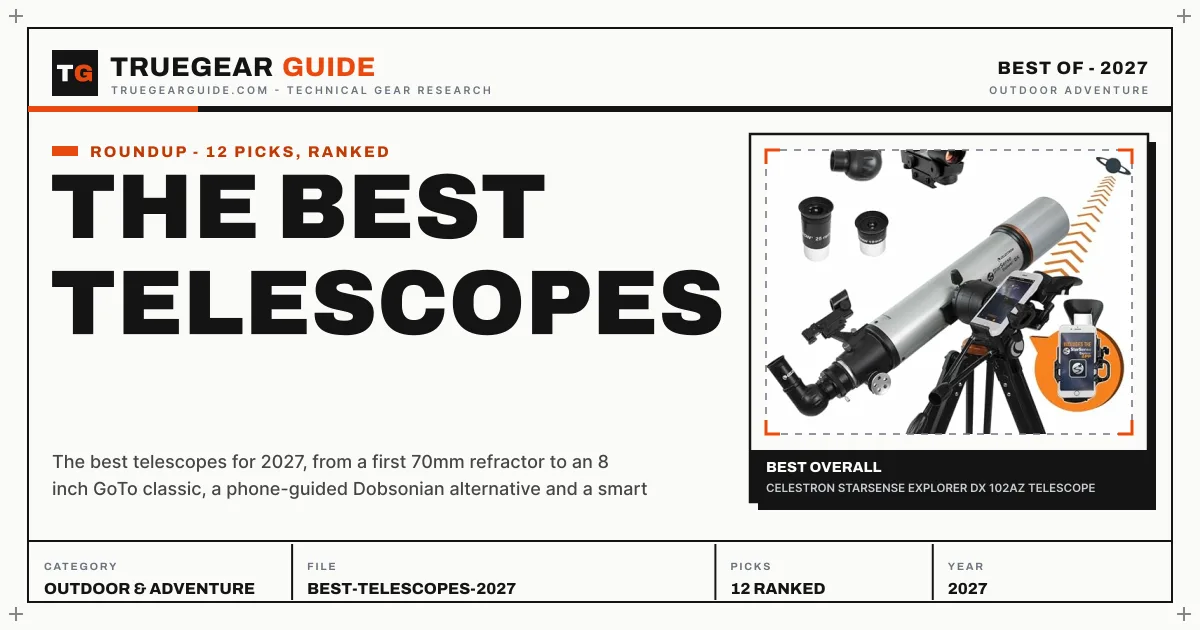
Best of
The Best Telescopes (2027)
The best telescopes for 2027, from a first 70mm refractor to an 8 inch GoTo classic, a phone-guided Dobsonian alternative and a smart imaging scope, ranked on aperture, mount and finding help.
Read guide
A beginner ranking should measure first-night success, not catalogue aperture. This guide weights finding help, mount simplicity and setup time ahead of raw optics, because a scope that finds the Moon and a planet on night one gets used again, while a scope that leaves a beginner sweeping empty sky gets stored. Manual classics stay in the list for learners who want the traditional route, but they are judged honestly against guided alternatives.
The Best Telescopes for Beginners (2027)
Beginner telescopes for 2027, ranked on first-night success: simple mounts, phone guidance, GoTo help and scopes that actually get used.
Read guide
Planetary observing rewards focal length, steady air and a mount that holds a planet still at high power. Wide-field deep-sky scopes can show planets, but they are not optimised for the job. This ranking therefore favours longer focal lengths, slow-motion or GoTo tracking, and mounts that settle quickly, while keeping aperture honest: a steady 102mm scope often beats a shaky 130mm scope on a planet.
The Best Telescopes for Planets (2027)
Planet telescopes for 2027: long focal lengths, steady mounts and tracking help for Moon, Jupiter, Saturn and Mars detail.
Read guide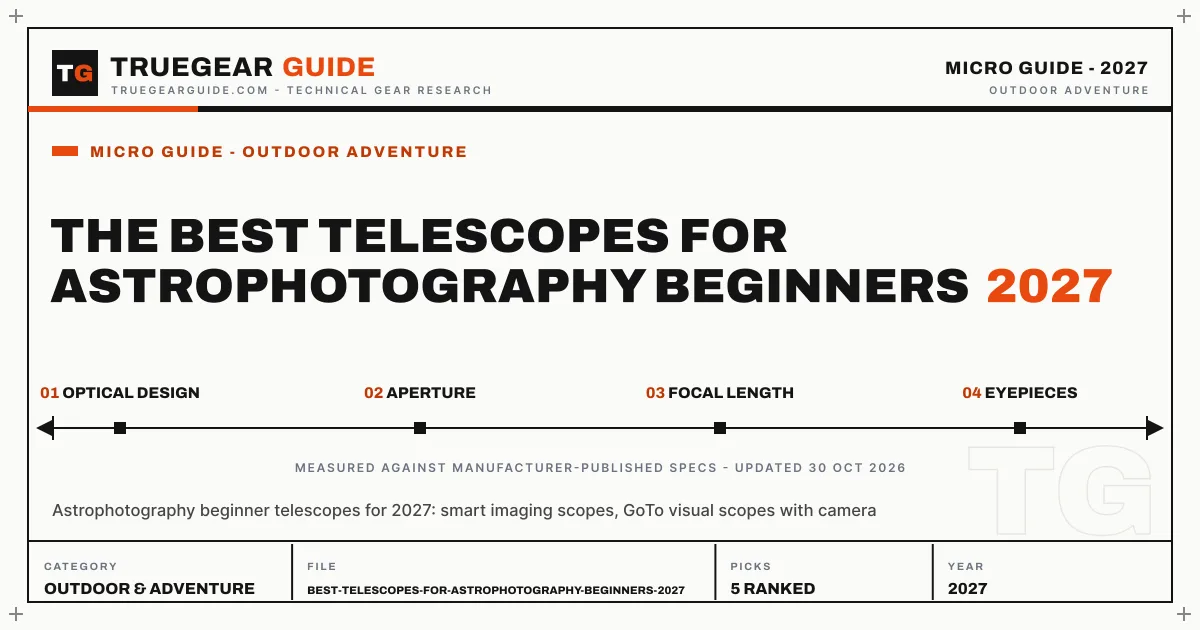
Astrophotography beginners face a fork: photograph deep sky with a smart scope that does the work, or learn visual astronomy first and add a camera later. This guide is blunt about that fork. Smart scopes produce deep-sky images from night one but teach little about eyepiece observing. GoTo visual scopes can take Moon and planet photos, but long deep-sky exposures need equatorial mounts and guiding that none of the visual scopes here promise. The ranking follows what each scope actually delivers, not what a camera adapter implies.
The Best Telescopes for Astrophotography Beginners (2027)
Astrophotography beginner telescopes for 2027: smart imaging scopes, GoTo visual scopes with camera potential, and honest limits for each.
Read guide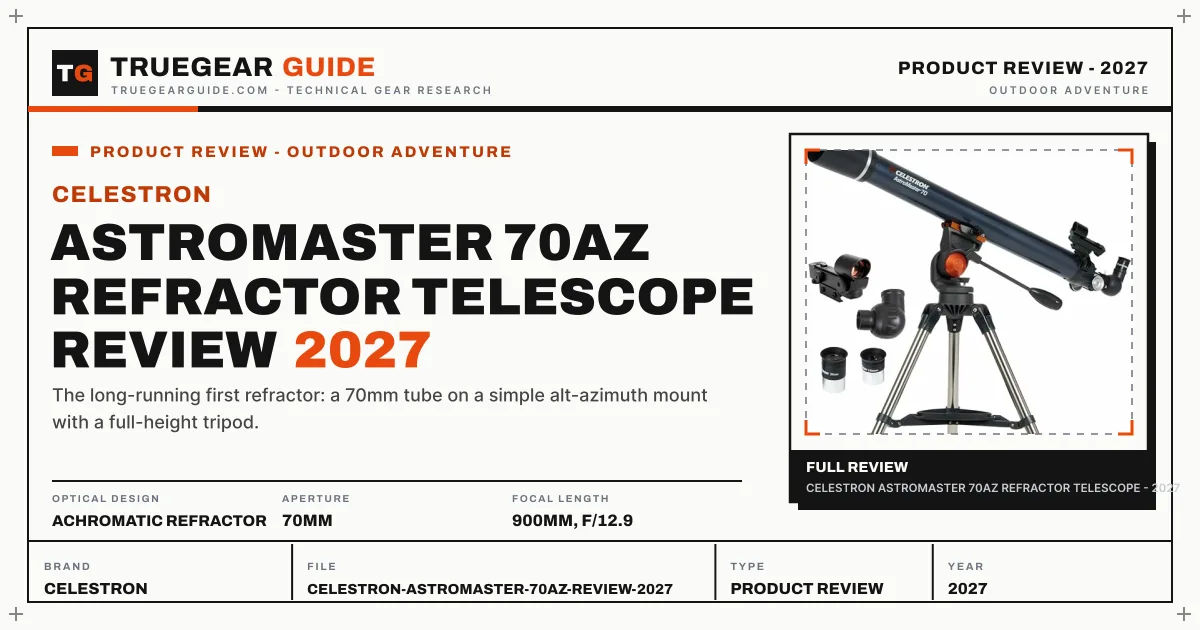
Review
Celestron AstroMaster 70AZ Review (2027)
Celestron AstroMaster 70AZ Refractor Telescope · The long-running first refractor: a 70mm tube on a simple alt-azimuth mount with a full-height tripod.
Read guide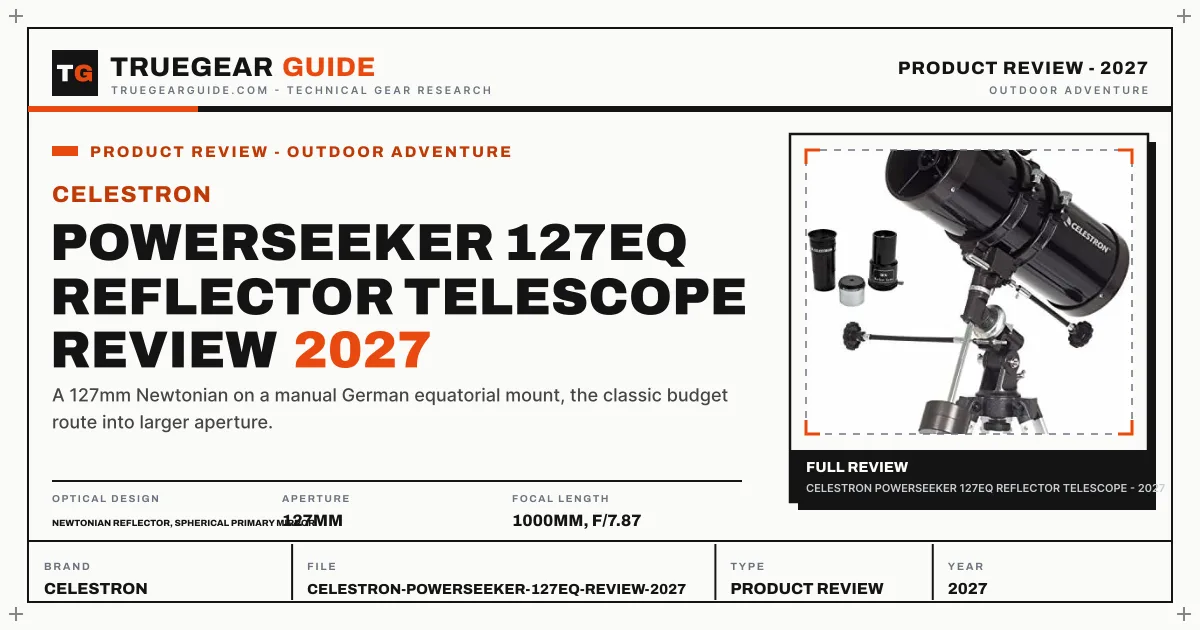
Review
Celestron PowerSeeker 127EQ Review (2027)
Celestron PowerSeeker 127EQ Reflector Telescope · A 127mm Newtonian on a manual German equatorial mount, the classic budget route into larger aperture.
Read guide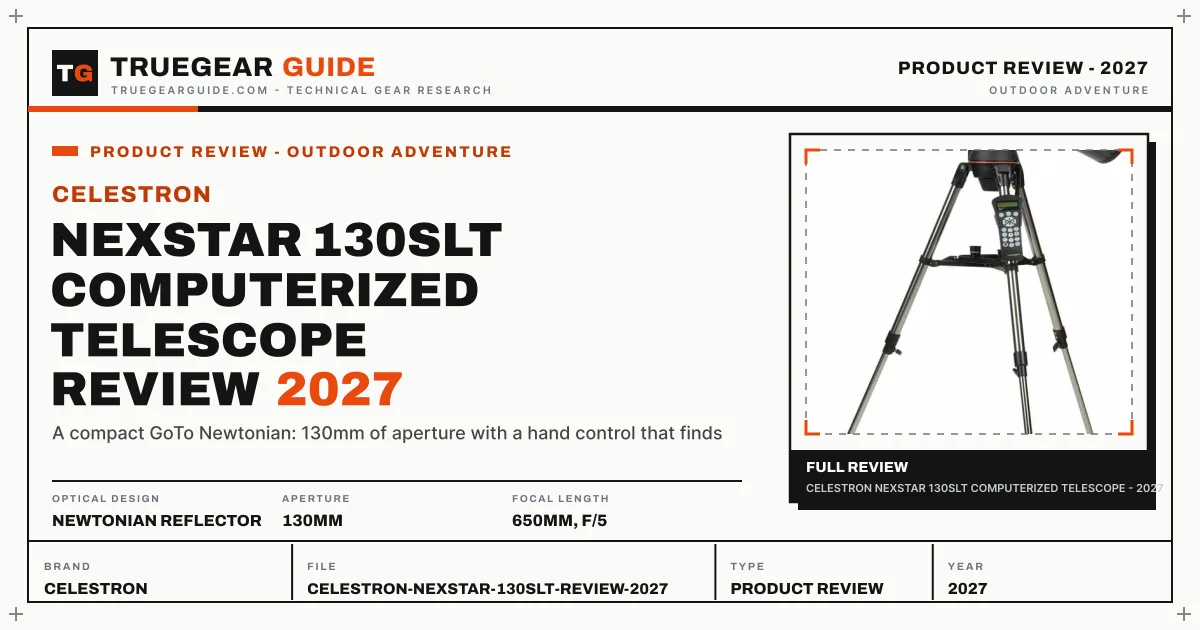
Review
Celestron NexStar 130SLT Review (2027)
Celestron NexStar 130SLT Computerized Telescope · A compact GoTo Newtonian: 130mm of aperture with a hand control that finds and tracks thousands of objects.
Read guide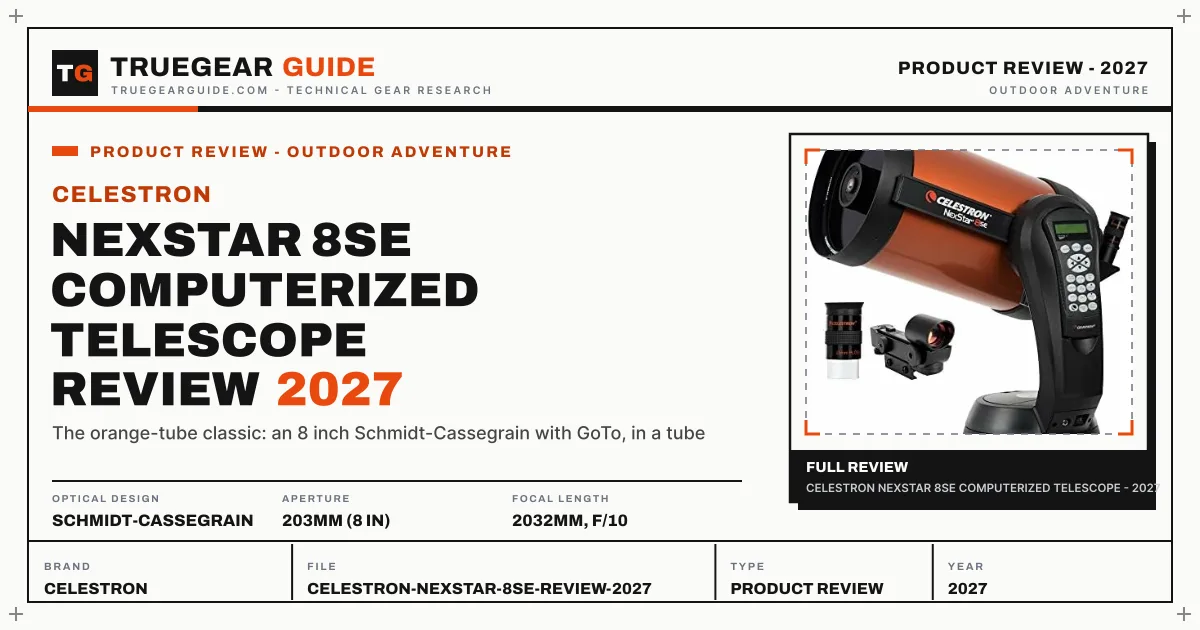
Review
Celestron NexStar 8SE Review (2027)
Celestron NexStar 8SE Computerized Telescope · The orange-tube classic: an 8 inch Schmidt-Cassegrain with GoTo, in a tube shorter than most 8 inch reflectors.
Read guide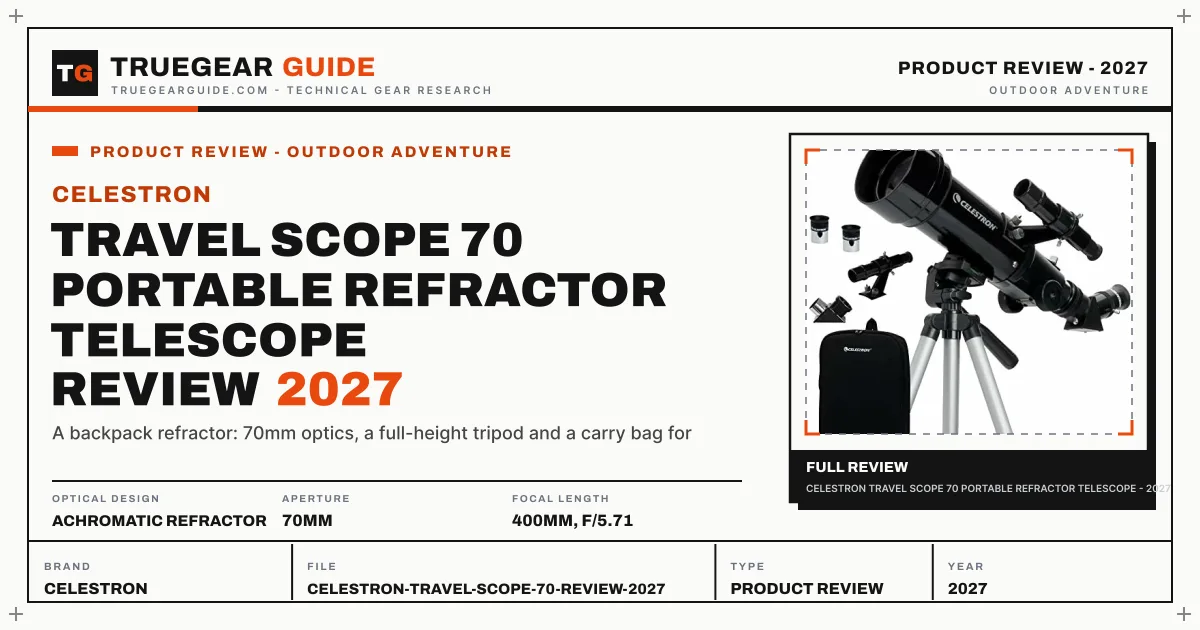
Review
Celestron Travel Scope 70 Review (2027)
Celestron Travel Scope 70 Portable Refractor Telescope · A backpack refractor: 70mm optics, a full-height tripod and a carry bag for camping and travel nights.
Read guide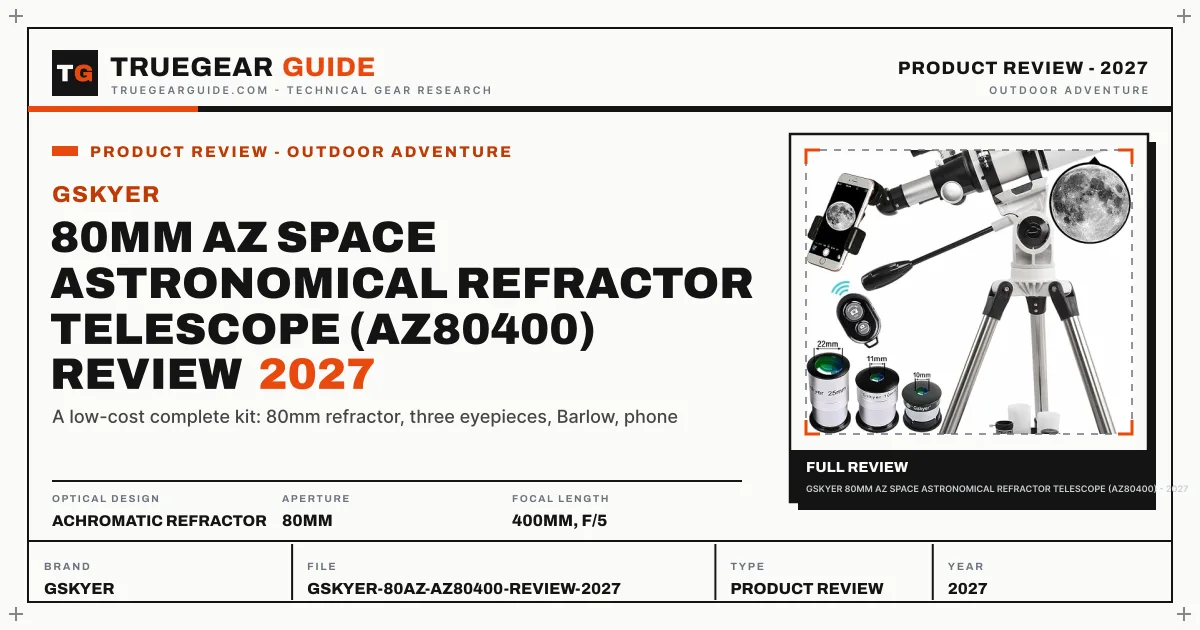
Review
Gskyer 80mm AZ (AZ80400) Review (2027)
Gskyer 80mm AZ Space Astronomical Refractor Telescope (AZ80400) · A low-cost complete kit: 80mm refractor, three eyepieces, Barlow, phone adapter and stainless tripod.
Read guide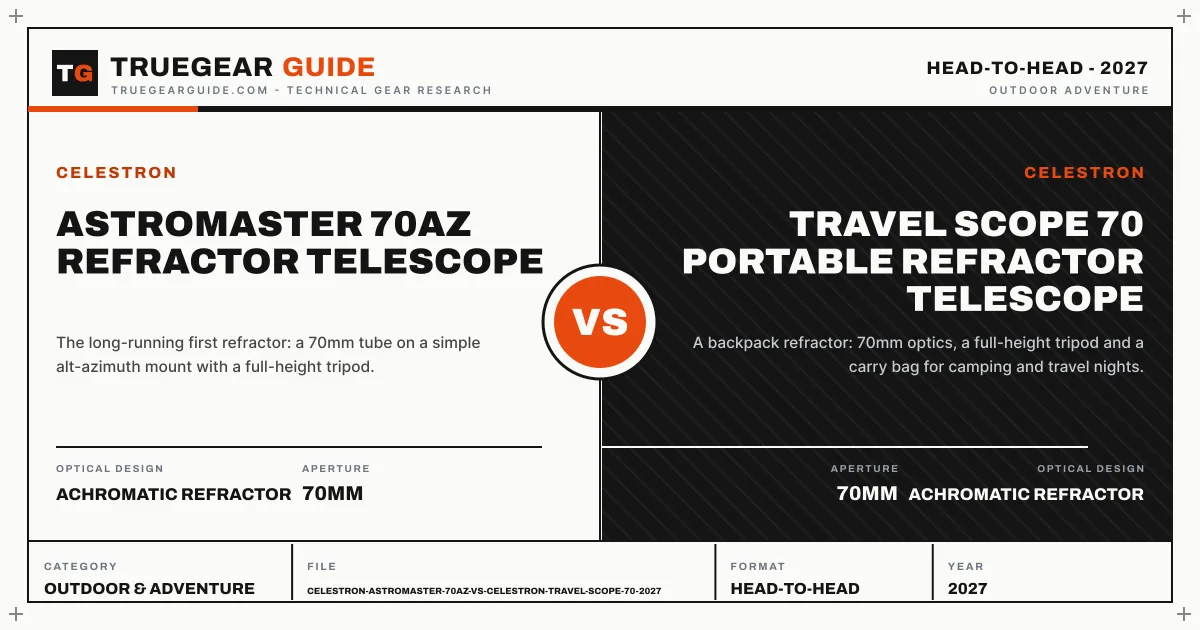
Head to head
Celestron AstroMaster 70AZ vs Travel Scope 70 (2027)
Two 70mm Celestron refractors compared: the long-tube AstroMaster 70AZ against the backpack Travel Scope 70, on planets, travel and first-night ease.
Read guide
Head to head
Celestron NexStar 130SLT vs NexStar 8SE (2027)
Two Celestron GoTo telescopes compared: the compact NexStar 130SLT against the 8 inch NexStar 8SE, on aperture, database, portability and price.
Read guide
Buying guide
Telescope Buying Guide (2027)
How to buy a telescope in 2027: aperture, mounts, finding systems, eyepieces and the mistakes that send scopes back into storage.
Read guide
Fix it
Telescope Cannot Find Anything? Fixes (2027)
A telescope that shows only black sky usually has a finder, focus or alignment problem, not a broken optic. Five ordered fixes, from daytime setup to GoTo alignment.
Read guide